
The Canadian healthcare system is facing a high demand for skilled workers across all fields. Pharmaceutical research and quality control are some of the areas where qualified healthcare workers are required every year, in addition to pharmacy assistance and diagnostic imaging. As parents, you play a pivotal role in guiding your children through one of life’s most important decisions: choosing their educational and career path.
In the case of pharmaceutical education Canada and medical training, even the most well-intentioned parents do not quite believe in what the reality of the modern day represents. Such medical college myths may occasionally cause youths to shirk the otherwise fulfilling lives in healthcare or give them false hopes about what they entail. This blog is aimed at closing the gap between the myths and the real state of affairs of the pharmaceutical medical education, so that you can be able to make a wise decision that actually contributes to the future of your child.
Understanding the truth about healthcare education misconceptions is the first step toward empowering the next generation of healthcare professionals. We shall see what parents think a lot about pharmaceutical-medical education and what students really feel during the training process.
Most Common Misconceptions Parents Have About Pharmaceutical/Medical Education vs. The Reality

Misconception 1: “It’s a Fast Track to Wealth & Prestige”
Many parents see careers in pharmaceuticals and medicine through the prism of material success and status. People have a misconception that as soon as your child gets through his or her training, they will immediately be earning six figures and be respected by a large proportion of society. This perception often stems from the traditional view of doctors and pharmacists as very wealthy.
The Reality: While healthcare careers can certainly be financially rewarding, the path isn’t an instant ticket to wealth. Students have to dedicate a lot of time, effort, and resources to education. Lower-level jobs in pharmaceutical quality control, manufacturing, or as pharmacy aides require professionalism and time before they can attain higher levels of pay. The meaningful work itself is the real reward: it focuses on improving patient outcomes, medication safety, and the general health of the population. The key to success in this area is not only the quest for prestige but also an interest in assisting others. In addition, the pharmaceutical and medical industries have dissimilar compensations at the different levels of work, and career development requires constant learning and improvement of professional levels.
Misconception 2: “Doctors Know Everything”
Parents tend to put medical and pharmaceutical practitioners on a high pedestal, and they think that they know all the conditions, pharmaceuticals, and treatment regimens. The myth can foster unrealistic expectations among students entering the profession.
The Reality: The modern healthcare model is founded on cooperation, specialization, and lifelong learning. There is no single professional who can be aware of any one thing about medicine or pharmaceuticals; one should understand that the field is too broad and constantly changing. Modern healthcare training has focused on the ability to think critically, conduct research, and find and use existing evidence-based information. The professionals are also taught to collaborate in interdisciplinary groups, where pharmacists and pharmacy assistants, laboratory technicians, and medical practitioners, among others, bring their expertise. The most effective healthcare practitioners are those who are humble, inquisitive, and dedicated to lifelong learning, rather than those who profess to know everything.
Misconception 3: “Pharma Is Purely Driven by R&D for Cures”

Most parents believe that pharmaceutical careers mostly entail laboratory research to develop breakthrough cures for diseases. Although this is good news, it accounts for only a small part of the pharmaceutical business.
The Reality: There are various other important functions of the pharmaceutical industry beyond research and development. Quality control specialists ensure medications meet safety standards, manufacturing technicians oversee production processes, regulatory affairs professionals navigate compliance requirements, and pharmacy assistant careers focus on patient care and medication management. All of these positions play a vital role in providing safe and effective drugs to patients. Indeed, most pharmaceutical jobs available are in quality assurance, manufacturing, supply chain management, and patient education. Students pursuing pharmaceutical education Canada programs will discover numerous career paths that don’t involve bench research but are equally vital to healthcare delivery.
Misconception 4: “Students Have No Life Outside Studies”
The stereotype about the medical or pharmacy student who is always tired and studies 16 hours a day, crouching over textbooks, is still in the minds of many parents. This picture may give the impression that healthcare education is so daunting and imbalanced.
The Reality: Although the pharmaceutical and medical programs are admittedly strict, universities and colleges nowadays are aware of the significance of student well-being and work-life balance. The programs are structured and include scheduled time within which individuals are allowed to engage in personal activities, interact with others, and take care of themselves. Flexible schedules, available at many institutions such as the Pharma-Medical Science College of Canada, support various learning styles and other life situations. The students are good time managers and will engage in clubs, volunteering, as well as hobbies, in addition to studying. It is the trick of effective studying and proactive learning styles, instead of spending hours and hours with textbooks. The goal of healthcare programs is to produce well-rounded professionals who can take care of their own well-being and health while also attending to others.
Misconception 5: “Medical School Is Just Memorization”
The pharmaceutical and medical education that parents run through their minds (endlessly) is often seen as memorization of names of drugs, anatomy, disease processes, and guiltless mind-exercise.
The Reality: The modern pharmaceutical medical education focuses on learning as opposed to memorization. Although the foundational knowledge is needed, the current curriculum is based on critical thinking, problem-solving, and the application of concepts to real-life situations. Students learn to interpret information, make evidence-based decisions, and be flexible with new information rather than memorize facts. The traditional lecture-based learning has been largely supplanted with active learning techniques such as case studies, simulations, laboratory work and collaborative projects. This method also produces professionals who can think independently, solve complex problems, and continue learning even after entering their careers. The aim is to create critical thinkers who can navigate a dynamic health care environment.
The Modern Landscape of Pharma-Medical Education
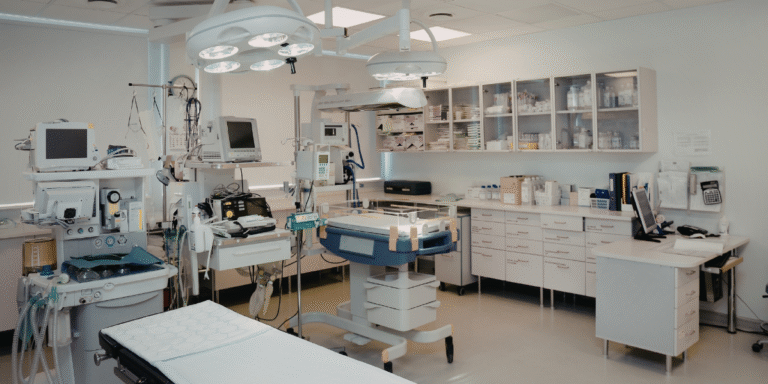
The current pharmaceutical education in Canada has developed largely from old models. The industry requires a technically skilled, flexible workforce willing to join at short notice. This has given birth to specialized and short-term diploma programs that provide high-impact training and are not exposed to the long-term approach of a traditional degree program.
Pharmaceutical quality control programs equip students to handle medications safely and to comply with regulatory standards. Training in manufacturing equips graduates to manage production processes in pharmaceutical plants. Medical sonography programs are diagnostic programs that prepare specialists in the latest imaging technology. These focused educational pathways allow students to enter rewarding pharmacy assistant careers and related healthcare roles in months rather than years.
The classroom learning experience has changed with the process of transition to active learning and integration of technologies. The use of artificial intelligence to facilitate personalized learning is now supported by tools that help students recognize what they do not know and practice what they are good at. Virtual simulation is a safe setting used to learn the techniques before dealing with real patients or drugs. Laboratory facilities that meet industry standards provide students with practical experience of what they will be working with in their profession, as well as protocols.
Why Pharma-Medical Science College of Canada?
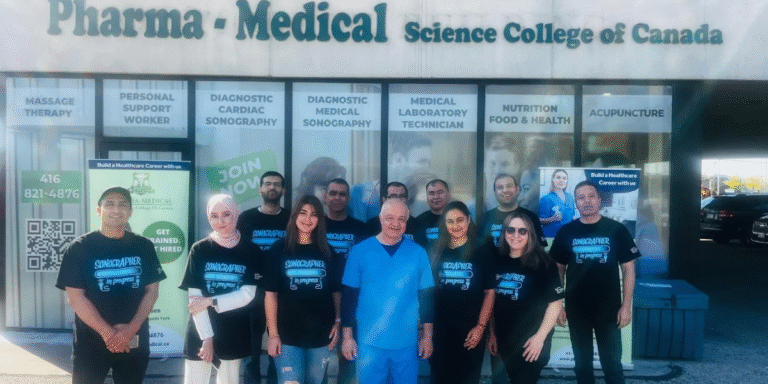
When considering pharmaceutical medical education options in Canada, Pharma-Medical Science College of Canada stands out for several compelling reasons. The institution has built its reputation on providing practical, industry-relevant training that prepares students for immediate employment in healthcare settings.
The main component of any program is hands-on training. The learners are trained in industrial laboratories using the same technology and tools used in pharmaceutical firms, hospitals, and clinics in Canada. This experiential learning ensures that graduates are competent and confident on the first day of their respective careers. Learning how to control quality in the learning process, how to manufacture or take care of patients, students acquire practical skills that are directly transferred into the workplace.
The college understands that many students have a combination of work, education, family, and other duties. Quality pharmaceutical education Canada is available to different learners by providing flexible schedule alternatives, such as evening classes and weekend classes, for some of the programs. This inclusivity clears the misunderstanding that healthcare education requires one to leave behind all other life aspects.
For parents exploring pharmacy assistant careers and other healthcare pathways for their children, institutions like Pharma-Medical Science College represent an investment in practical, achievable education that leads to stable, meaningful employment.
Conclusion
The journey through pharmaceutical and medical education is filled with challenges, rewards, and opportunities that don’t always align with popular medical college myths. By understanding the reality behind common healthcare education misconceptions, you can better support your child’s aspirations and help them make informed decisions about their future.
The reality is that healthcare professionals provide a wide range of opportunities for active and continuous learning, rather than encyclopedic knowledge; teamwork and critical thinking rather than merely memorization; and balance through proper time management. The entry point to this lucrative field is through modern pharmaceutical education Canada, especially the particular diploma programs.
Ready to explore the reality of modern pharmaceutical education? Visit Pharma-Medical Science College of Canada or contact us to discover programs that combine practical training, flexible scheduling, and comprehensive career support.