The world of medical imaging is vast, but few roles are as vital or as rewarding as those in ultrasound. When exploring your options in healthcare education, you will likely encounter the debate of cardiac sonography vs diagnostic medical sonography. While both professions utilise high-frequency sound waves to create internal images of the body, they are distinct career paths with different clinical focuses, day-to-day responsibilities, and educational requirements.
Whether you are a prospective student in Ontario or a healthcare professional looking to specialise, understanding these nuances is essential. This guide explores the unique aspects of a cardiac sonography career compared with a diagnostic medical sonography career, helping you decide which path best aligns with your professional goals.
Understanding the Core Differences: Cardiac vs. Diagnostic Medical Sonography
To the general public, ultrasound is often associated primarily with pregnancy. However, in a professional medical context, diagnostic medical sonography is typically used as an “umbrella” term. It encompasses a wide range of imaging applications, from checking the health of an unborn fetus to examining the liver or kidneys.
In contrast, cardiac sonography is a specialised niche. It focuses exclusively on the cardiovascular system. While a general sonographer may be a “jack of all trades” regarding various organ systems, a cardiac sonographer is a specialist dedicated to the intricacies of the human heart.
What is Diagnostic Medical Sonography (DMS)?
Diagnostic medical sonography is a specialty within diagnostic medical imaging that uses non-invasive ultrasound technology to produce images of the body’s organs, tissues, and blood flow. It is a critical tool for physicians to diagnose and monitor a staggering variety of medical conditions. Practitioners in this field must have a deep understanding of anatomy throughout the torso, as they may be asked to scan anything from the thyroid gland to a musculoskeletal injury in a single shift.
What is Cardiac Sonography (Echocardiography)?
Cardiac sonography, also known as echocardiography, is the specialised practice of using ultrasound to evaluate the anatomy and physiology of the heart. These specialists focus on how the heart is structured and, more importantly, how it functions in real time. Because the heart is a constantly moving target, this role requires a high level of technical skill and a specialised understanding of hemodynamics (the way blood flows through the body).
Did You Know?
The first medical use of ultrasound was not for pregnancy, but for detecting gallstones and, later, for investigating the heart in the early 1950s.
Clinical Scope: What Will Your Daily Work Look Like?
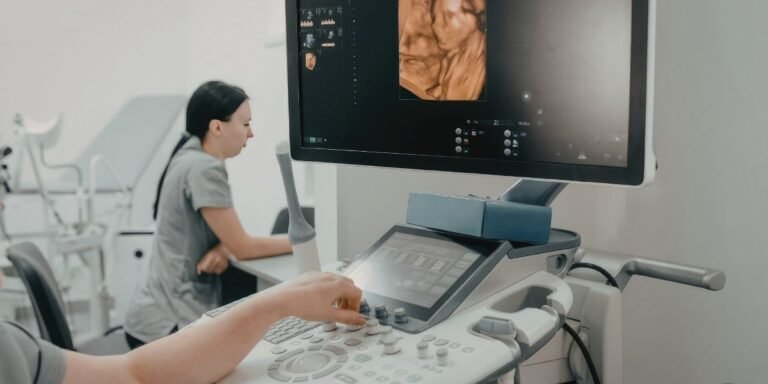
These two professionals’ daily routines vary based on the “patient volume” and the specific structures they image. When comparing cardiac sonography vs diagnostic medical sonography, the clinical scope is perhaps the most visible difference.
Areas of Focus in Diagnostic Medical Sonography
A professional in a diagnostic medical sonography career usually handles “general” ultrasound. This includes:
- Abdominal Imaging: Evaluating the liver, gallbladder, pancreas, and spleen.
- Obstetrics and Gynaecology (OB/GYN): Monitoring fetal development and female reproductive health.
- Small Parts: Imaging the thyroid, testes, or breasts.
- Vascular Ultrasound: Checking for blood clots or blockages in the extremities.
Areas of Focus in Cardiac Sonography
In a career in cardiac sonography, the focus narrows but deepens. Daily tasks involve:
- Heart Chambers and Valves: Measuring the size of the heart and ensuring valves open and close correctly.
- Blood Flow Analysis: Using Doppler technology to track the velocity and direction of blood.
- EKG Integration: Monitoring a patient’s heart rhythm simultaneously with the ultrasound image.
- Stress Echoes: Imaging the heart while the patient exercises to assess how it performs under pressure.
Career Opportunities in Sonography: Comparing the Paths

Both fields offer robust career opportunities across Canada, especially as the ageing population requires more diagnostic screenings.
Diagnostic Medical Sonography Career Paths
Graduates often find that diagnostic medical sonography career offers high versatility. You might start as a generalist and later earn additional credentials in breast or vascular imaging. Because the scope is so broad, there is rarely a dull moment, as every patient presents a different anatomical puzzle.
Cardiac Sonography Career Paths
A career in cardiac sonography is ideal for those who want to be part of a specialized cardiac care team. You might work closely with cardiologists in specialized heart clinics or assist in surgical settings. There are also paths into pediatric echocardiography, focusing on congenital heart defects in newborns.
Typical Work Environments (Hospitals vs. Private Clinics)
- Hospitals: Both types of sonographers work here. Hospitals usually handle higher-acuity cases, emergency room calls, and bedside scanning in the Intensive Care Unit (ICU).
- Private Clinics: General diagnostic medical sonography is very common in community clinics. Cardiac sonographers also work in private clinics, though these are often specialized “Heart Centers” that focus solely on cardiovascular health.
Salary Guide: Which Specialization Pays More?
Salary is a big factor to consider when weighing cardiac sonography vs diagnostic medical sonography. Both are well paid in Ontario, but specialization tends to have a higher ceiling.
|
Role |
Entry Level (Annual) |
Mid-Senior Level (Annual) |
Hourly Average (Ontario) |
|
Diagnostic Medical Sonographer |
$65,000 – $75,000 |
$85,000 – $100,000+ |
$34 – $48 |
|
Cardiac Sonographer |
$70,000 – $80,000 |
$90,000 – $115,000+ |
$38 – $52 |
Entry-Level vs. Senior Salary Expectations
Initially, the pay gap between the two is narrow. However, because cardiac sonography is considered a high-level specialty, senior practitioners in cardiac labs or those with advanced certification in fetal echo often command the highest wages in the field.
Factors Influencing Sonographer Compensation
Several factors impact your earning potential in these career opportunities:
- Geographic Location: Major hubs like Toronto or Ottawa often offer higher rates to match the cost of living.
- Shift Differentials: Working evenings, weekends, or being “on call” in a hospital setting increases take-home pay.
- Certification: Being registered with Sonography Canada is mandatory for the best-paying positions.
Choosing the best sonography career path depends on your interests, lifestyle preferences, and long-term goals. Evaluate specialties, work environments, and growth opportunities to find the right fit.
Educational Requirements & Certification in Canada

To enter a diagnostic medical sonography career or its cardiac counterpart, you must complete a program at an accredited institution.
Sonography Canada Certification Requirements
Regardless of your chosen path, you must pass national certification exams. These exams ensure that you meet the high standards required to practice safely in Canada. For general ultrasound, you take the Core and General exams. For cardiac, you focus on the Cardiac specialization exams.
Choosing the Right Diploma Program at Pharma Medical College
Pharma Medical College offers comprehensive training designed to prepare students for these exact challenges. By choosing a focused diploma program, you gain the hands-on scanning hours necessary to feel confident during your clinical placements and eventual certification exams.
If you are wondering whether prior experience is needed before enrolling for Sonography Diploma, it’s important to understand the typical entry requirements and expectations for these programs.
Comparison of Diagnostic Medical Sonography vs. Cardiac Sonography Specializations
|
Feature |
Diagnostic Medical Sonography |
Cardiac Sonography |
|
Primary Focus |
Multiple organs (Liver, Pelvis, etc.) |
The Heart and Great Vessels |
|
Common Tools |
2D/3D Ultrasound, Doppler |
2D Echo, Colour Doppler, M-Mode |
|
Patient Interaction |
Brief to Moderate |
Intensive (often involves 45-60 min scans) |
|
Physical Demand |
High (standing/reaching) |
High (repetitive scanning motions) |
|
Variety |
Very High (different organs daily) |
Focused (variations of heart pathology) |
Which One is Right for You? (Comparison Checklist)
Still undecided? Use this checklist to see where your interests lie.
Choose Diagnostic Medical Sonography if:
- You enjoy variety and want to see different parts of the body every day.
- You are interested in prenatal care and women’s health.
- You like the idea of working in diverse settings, from small clinics to large hospitals.
Choose Cardiac Sonography if:
- You are fascinated by the physics of blood flow and the “mechanics” of the heart.
- You prefer to become a master of one specific, complex organ system.
- You enjoy a high-tech environment where you integrate ultrasound with EKG data.
Start Your Healthcare Journey at Pharma Medical College

The demand for skilled professionals is at an all-time high. Whether you choose a diagnostic medical sonography course for its versatility or a cardiac sonography course for its specialized nature, you are entering a field that saves lives every day. At Pharma Medical College, we provide the environment and expertise to turn your interest into a profession.
Choosing between cardiac sonography and diagnostic medical sonography is the first step toward a fulfilling future. Both paths offer excellent career opportunities and the chance to make a tangible difference in patient outcomes. Ready to take the next step? Explore our programs today and find your place in the future of healthcare.
Take the first step toward your healthcare career, apply today or contact us to learn more about our programs.
FAQs About Medical Esthetician vs Esthetician
Difficulty is subjective. Many find cardiac sonography more challenging because the heart is always moving, requiring faster hand-eye coordination. However, diagnostic sonography requires memorizing the anatomy of many more organ systems.
The fundamental physics is the same. However, cardiac ultrasound machines often have specialized software for measuring heart volume and “strain” (the stretching of heart muscle), which are not used in general scans.
Usually, no. While they understand ultrasound physics, they lack the specialized training in cardiac pathology and EKG interpretation. Most employers require specific cardiac certification for these scans.
Most diploma programs range from 18 to 24 months, including intensive clinical placements where you gain real world experience.
Hospitals often have a more unpredictable, fast-paced workload due to emergencies. Private clinics usually have a set schedule, but may have a higher volume of “routine” patients back-to-back.