
Massage Therapy Program : Program Structure and Delivery
Year I – Foundational Knowledge and Preparation
In Year I, students develop core knowledge and skills through instruction in:
- Foundational Health Sciences
Including musculoskeletal anatomy, physiology, neurophysiology, and pathophysiology. Foundational health science content is delivered throughout the program to a breadth and depth sufficient to enable students to understand commonly occurring conditions and impairments and to apply this knowledge safely and effectively in assessment and treatment. - Law, Ethics, and Professional Practice
Covering ethical and professional standards related to trauma- and violence-informed care, cultural competence, cultural safety and humility, prevention and reporting of sexual misconduct, and identifying and avoiding fraudulent activities (e.g., conflicts of interest, unlawful benefits, payment through deceit, and identity theft). - Massage Therapy Techniques I – Theory and Foundations
Introducing the profession and practice of massage therapy, with emphasis on therapeutic effects, foundational and selected advanced techniques, contraindications, and direct alignment with Inter-Jurisdictional Practice Competencies and Performance Indicators. - Professional Foundations and Clinic Preparation
Including nutrition, business practices, interprofessional collaboration, clinic preparation and observation, and the introduction of supervised clinical learning
Year II – Advanced Clinical Training and Professional Readiness
In Year II, students deepen their clinical knowledge and skills with an emphasis on advanced practice and professional readiness:
- Assessment and Treatment Planning
Development of a comprehensive, systematic approach to orthopedic physical assessment and treatment planning. - Massage Therapy Techniques II – Range of Motion, Joint Mobilization, and Advanced Applications
Advanced theoretical and practical instruction in joint mobilization, stretching, and therapeutic techniques for all major joints, with direct application to treatment. - Therapeutic Exercise and Clinical Application
Integration of exercise prescription with massage therapy interventions to support rehabilitation, recovery, and functional improvement. - Clinical Practice
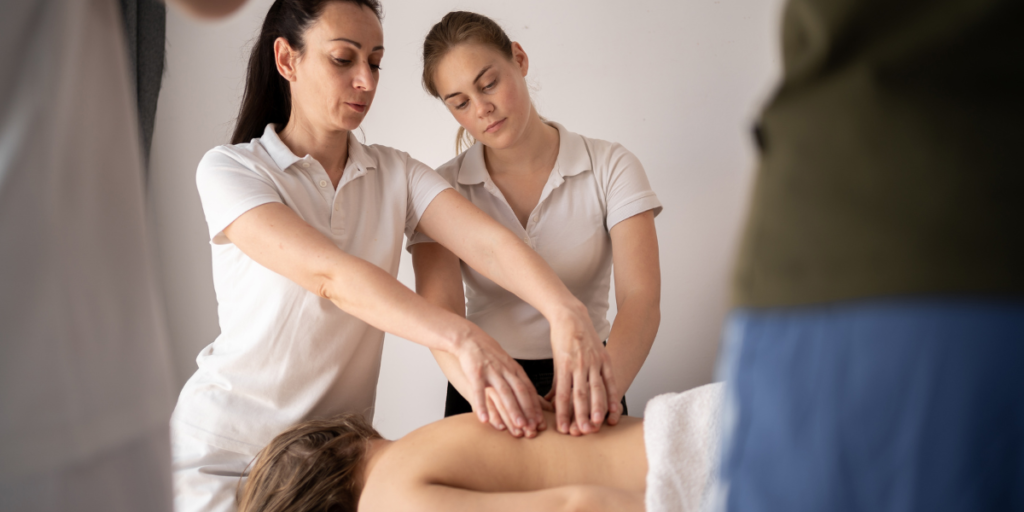
Students provide massage therapy treatments to the public through the on-site student clinic and outreach opportunities, applying ethical practice and risk management under the supervision of licensed professionals. - Professional Readiness
Focused preparation for entry-to-practice success, including structured preparation for the CMTO MCQ and OSCE examinations.
Clinical Education
A total of 330 hours of faculty-supervised direct massage therapy to the public is required for graduation and is completed in Year II of the program. Clinical education includes:
- Student Clinic
Hands-on experience delivering massage therapy treatments in a professional clinical environment. - Outreach and Diverse Population Clinics
Opportunities to work in a variety of settings and with diverse populations, including interprofessional environments.
Upon successful completion of the program, graduates are eligible to write the CMTO certification examinations (MCQ and OSCE). Successful candidates may apply for registration as Registered Massage Therapists (RMTs) in Ontario.
Learning Environment
The program provides a supportive, student-centred learning environment that values professionalism, respect, and collaboration. Students are encouraged to engage actively with faculty in an academic culture that promotes critical thinking, problem-solving, and the ongoing development of evidence-based, outcome-focused practice.
Program content is regularly reviewed to ensure alignment with current regulatory requirements, legislative responsibilities, and evolving professional standards. Program quality is evaluated on an ongoing basis through feedback from students, faculty, and administration to support continuous improvement.
The college provides appropriate facilities to support learning, including academic classrooms, clinical facilities, and student common areas. Graduates remain connected through an alumni network that supports ongoing professional development and lifelong learning.
Assessment
Student learning is assessed on an ongoing basis to ensure achievement of all program learning objectives and entry-to-practice competencies. Assessment methods include formative and summative evaluations, in-class simulated scenarios and assignments, MCQ testing, objectively structured clinical evaluations (OSCEs), and assessment within the student clinic.
Most courses conclude with a comprehensive examination and an OSCE. Students must successfully demonstrate the required level of competency to progress to the next level of the program. Assessment practices are designed to ensure consistency, fairness, and alignment with professional and regulatory standards.
Commitment to Continuous Improvement
The program is continuously evaluated and refined through feedback from students, faculty, clinic supervisors, alumni, and advisory board members. This process ensures ongoing alignment with evolving healthcare practices, professional expectations, and provincial regulatory standards.
The program fosters a culture of collaboration, respect, and academic excellence, preparing graduates to succeed as ethical, confident, and compassionate health care professionals.
← Click here to get Back to Massage Therapy Program Information