
The pharmacy profession has been experiencing incredible changes in the last two decades. The role that was formerly mostly dispensing has become a complex career in the field of clinical work that requires one to continue their learning and develop specific knowledge and adaptive skills. The pharmacists of today no longer hide behind a counter and count pills like it were part of their job; they are clinical consultants, patient educators, medication therapy managers, and healthcare leaders who play a central role in patient outcomes.
The pharmacists who succeed are the ones who adopt professional development in pharmacy as a lifelong commitment, constantly broadening their level of knowledge, attaining special certificates, and taking up the opportunities of continuing education that will keep them up to date with pharmaceutical care.
The question most pharmacy practitioners are asking is, what does this continued investment in professional development do to long-term career growth and salary? The answer, backed by industry data and career trajectories, is profoundly significant.
What is Professional Development in Pharmacy?

Professional development is a continuous process of learning new skills, knowledge, and competency in the course of a career. It includes formal education, which includes pharmacy certificate and education programs, continuing education courses, specific training, workshops, conferences, and self-directed learning activities, which increase professional capabilities.
Professional development in the sphere of medicine gains specific significance because scientific development is rapidly growing, and the profession of medical workers directly affects the safety and outcome of patients. For pharmacists specifically, professional development includes:
- Pursuing pharmacy specialization programs in such fields as oncology, geriatrics, pediatrics, or ambulatory care.
- Obtaining continuing education units (CEUs) is a requirement to renew the license.
- Obtaining additional certifications, such as immunization delivery, diabetes education, or medication therapy management
- Participation in conferences and workshops in the industry.
- Engaging in research and scholarly activities.
- Participating in professional organizations and committees.
How Professional Development Impacts Long-Term Career Growth

Investing in continuous professional development creates a compounding effect on pharmacy career growth, opening doors that remain closed to those who rely solely on their initial credentials.
Specialization & Advanced Roles
The possibility to shift to a specialized and advanced role is one of the greatest influences of professional development. Pharmacists who have undergone pharmacy specialization programs place themselves in such positions as
- Clinical pharmacy specialists in hospital settings.
- Ambulatory care pharmacists manage chronic disease patients.
- Oncology pharmacists work alongside cancer treatment teams.
- Pharmacists specializing in infectious diseases optimize the use of antibiotics.
- Pharmacy managers and directors oversee operations.
The specialized positions come with higher levels of professional satisfaction, autonomy, and direct patient care responsibility that is much more than the traditional dispensing roles. We have witnessed Pharma Medical graduates using specialized training to move out of the community pharmacy practice environment and into the clinical environment, which is more in line with their career goals.
Increased Competency & Confidence
Continuing education and special training directly contribute to clinical competency. The more pharmacists can expand their knowledge in a particular field of therapeutic activity, the more they gain confidence in their right to make clinical recommendations, support patients, and cooperate with other health workers. This heightened competence can be seen by employers, fellow workers, and even patients, and it helps make the pharmacist an expert and a resource to turn to.
This confidence translates into tangible career benefits: better performance reviews, increased responsibilities, and recognition as a subject matter expert within their organization.
Adaptability & New Opportunities
The healthcare environment is ever-changing. Pharmaceutical services are being redefined through the use of telepharmacy, pharmacogenomics, biosimilars, specialty drugs and value-based care models. Professional development initiatives make these pharmacists more adaptable to these changes and able to exploit new opportunities.
One such case was the implementation of immunization certification for pharmacists, who were put in a very promising position to take up significant roles during the COVID-19 pandemic and make a massive change in their scope of practice and visibility across communities. The people who invested in digital training in health are now leading telepharmacy programs that reach underserved groups.
Shift Toward Outpatient and Diagnostic Services
The transition from inpatient care models to outpatient care models is one of the most important changes in the past few years. The development of medical technology and shifting healthcare philosophy imply that medical procedures, which have traditionally required hospital stays, can now be performed in outpatient clinics. This revolution has created a massive demand for allied health professionals who can provide specialized services at such locations.
Diagnostic services, especially, have been growing at an explosive rate. With the focus on preventive care and improved diagnostic technology, the demand for well-trained imaging technologists, ultrasound technicians and other diagnostic experts has been on the rise. This change not only indicates a shift in the place of care provision but also a complete redesign of the structure of healthcare service provision and access.
Growth in Private Healthcare and Clinics
The healthcare system in Canada is changing to incorporate an increasing private sector that supplements public-sector healthcare provision. The number of private clinics that provide specific diagnostic imaging, surgical, and therapeutic services has been increasing nationwide. These facilities are largely relying on the allied health professionals to ensure they run smoothly and provide quality care.
This expansion in the field of private healthcare has provided Canadian allied health professionals with new career opportunities, with more flexible working conditions than in the traditional hospital environment. The growth of private clinics has also helped address wait times and capacity issues within their own systems, and allied health training programs have become more appealing to students seeking viable, rewarding careers.
Staffing Shortages
In most Canadian provinces, the problem of healthcare staffing shortage has become a crisis. Although a significant part is paid to the shortage of physicians and nurses, allied health positions are also not easy to fill. Some of the causes of such shortages include an ageing employee base that is soon to retire, rising demand for services, and a lack of sufficient training facilities to address the rising needs.
The shortage of health professionals in allied health has tangible effects: more people have to wait for diagnostic tests, fewer people are receiving treatment, and existing staff are overworked, leading to burnout. The resolution of these healthcare staffing shortages will require a multifaceted approach that includes providing more training programs, improving working conditions, and promoting these professions to potential students.
Networking & Professional Connections

Conferences, certification programs, or specialty training (professional development activities) are invaluable networking opportunities. Such networks tend to result in mentoring relationships, joint projects, employment, and other opportunities that would not otherwise exist. Pharmacy is a surprisingly small world, and networking with people in leadership positions within the field will jumpstart pharmacy career growth in ways you had not initially considered.
Leadership Potential
Organizations will always encourage those professionals who show initiative and willingness to develop. The proactive pharmacists who are keen on continuing education and special training send a message to their employers that they are serious about their profession and can adopt leadership roles. Such experience qualifies them to be top contenders in the blogs of supervisors, committee heads, preceptors, and management.
Professional development also offers the business savvy, ability to communicate, and knowledge of how to think strategically that are required to be a good leader, skills that are not necessarily taught in a first-year pharmacy program.
How Professional Development Impacts Salary

Beyond the intrinsic rewards of expanded knowledge and capabilities, professional development has a direct, measurable impact on earning potential throughout a pharmacy career.
Higher Earning Potential
Industry data consistently shows that pharmacists with specialized certifications and advanced training command higher salaries than their generalist counterparts. According to recent compensation surveys:
- Board-certified pharmacotherapy specialists earn 15-25% more than non-certified pharmacists in similar settings.
- Clinical pharmacists with specialty certifications earn median salaries $15,000-$30,000 higher than community pharmacists.
- Pharmacy managers’ and directors’ Jobs that normally demand proven professional growth attract much higher salaries compared to the job of staff pharmacists.
The return on investment for pharmacy certificates and education programs is substantial. While there’s an upfront cost in time and tuition, the salary differential over a 30-year career can amount to hundreds of thousands of dollars in additional earnings.
Increased Demand
Healthcare institutions are after pharmacists who have expert knowledge. Candidates having the relevant certifications and continuing education credentials are actively recruited by hospitals, health systems and specialty pharmacy providers. This leverage at the bargaining table, coupled with more choices in case of job opportunities, has been found to work out in their favour.
At Pharma Medical, our Pharma-Medical college programs are tailored to address the needs of this market, and thus, the graduates will be well-equipped with specialized skills and credentials that will make them very active in the employment market.
Job Mobility & Career Flexibility
Professional development creates career flexibility. Pharmacists with varying levels of credentials and specialized training have greater opportunities in terms of career changes, relocations, and movements between practice settings. In itself, this mobility offers some negotiating strength, because highly portable professionals who do not rely on a single employer or practice environment can negotiate better remuneration packages.
Also, specific skills usually cross over environments. A pharmacist who has been trained in diabetes management can use that experience in a community pharmacy, ambulatory care clinic, hospital setting, or even during service in the pharmaceutical industry, and the career opportunities are vast.
Why Choose Pharma-Medical College for Professional Development in Pharmacy
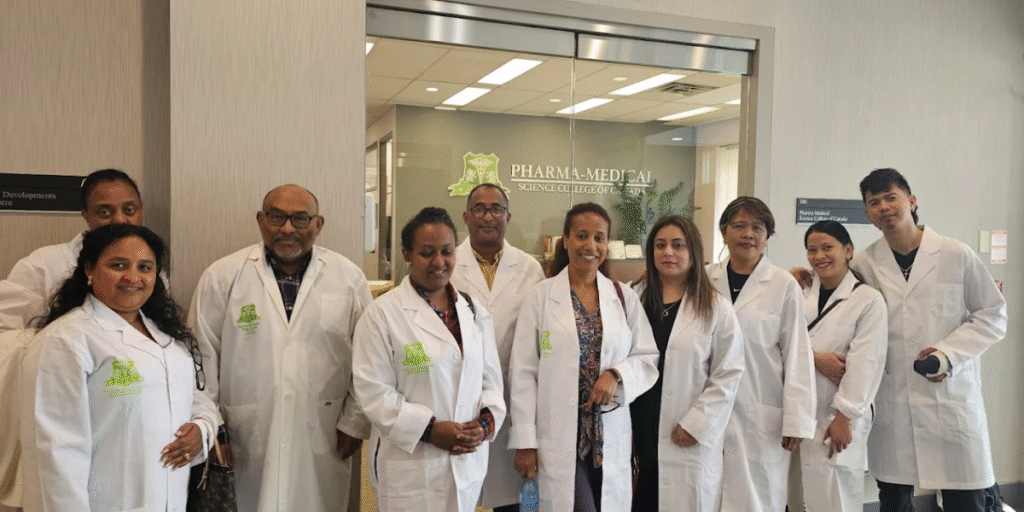
When it comes to advancing your pharmacy career through professional development, choosing the right educational partner makes all the difference. Pharma Medical has established itself as one of Canada’s most trusted institutions for pharmacy education and professional advancement.
What sets Pharma-Medical apart:
- Industry-Relevant Curriculum: Our Pharma-Medical college programs are continuously updated to reflect current practice standards, emerging therapeutic areas, and evolving healthcare delivery models. You’ll learn skills you can apply immediately in your practice.
- Flexible Learning Options: We know that pharmacy professionals do not have time. Through our programs, you are provided with flexibility and online-based and practical training facilities, which do not put you at a disadvantage in your present job.
- Experienced Faculty: Study under pharmacists and health care professionals who are actively working in the industry and inject each lesson with their practical experience and up-to-date views.
- Strong Industry Connections: Our extensive network of pharmacy employers, healthcare organizations, and industry associates gives students opportunities to do internships, to secure employment, and to make other professional contacts, which fast-tracks their career progression.
- Proven Track Record: Thousands of pharmacy professionals have advanced their careers through Pharma-Medical programs, transitioning into specialized roles, leadership positions, and higher-earning opportunities.
- Comprehensive Support: From academic advising to career counselling, we will offer you the support that you require to complete your professional development objectives and channel them into career growth.
Pharma-Medical has provided programs and continuing education opportunities in pharmacy specialization growth to both new pharmacy graduates looking to specialize and experienced pharmacists who are seeking to move into clinical practice or pharmacy professionals seeking a career pathway towards leadership roles.
Conclusion
In the modern, fast-changing healthcare world, professional growth in pharmacy is not an optional expense but an investment in your future. The pharmacists who invest in lifelong learning, focused training, and continuing education place themselves in expanded roles, greater responsibility, and much greater earning potential, both in the short term and throughout their lifetime.
Professional development directly influences both the growth of a pharmacy career and the trend of salary. Learning specialized certifications leads to higher clinical positions, and ongoing education boosts competence and confidence, and a proven interest in professional development indicates to employers that one is a leader.
Contact us today and discover how strategic professional development can transform your career trajectory and earning potential. Your future self will thank you for the investment you make today.