Do You Need Healthcare Experience for a Cardiac Sonography Diploma—Or Can Anyone Start?

Feature Image

Thinking about a future in cardiac imaging, but unsure where to start? Cardiac sonography is attracting students across Ontario and Canada because it blends patient care, high-impact diagnostics, and steady job prospects. The big question many ask is simple yet pivotal: Can you enroll without prior healthcare experience, or do you need a foundation first? This guide breaks down how admission works, what training looks like, and why prerequisites matter. By the end, you will know where you stand, what to prepare, and how to move forward with confidence in a cardiac sonography program that aligns with your goals to become a cardiac sonographer.

Understanding the Role of a Cardiac Sonographer
Understanding the Role of a Cardiac Sonographer

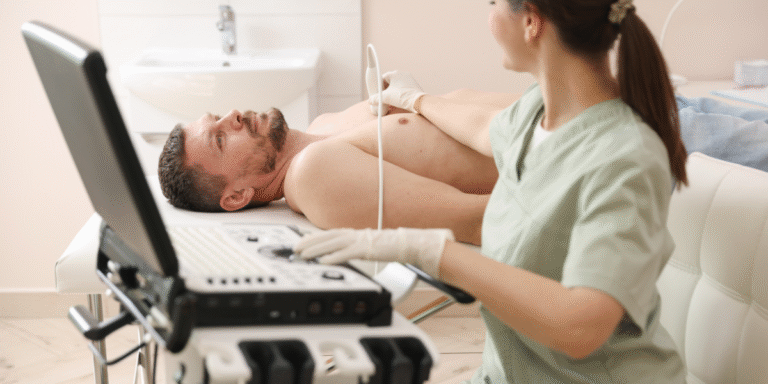
Cardiac sonographers play a central role in cardiovascular care by producing real-time ultrasound images of the heart. The profession is growing across Canada due to increased cardiac disease prevalence and expanded diagnostic services.

Daily Responsibilities and Clinical Workflow

Cardiac sonographers perform echocardiograms, apply patient positioning techniques, and capture quality images that cardiologists use to diagnose and guide treatment. They communicate exam steps clearly, support patient comfort, and maintain equipment standards. Collaboration with cardiology teams shapes daily workflow, which is why a cardiac sonography program trains students to operate efficiently and ethically as they prepare to become cardiac sonographers.

Core Skills Needed in the Profession

The role calls for technical precision, deep anatomical knowledge, steady patient communication, and meticulous attention to detail. Professionals must interpret dynamic physiology while adjusting gain, depth, and Doppler settings to optimize image quality. These competencies are cultivated systematically in a cardiac sonography program, helping graduates become cardiac sonographers ready for clinical practice.

Do You Need Healthcare Experience to Enter a Cardiac Sonography Program in Ontario?
Do You Need Healthcare Experience to Enter a Cardiac Sonography Program in Ontario

Most Ontario pathways are structured for applicants who already have healthcare education or a related degree. This model supports fast-paced learning and early clinical exposure.

Why Ontario Programs Require Prior Healthcare Education

Cardiac sonography diplomas move quickly, compressing complex theory and labs into a short window. Programs teach advanced imaging concepts, which require students to arrive with patient-care experience and foundational sciences. Accreditation standards and clinical partner expectations often tie eligibility to existing credentials, so a cardiac sonography program can concentrate on the specialized training needed to become a cardiac sonographer.

Rare Exceptions and What They Involve

Direct-entry options right from high school are unusual in Ontario. Where limited openings exist, they typically involve extensive prerequisite science courses and competitive screening. Even in these cases, candidates strengthen their readiness through volunteer experience, shadowing, or bridging, which helps them progress in a cardiac sonography program and ultimately become cardiac sonographers safely and effectively.

Admission Requirements for Ontario Cardiac Sonography Programs
Admission Requirements for Ontario Cardiac Sonography Programs

Ontario programs generally follow two eligibility pathways. Understanding which path applies to you will help you organize transcripts, prerequisites, and timelines.

Pathway 1, Prior Healthcare Credential (Most Common Route)

Applicants often hold a diploma or advanced diploma in a registered health profession, such as:

  • Medical Radiation Technology, Respiratory Therapy, Registered Practical Nursing
  • Cardiovascular Technology, Registered Massage Therapy

Graduates from these programs bring clinical communication, patient handling, and baseline physiology, which accelerates their progress. With this foundation, they can step into a cardiac sonography program and become a cardiac sonographer with fewer academic gaps and stronger clinical readiness.

Pathway 2, Bachelor’s Degree in a Medical or Health-Related Science

Many programs accept bachelor’s degrees in fields like Kinesiology, Nursing, and Applied Health Sciences. Strong performance in anatomy, physiology, biology, and pathology is typically expected. This pathway suits career changers who want a direct clinical role, using their degree to enter a cardiac sonography program and become a cardiac sonographer through focused, practical training.

Additional Admission Requirements

Applicants are commonly asked to provide English proficiency results, an updated criminal record and vulnerable sector screening, and immunization records aligned with clinical partner policies. Meeting these standards supports early placement success in a cardiac sonography program, creating a smoother path to becoming a cardiac sonographer.

Connect with Us for Details on the Medical Cardiac Sonography Program

Why These Requirements Exist

Cardiac imaging involves real-time decisions that affect patient safety and diagnostic accuracy. Prerequisites help programs teach advanced content without reteaching fundamentals.

The Advanced Nature of Echocardiography

Echocardiography requires interpreting chamber size, wall motion, valve function, and hemodynamics while managing probe orientation and Doppler measurements. Students need medical terminology and physiology from day one, so the cardiac sonography program can focus on echo mastery, accelerating the journey to become a cardiac sonographer who can deliver reliable studies.

Clinical Rotations Demand Immediate Readiness

Students enter hospitals early, where they interact with diverse patients and clinical teams. Prior healthcare exposure shortens the learning curve and improves patient interactions. This foundation supports meaningful progress in a cardiac sonography program, building confidence and competence to become a cardiac sonographer who integrates seamlessly into care teams.

What Students Learn in a Cardiac Sonography Program
What Students Learn in a Cardiac Sonography Program

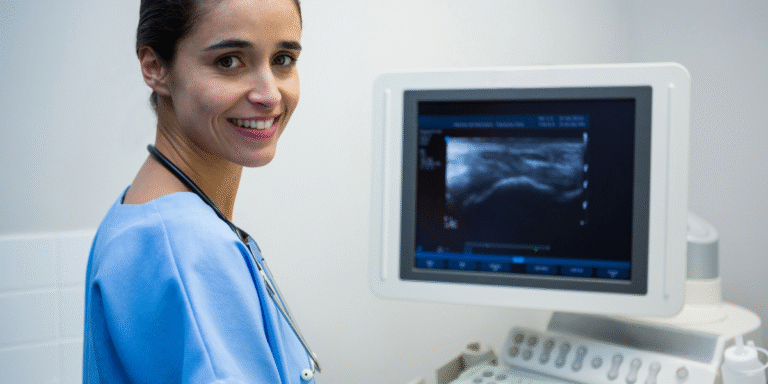
Even experienced applicants start with a focused foundation, then move into advanced echo topics. The curriculum stacks theory, lab practice, and clinical rotations in a logical sequence.

Core Curriculum Examples

Students study cardiac anatomy and physiology, ultrasound physics, Doppler principles, cardiac pathology, and instrumentation. They learn image acquisition protocols, scanning planes, and quality optimization. This integrated coursework shapes the core competencies a cardiac sonography program requires, preparing graduates to become cardiac sonographers with sound judgment.

Practical Labs and Simulation Training

Labs provide hands-on scanning practice with peers and models, supported by faculty feedback. Simulation refines image acquisition, probe control, and measurement skills in a safe environment. Iterative practice bridges theory and clinical performance, aligning with the expectations of a cardiac sonography program and the goal to become a cardiac sonographer.

Clinical Placements

In-hospital rotations immerse students in real patient care, supervised by experienced cardiac sonographers and cardiology teams. Learners practice complete exam protocols, documentation, and communication. These placements are the capstone of a cardiac sonography program, offering the experience needed to become a cardiac sonographer ready for entry-level roles.

Career Outlook After Becoming a Cardiac Sonographer

Career Outlook After Becoming a Cardiac Sonographer

Graduates find opportunities in hospitals, diagnostic labs, and cardiology clinics across provinces. Workforce demand is driven by population aging and the need for cardiovascular screening and follow-up.

Entry-Level Positions

New graduates often step into echocardiography technologist roles where they perform standard transthoracic studies and assist with stress testing. The transition from student to staff is supported by mentorship and structured onboarding. Completing a cardiac sonography program positions candidates to become cardiac sonographers with immediate clinical value.

Specializations and Continuing Education

After building a strong base, some professionals focus on pediatric echocardiography, stress echo, or multi-modality cardiac imaging that complements ultrasound. Additional competencies can open doors to advanced practice or leadership. A solid start in a cardiac sonography program provides the platform to become a cardiac sonographer who grows throughout a career.

Professional Certification Pathways

Employers commonly value ARDMS or CCI credentials as proof of competence and commitment. Preparing for registry exams includes case review, physics refreshers, and protocol mastery. Strong exam performance reflects disciplined training in a cardiac sonography program and supports the goal to become a cardiac sonographer whom hiring managers trust.

Who Should Consider This Path?

Different applicant profiles can thrive, provided they match their background to the right pathway. Clarity about fit helps with planning and timelines.

Healthcare Professionals Seeking Advancement

Nurses, MRTs, RTs, RPNs, and cardiovascular technologists often transition smoothly because they already work with patients and clinical systems. Their experience speeds up skill acquisition in labs and rotations. With focused training in a cardiac sonography program, they can become a cardiac sonographer poised for growth.

Graduates with Health or Science Degrees

Bachelor’s graduates looking for a direct, patient-facing role will find a clear trajectory. With prerequisite sciences in place, they can pivot from academic learning to applied imaging. This pathway uses a cardiac sonography program as the bridge to become a cardiac sonographer in a practical, hands-on setting.

International Students

Prospective learners from abroad should plan for credential evaluation, language testing, and regulatory steps. Advising support helps translate previous education into local requirements and timelines. When aligned properly, international applicants can enter a cardiac sonography program and become a cardiac sonographer in the Ontario context.

Academic Advisors and Parents

Advisors and parents can help candidates chart prerequisites early, schedule labs strategically, and plan volunteer or shadowing experiences. Early planning avoids delays and strengthens applications. This support builds momentum toward a cardiac sonography program and the decision to become a cardiac sonographer.

Next Steps for Prospective Applicants

A clear action plan can shorten your path and reduce stress. Start by matching your current credentials to the right entry route.

How to Prepare Before Applying

  • Upgrade sciences such as anatomy, physiology, and biology if your transcript has gaps or older grades.
  • Explore bridging or post-grad certificates that close competency gaps efficiently.
  • Shadow a cardiac sonographer to confirm fit and understand day-to-day clinical realities.

Each step deepens your readiness, strengthens your application, and clarifies expectations within a cardiac sonography program, smoothing your progress to become a cardiac sonographer.

Questions to Ask Programs

  • Accreditation status and recognition within Ontario and across Canada
  • Clinical placement partnerships and the variety of rotation sites
  • Competitiveness of admission and typical applicant profiles
  • Graduate success rates and first-time cert exam outcomes

Clear answers to these questions help you choose a cardiac sonography program that matches your learning style and career timeline, positioning you to become a cardiac sonographer with confidence.

How We Support Your Journey at Pharma-Medical Science College of Canada
How We Support Your Journey at Pharma-Medical Science College of Canada

Pharma-Medical Science College of Canada is to deliver career-focused healthcare education that aligns with Ontario standards and employer expectations. We support both domestic and international learners with a structured path that complements future advanced studies.

Our Hands-On Training Environment

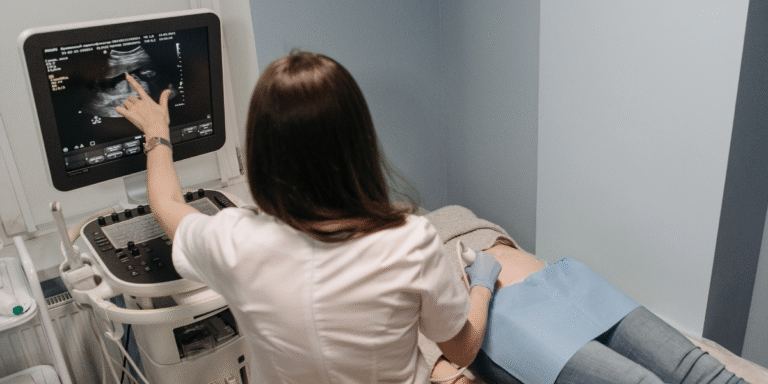
We highlight practical learning in facilities such as an ultrasound lab, pharmacy simulation lab, and microbiology lab. This environment builds technical discipline, critical thinking, and professional communication. The skills translate directly to the demands of a cardiac sonography program, helping you become a cardiac sonographer who excels in clinical settings.

Our Commitment to Student Support

From academic advising to career guidance and clinical placement assistance, our services are designed to reduce friction and keep your progress steady. Financial aid advising, including OSAP guidance, helps you plan responsibly. With the right support, you can focus on the competencies that matter in a cardiac sonography program and the journey to becoming a cardiac sonographer.

Why Students Choose Us

Students value flexible scheduling, experienced faculty, and an industry-relevant curriculum that fits real healthcare needs. Our approach emphasizes practical readiness and individualized support. These strengths align with the preparation needed before entering a cardiac sonography program, giving you momentum to become a cardiac sonographer.

Conclusion

Ontario programs that train cardiac imaging professionals typically expect applicants to bring healthcare education or a related degree. That structure protects patient safety, supports early clinical success, and allows focused training in echo techniques. If you are mapping your path, start by confirming which eligibility route you fit and organizing your prerequisites, labs, and documentation accordingly. With thoughtful planning and targeted preparation, a cardiac sonography program can position you to become a cardiac sonographer in a rewarding field.

Ready to take the next step with a student-first environment and practical guidance? Contact Pharma Medical Science College of Canada to discuss pathways, timelines, and support. Your journey can start today, and your preparation can set a clear course to clinical practice.


Connect with Us for Details on the Medical Cardiac Sonography Program

Is Becoming a Registered Acupuncturist Worth It in Ontario Today?

Feature Image

Traditional healing and modern integrative care, Acupuncture has become an essential link in the changing healthcare environment of Ontario. With the increasing population of Canadians seeking natural and non-pharmaceutical healthcare, the need to have qualified acupuncturists is ever-increasing. Considering an acupuncture diploma program, this blog will discuss the educational opportunities, acupuncturist salary Ontario, career opportunities, and the long-term worth of the investment in pursuing acupuncture training Ontario has to pursue.

What Does a Registered Acupuncturist Do?

What Does a Registered Acupuncturist Do

Registered acupuncturists are important participants in the treatment of pain, stress, and chronic conditions in terms of applied studies of traditional Chinese medicine. These medical practitioners make use of the exact needling methods to trigger certain points on the body to make patients experience improved health results with the help of holistic methods.

Acupuncture in Ontario’s Regulated Healthcare System

Acupuncturists in Ontario are governed by the College of Traditional Chinese Medicine Practitioners and Acupuncturists of Ontario (CTCMPAO). This policy ensures patient safety and the effectiveness of treatment by offering professional credibility and legal protection to registered practitioners who maintain high standards.

Core Skills and Training

Modern acupuncture training Ontario involves the focus on key skills such as communication with patients, needling, theory of meridians, anatomy, and ethics. Such programs combine conventional techniques with evidence-based medical care practices with excellence, making graduates successful in the modern integrated medical practice.

Education Pathway – How to Become a Registered Acupuncturist

Three important steps need to be followed when embarking on the journey of becoming a registered acupuncturist; these steps will guarantee him or her appropriate preparation and legal authorization to practice.

Step 1 – Get an Education

Aspiring acupuncturists should take a certified acupuncturist diploma course or a college of traditional Chinese medicine. These are intensive programs and usually take a period of three years of full-time study, which is a combination of classroom and practical clinical work. Acupuncture courses Ontario offer quality education that enables one to succeed professionally.

Step 2 – Pass the Licensing Exams

The acupuncture practitioners need to pass the Pan-Canadian Examination for students. When choosing programs, it is also important to ensure that they are sufficient to prepare students for the requirements of registering with CTCMPAO and enable graduates to meet the professional standards.

Step 3 – Get Licensed and Start Practicing

In Ontario, practitioners are required to be registered by the CTCMPAO to practice acupuncture legally. Acupuncture is a registered practice. The graduates are then given the option to work in existing clinics or establish their own private practice.

Benefits of Becoming an Acupuncturist

Benefits of Becoming an Acupuncturist

There is an ongoing increase in public interest in natural healthcare solutions that are not pharmaceutical. Acupuncture is becoming a commonly used treatment method in pain management, stress, fertility, and general wellness, which generates a consistent demand for competent professionals.

Growing Demand for Holistic Health

Public interest in natural, non-pharmaceutical healthcare solutions continues rising. Acupuncture plays an increasingly important role in pain management, stress relief, fertility support, and overall wellness, creating a steady demand for qualified practitioners.

Expanding Insurance Coverage

Acupuncture treatment is now covered under more extended health plans, and the access of patients has increased greatly, as well as the financial sustainability of the practitioners. The trend promotes the growth of sustainable practice and retention of patients.

Strong Earning Potential

Acupuncturist salary Ontario is based on an average of between $45,000 – $90,000 dollars a year, with the highest paid in corporations with high patient traffic, surpassing $100,000 a year. There is a significant increase in income potential when there is specialization, an increase in patient volume, and ownership of the business.

Flexibility and Personal Fulfillment

Acupuncturists like being self-employed, have time flexibility, as well as significant client relationships. The field is very rewarding to individuals who are enthusiastic about holistic wellness and the ability to assist others to improve their health.

Connect with Us for Details on the Medical Acupuncture Diploma Program

Challenges and Considerations

However, as much as acupuncture has a good career potential, the aspiring practitioners are supposed to be aware of the harsh side of the trade.

Business and Practice Management

Operating an acupuncture clinic business implies the management of marketing, rent, supplies, and administration. Entrepreneurial skills are good resources that greatly influence career success because of their strong business skills.

Competition and Regional Variability

Even with the increasing demand, location and proper marketing strategies are key in ensuring that success is achieved. Some parts of Ontario are more developed, and some areas offer opportunities to the first-in-the-market practitioners.

Education and Licensing Requirements

The investment of time and money to obtain an acupuncture diploma and licensing is are serious undertaking. Besides, in order to renew a registration, one has to maintain continuing education credits, which can only be achieved through continuous professional growth.

Career Opportunities and Job Outlook

The acupuncturist job outlook in Ontario and Canada overall is still a promising one, and there are various work environments that one can find.

Employment Settings

Acupuncturists may be employed in individual wellness centers, interdisciplinary medical facilities, hospitals, community health-oriented programs, or open their own enterprises. This diversity offers career development flexibility and the possibility of specialization.

Market Trends

Expanding opportunities are provided by higher public confidence in alternative medical care and increased development of integrative medical centers. New opportunities for reaching patients and establishing practices are also presented by online wellness services.

Financial Perspective – Is It Worth the Investment?

An acupuncture diploma program may provide a long-term, rewarding career when the cost of tuition and licensing is compared to the potential of earning and job satisfaction.

Return on Investment

The payoff schedule of tuition and setup costs with varying payoffs will most likely demonstrate the breakeven point within 3-5 years of practice development. Acupuncture as a healthcare profession has a better earning potential compared to other medical professions, such as massage therapy, chiropractic, or physiotherapy, due to low overhead expenses.

How Pharma-Medical Science College of Canada Supports Future Acupuncturists

How Pharma-Medical Science College of Canada Supports Future Acupuncturists

At Pharma-Medical Science College of Canada, we take pride in preparing students for success through our comprehensive acupuncture diploma program. Our staff is focused on practical training and clinical experiences with exam preparation executed according to the CTCMPAO professional standards.

Our philosophy also blends traditional Chinese medicine and modern healthcare provisions, which enable graduates to thrive in the private and clinical settings. Our strategy will see our students obtain practical and relevant education that will translate into professional success.

Our Commitment to Student Success

Pharma-Medical offers individualized counselling, flexible work hours, as well as faculty support to enable students to reach a balance between learning, work, and life. We not only design our programs to train practitioners but also to raise leaders in the field of holistic healthcare in Ontario and other provinces.

Conclusion

Is it worth it to become a registered acupuncturist in Ontario? The response will also rely on how serious you are in assisting others using approaching health methods. The profession is a great combination of a challenge and professional satisfaction for people who want to work hard.

Acupuncture is a potentially successful choice of career in the face of increasing demand, increasing insurance coverage, and good earnings. Still, that is not enough without appropriate education, licensing, and business skills.

When you are willing to venture into this fulfilling career in the health care sector, then you can consider researching approved acupuncture diploma programs and contacting admissions advisors at Pharma-Medical Science College of Canada to strategize on how to become a registered acupuncturist in Ontario.

Frequently Asked Questions (FAQs)

How much does an acupuncturist make in Ontario?

Entry-level practitioners earn around $45,000-$60,000, with established professionals earning $80,000-$100,000+, depending on clinic size and clientele.

What is the difference between a licensed and a certified acupuncturist?

In Ontario, licensed acupuncturists are controlled by the CTCMPAO and can practice; certified is sometimes used to refer to individuals who have been trained but have not registered with the provincial government.

Are acupuncturists in demand?

Yes, the growing trend of awareness of holistic health and insurance has caused the demand to rise, particularly in urban and wellness-oriented locations.

What are the 4 golden rules of acupuncture?

Safety, precision, patient communication, and individualized treatment – principles emphasized in every acupuncture training Ontario program.

Is acupuncture a good career in Canada?

Overall, yes. It is purposeful, autonomous, and increasing societal tolerance. Success is, however, dependent on education, license, and business skills.

Connect with Us for Details on the Medical Acupuncture Diploma Program

Don’t Have a Science Degree? Can You Still Become a Medical Laboratory Technician?

Feature Image

We now live in times where Medical Laboratory Technicians (MLTs) are vital participants within the healthcare system in terms of both diagnosing and monitoring health. They perform crucial lab tests on blood, tissue, and other bodily fluids that inform the doctor’s decision and ultimately impact the patient’s outcome. Still, for many aspiring healthcare professionals, the second question asked is, “Can you be a medical laboratory technician without a science background?”

The answer is yes! You most definitely can!

Similar to Ontario’s route to qualification for some healthcare professionals without completing a degree in science, MLTs also have pathways for qualification for high school graduates, career changers, and mature students who do not have a science background.

In this blog, we will look at how to begin your Medical Laboratory Technician Training Program journey in Ontario, what educational requirements are needed, and how colleges like Pharma-Medical Science College of Canada will support you from the classroom to the career.

What Does a Medical Laboratory Technician Do?

What Does a Medical Laboratory Technician Do

The Role of MLTs in Modern Healthcare

A Medical Laboratory Technician is a skilled individual who performs laboratory testing that is critical to the care of a patient. Laboratory tests help physicians to diagnose disease, determine the effectiveness of treatment, and monitor the health status of a patient.

MLTs typically:

  • Analyze biological specimens like blood, urine, and tissues.
  • Monitor specific laboratory testing using advanced diagnostic equipment
  • Maintain accurate and detailed records of laboratory results.
  • Follow laboratory safety and quality control procedures.
  • Collaborate with physicians, nurses, and/or doctorally prepared practitioners, and pathologists.

Technologists have a degree from a university to manage more complex testing analyses, and MLTs have a diploma from a college to complete the hands-on work and testing clinically in laboratories. Both are essential to care, and together they are the backbone of the medical diagnostic system in Canada.

Skills You’ll Develop Through a Medical Laboratory Technician Program

Training in a medical laboratory technician program develops both technical skills and soft skills that prepare students for success in the healthcare sector. These include:

  • Laboratory safety and infection control.
  • Operation of diagnostic and analytical instruments.
  • Understanding biological samples and chemical properties.
  • Data recording and result interpretation.
  • Professional ethics, accuracy, and attention to detail.
  • Communication and teamwork skills.

Even students with no science background will learn the essentials from the basics, so that when they graduate, all students, regardless of their previous knowledge base, can achieve competency and confidence as healthcare professionals.

Can You Become a Medical Laboratory Technician Without a Science Degree?

Can You Become a Medical Laboratory Technician Without a Science Degree

Absolutely. Many Ontario colleges, including Pharma-Medical Science College of Canada, welcome students from diverse academic and professional backgrounds.

You don’t need to have a university science degree to enter the field. Instead, you can complete a college diploma-based Medical Laboratory Technician Training Program that will provide you with the theoretical training and lab experience you need.

If you have not taken high school science classes or feel unsupported, you can consider the pre-health sciences pathway or academic upgrading programs in Ontario to prepare you for completion of the program.

Educational Pathways for Non-Science Students

There are three main ways for non-science learners to begin their MLT career:

  1. Pre-Health Sciences Certificate

    • This is a short program that is designed to provide the basics of biology, chemistry, and math—the core prerequisites for diplomas related to healthcare. 
    • This is an excellent first step for students who are entering from a non-science background.

  2. Medical Laboratory Technician Diploma
    • This is a direct entry diploma program delivery model that provides theoretical content to students, followed by hands-on lab experience, and includes some placement in a clinical site as part of their learning experience. 
    • Upon graduation, students will be eligible to apply for certification as an MLT in the province of Ontario. 
  3. Mature Student Status
    • Students who are 19 years or older and have no Ontario Secondary School Diploma (OSSD) can qualify by testing or through prior learning assessment or life/work experience.

These are flexible entry pathways into the MLT profession that allow determined learners to prepare for a career in medical laboratory technology, regardless of previous academic background.

Academic and Admission Requirements

In preparation for a medical laboratory technician program in Ontario, students typically must meet the following requirements: 

  • An Ontario Secondary School Diploma (OSSD) or equivalent.
  • Grade 12 English (C or U) or completion of an English placement test.
  • Grade 12 Math (C, M, or U) or equivalent.
  • Grade 11 or 12 Biology (C or U)—this is a key prerequisite for entry into MLT programs.

These requirements confirm that students are ready for the academic and scientific challenges of the program.

What If You’re Missing a Requirement?

If you lack one or more prerequisites, don’t worry. Many colleges, including Pharma-Medical Science College of Canada, offer academic upgrading or Pre-Health Sciences programs to help you qualify. These preparatory courses strengthen your foundation and boost your confidence before entering a full diploma program.

How to Become a Medical Laboratory Technician in Ontario

How to Become a Medical Laboratory Technician in Ontario

Here’s a step-by-step overview to help you navigate your path toward becoming a certified Medical Laboratory Technician:

  1. Meet Academic Prerequisites
    • Complete the required high school courses or an apprentice program.
  2. Apply to an Accredited Program
    • You must apply to a college in Ontario that offers a Medical Laboratory Technician Diploma Program accredited by the Canadian Society for Medical Laboratory Science (CSMLS). 
  3. Complete Academic and Clinical Training
    • Most programs are generally two years in length, and all include some degree of classroom learning and a clinical placement.
  4. Earn Your Diploma and Certification
    • After graduation, apply for certification through the Canadian Society for Medical Laboratory Science (CSMLS).
  5. Register with the CMLTO
    • To legally practice in Ontario, you must register with the College of Medical Laboratory Technologists of Ontario (CMLTO).

Key MLT Training Requirements

  • Must complete an accredited diploma program.
  • Completion of clinical practicum hours in a healthcare setting.
  • Passing the national certification (CSMLS) exam. 

these requirements is the best way to ensure that graduates meet the national standards of practice for laboratory professionals practicing in Canada.

Connect with Us for Details on the Medical Laboratory Technician Training Program

Why Choose Ontario for MLT Training and Career Opportunities

Why Choose Ontario for MLT Training and Career Opportunities

Ontario is one of the best provinces to pursue a medical laboratory technician career. Here’s why:

  • Top-Quality Education: Ontario is home to some of the most well-known and accredited MLT programs in Canada.
  • Growing Job Market: The expansion of healthcare, coupled with retirements in the field, and high demand for qualified medical laboratory professionals in Ontario.
  • Diverse Career Settings: MLTs work in a variety of environments: hospitals, diagnostic laboratories, research labs, and private practices.
  • Support for International Students: Ontario’s colleges are proactive in assisting newcomers, continuously offering support, academic advice, and career advice.

Career Outlook and Salary Potential

Medical Laboratory Technicians in Ontario enjoy strong job stability and competitive salaries.
According to the most recent data, MLTs’ salaries can range from $50,000 to $70,000 per year, with increased salaries being offered in the roles of management, supervision, or specialized laboratories.

This job also offers a number of advancement opportunities, including providing the ability to pursue roles such as laboratory supervisor or quality assurance officer, or it could even provide an opportunity to pursue the role of a medical laboratory technologist with the appropriate education.

What to Look for in a Quality Medical Laboratory Technician Program

What to Look for in a Quality Medical Laboratory Technician Program

Choosing the right program is crucial for long-term success. When evaluating colleges, consider the following factors:

  1. Accreditation: You want to ensure that the program has accreditation status from CSMLS and a favourable response from the CMLTO.
  2. Hands-On Training: Look for programs that have developed extensive clinical placements and/or partnerships with hospitals and diagnostic labs.
  3. Modern Facilities: Having state-of-the-art laboratories and up-to-date diagnostic technologies will contribute greatly to your hands-on practice.
  4. Student Support: As you may come from a non-science background and might be considered a mature student, it would be essential to have institutional academic advising, tutoring/learning support, and career counselling.

Questions to Ask Before Applying

  • Does the program meet current MLT training standards?
  • What is the graduate employment rate?
  • Are there pathways for upgrading from technician to technologist?
  • What type of school-based support is available for non-science-based learners?

These questions should help with the appropriate vetting of a program while aligning your needs and goals with your learning style.

Our Commitment to Your Success at Pharma-Medical Science College of Canada

Our Commitment to Your Success at Pharma-Medical Science College of Canada

At Pharma-Medical Science College of Canada, we are dedicated to providing access to students from all backgrounds to enter the healthcare profession with confidence.

Whether you have a strong science background or you are completely new to the field, our Medical Laboratory Technician Training Program has the curriculum for you.

Why Students Choose Pharma-Medical

  • Accredited Curriculum: Our program meets all standards for CSMLS certification and CMLTO registration.
  • Hands-On Experience: Develop experience and confidence through supervised clinical placements at high-quality healthcare sites.
  • Flexible Learning: We have flexible learning choices for busy, mature students.
  • Student-Centered Support: From academic coaching to career services, we are with you throughout your journey.

At Pharma-Medical, we believe that your background should never be an obstacle to your future. We hope to help all of our students, both domestic and international, find meaningful careers in the growing healthcare profession.

If you’re ready to get started with your medical laboratory technician program in Ontario, visit Pharma-Medical Science College of Canada to learn more and apply today.

Final Thoughts – Start Your Journey Toward a Medical Laboratory Career

Lacking a science degree should not deter you from your dream of working in the world of healthcare. Ontario has many educational pathways designed to help you qualify, train, and succeed as a medical laboratory technician.

Joining institutions with an outstanding reputation, such as Pharma-Medical Science College of Canada, will not only provide you with a world-class education but also an expert instructor, hands-on lab experience, and future career support in preparation for you to become a certified medical laboratory technician, as well as to gain long-term success in the field itself. 

Interested in taking the first step today? Explore accredited medical laboratory technician programs in Ontario and start the journey towards an exciting, respected, life-changing, stable, and ever-growing career in the medical field.

Frequently Asked Questions

Can a Non-Medical Student Do an MLT Course?

Yes, as a non-medical student, you can undertake pre-health sciences or bridging programs to fulfill your science qualifications. Once accepted into the MLT program, you will receive all the theory and practical training you need to complete your diploma.

What Education Is Required to Be a Lab Technician in Canada?

You will need a college diploma in medical laboratory technology from an accredited college/university. You will also need to achieve CSMLS certification and must have provincial registration to practice legally as a medical lab technician.

Do You Need Qualifications to Be a Lab Technician?

Yes. You need academic qualifications (a diploma) and professional certification. This ensures competency and safe practice in a laboratory environment. 

What Is the Minimum Qualification for MLT?

You will need an Ontario Secondary School Diploma (OSSD), along with completion of a recognized Medical Laboratory Technician program, to begin your career.

Which Is the Highest-Paid Job in Non-Medical Fields?

MLTs are paid very well, but there are other high-paying careers, such as diagnostic imaging technologists, dental hygienists, and pharmaceutical sales professionals.

MLT jobs in Ontario provide great job security, good health benefits, and many advancement opportunities as a medical lab technician within the medical field.

Connect with Us for Details on the Medical Laboratory Technician Training Program