

Think about beginning a profession that involves important patient data in each heartbeat that you look at. Choosing the best diagnostic cardiac sonography program in Canada is the first step in a rewarding career for aspiring medical professionals. There are many different healthcare programs in Canada, and it can be difficult to know which programs will help students to become certified and employed.
This article discusses the characteristics of an outstanding cardiac sonography program. Whether it’s accreditation, coursework, or practical labs, clinical rotations, and graduate success, you will be able to see how a program is comprehensive and career-focused. The program you select should help you get ready to take the RDCS/ARDMS exams and have the knowledge and talents to begin working as soon as you graduate.
Why Accreditation Matters in a Diagnostic Cardiac Sonography Program
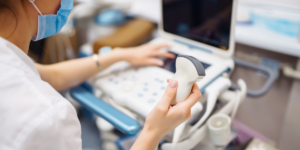
Accreditation is one of the main elements to consider when making your choice of program for both professional credibility and exam eligibility. A program that is not accredited will not provide adequate laboratory or clinical exposure, nor teaching quality, and graduates will not be well prepared for the profession.
CAAHEP Accreditation – The Gold Standard
The CAAHEP (Commission on Accreditation of Allied Health Education Programs) sets tough standards for allied health programs, such as diagnostic cardiac sonography programs. Accredited programs offer organized instruction, qualified teachers and suitable labs and clinical facilities.
The proof of a CAAHEP-accredited program is that you’ve had a quality education that’s recognized all across Canada. Accreditation also helps to ensure that the course covers the content expected in the RDCS/ARDMS exam.
Board Exam Alignment
Programs that reflect the job requirements of the RDCS/ARDMS certification provide students with strong preparation for taking the registry exams. Students who have completed their education from an accredited program know the theoretical concepts and skills they need to pass the certificate exams, which helps them to achieve a higher pass rate on the first attempt. The alignment places students high in the employability scale in hospitals and specialized imaging centres, given their competence and confidence.
Building a Strong Foundation – Curriculum Essentials
The fundamentals of a quality echocardiography program are based on the curriculum. Every echocardiography program should teach students the knowledge and skills required to be an effective practitioner in the echocardiography field. A quality program teaches sonographic physics and science while demonstrating how to use ultrasound to evaluate how well a person’s heart works.
Physics and Instrumentation
Knowledge of the physics involved in ultrasound and how to operate machines is basic to cardiac sonography training. Wave propagation, tissue interactions, image formation and machine settings should all be included in training courses. With practice on actual ultrasound machines, sonographers can learn to operate equipment, solve problems on the go to generate appropriate images, and work in a number of different settings.
Specialized Cardiac Focus
Cardiac anatomy, hemodynamics and echocardiography should be addressed thoroughly within a program. The students should receive training on normal and abnormal cardiac structures, hemodynamics and congenital heart disease. Experience with both 2D and 3D imaging prepares the graduate to deal with complex situations, with diagnostic information they will have faith in. Students are prepared for the expectations placed on them by employers when they choose an area of focus within cardiac sonography.
Hands-On Scanning Labs – Developing Practical Skills
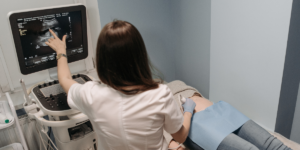
Practical experience will enhance confidence and competence. Excellent cardiac diagnostic sonography programs will use the simulation lab to allow students to move from the classroom environment to clinical reality.
State-of-the-Art Simulation Labs
Simulation labs recreate actual cardiac conditions and enable students to repeatedly practice the procedure within a secure atmosphere. State-of-the-art ultrasound equipment, coupled with heart models, provides legitimate representations so that no one is subject to harm. Continuous practice allows you to enhance your level of accuracy and consistency, as well as your ability to accurately interpret complicated images.
Psychomotor Skill Development
Cardiac sonography involves accuracy and the development of motor coordination and precision in technique. Programs concentrate on designing learning activities using guidebooks, instructor-led feedback, etc., to have students develop these psychomotor skills. Once students become proficient in these skills through practice in the lab setting, they should have no difficulty continuing to apply the same skills when working with patients while on their clinical rotations.
Clinical Rotations – Real-World Experience
Clinical rotations provide essential exposure to professional healthcare settings, helping students apply theoretical knowledge to real patients. This experience is invaluable in preparing graduates for employment.
Structured Hospital Rotations
Quality programs coordinate with hospitals and clinics to provide structured rotations. Students learn with observation first and then eventually do scans on their own under supervision. A rotation often means hundreds of hours of patient contact and exposure to a wide variety of diseases and imaging needs. This encounter improves confidence and reaffirms practical abilities.
Competency Assessment and Mentorship
Students are assessed by trained sonographers who provide ongoing feedback. Mentorship helps to improve technical skills, fosters professional development and improves problem-solving skills. Strong mentorship networks in programs also help students connect with potential employers, increasing graduate job placement rates.
Graduate Outcomes and Career Support

The success of graduates from a diagnostic cardiac sonography school is a reflection of the effectiveness of the curriculum. Programs with high exam success rates and planned career support provide real-world evidence of the value of their training.
High Pass Rates and Exam Success
RDCS/ARDMS exam prep programs ensure that students complete their professional certifications quickly. High pass rates show that the curriculum is relevant to exam requirements and that students have a good grasp of academic knowledge and practical abilities.
Career Placement and Employer Connections
Hospital affiliations, advisory boards, and networking opportunities for employment help are important in improving job placement. Graduates are offered career coaching and mentorship to help seek placements in hospitals, clinics, or imaging centres across Canada.
Choosing the Right Program – Decision-Making Checklist
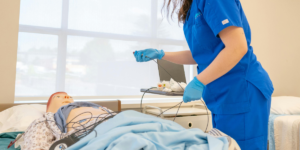
Prospective students should assess programs based on:
- Accreditation status to confirm industry recognition and certification eligibility
- Curriculum depth, covering both general and specialized cardiac sonography content
- Hands-on labs and simulation experiences for skill development
- Clinical rotations that provide real-world exposure and evaluation
- Graduate outcomes, including certification success rates and employment support
- Program facilities, resources, and accessibility
Evaluating programs against these criteria ensures that students make informed choices and invest effectively in their future careers.
Take the Next Step in Your Cardiac Sonography Career
Pharma Medical College has a top accredited diagnostic cardiac sonography curriculum with hands-on training and robust clinical rotations. Contact us today to learn more about enrollment, program requirements and how to begin your journey to being a certified cardiac sonographer in Canada.
Featured Snippet Opportunity:
“A great diagnostic cardiac sonography program combines CAAHEP accreditation, hands-on labs, and clinical rotations, ensuring eligibility for RDCS exams and a clear path to employment.”
Frequently Asked Questions
1: What prerequisites are required for a cardiac sonography program?
Most programs provide study in anatomy, physiology, and physics, and basic health care experience. Some may also reflect exposure to medical terminology and clinical observation.
2: How long does a diagnostic cardiac sonography program usually take?
Programs usually range from 12 to 24 months and combine classroom learning, hands-on labs, and clinical rotations. Part-time options may slightly extend the timeline.
3: What is the RDCS/ARDMS certification process?
Graduates must register with ARDMS, meet clinical experience requirements, and pass the RDCS exam. Certification demonstrates competency in diagnostic cardiac sonography and is recognized throughout Canada.
4: Can I work in Canada immediately after graduation?
Graduates of accredited programs with clinical experience are eligible for employment in hospitals, clinics, and diagnostic centers. Programs with strong employer connections can facilitate immediate job placement.