

If you are exploring a hands-on healthcare career in Toronto, Ontario, Canada, two popular options often come up: becoming a Registered Massage Therapist or working as a Physiotherapy Assistant. Both jobs help with recovery, mobility, and pain management, but they have different duties, training paths, and long-term career goals.
This guide explains the real differences, what a typical day at work is like, and how to pick the best path for you in Toronto.
Quick Overview of the Registered Massage Therapist Career
A Registered Massage Therapist is a regulated health professional who assesses soft tissues and joints and provides treatment to reduce pain and dysfunction.
What a Registered Massage Therapist typically does in real life:
- Does client intake and basic assessments of muscle, soft tissue, and joint movement
- Uses hands-on methods to ease tension, pain, and limited movement
- Makes plans for treatment and keeps track of progress over several visits
- Teaches clients about home care, posture, and easy therapeutic exercises
- Keeps professional records and follows the rules of the field
People they usually work with:
- Clients who are dealing with stress, chronic pain, repetitive strain, and trouble moving around
- People who play sports and are active
- Patients who were sent to us from rehab centres and wellness clinics in Toronto
Registered Massage Therapist Career is often chosen by people interested in a long-term career with the option to work in clinics, wellness centres, or independent practice.
Quick Overview of Physiotherapy Assistant Career
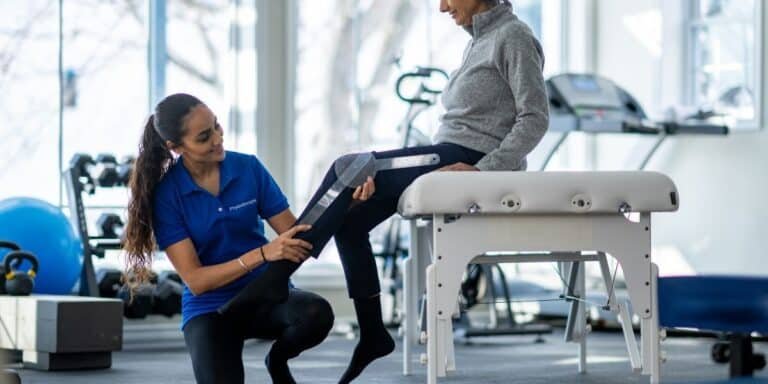
A Physiotherapy Assistant supports the physiotherapist by helping patients follow treatment plans safely and consistently. This role is often found in rehab and clinical environments.
What a Physiotherapy Assistant typically does in real life:
- Helps patients follow their prescribed exercises and mobility routines
- Helps set up treatment and keep the clinic running smoothly
- Helps keep patients safe and comfortable during sessions
- Keeps track of progress; reports it to the superphysiobout it.
- Helps keep rehab areas neat and ready for care
Who they usually work with:
- Patients recovering from injury, surgery, or chronic movement issues
- Physiotherapists and multidisciplinary rehab teams
- Clinics focused on rehabilitation, sports recovery, and mobility in Toronto
Many people choose this path for a stable career in physiotherapy in clinical settings where teamwork and structure are important.
Registered Massage Therapist vs Physiotherapy Assistant (Core Difference)
A Registered Massage Therapist typically assesses and treats clients directly within their professional scope. It is a patient-facing therapy where you deliver hands-on cadevelopd build treatment plans over time. That is why many students look for a strong massage therapy course or a registered massage therapist course that prepares them for real clinical practice and professional expectations.
A Physiotherapy Assistant, on the other hand, supports the treatment plans of a physiotherapist. It is a key role in a clinic, but the assistant generally follows established protocols and helps patients complete their rehab steps safely. For people considering a physiotherapy assistant career, this can be a great fit if you like helping patients progrend you thrive in structured clinical routines.
Difference between Registered Massage Therapist vs. Physiotherapy Assistant (Comparison Table)
|
|
Registered Massage Therapist (RMT) |
Physiotherapy Assistant (PTA) |
|
Focus: |
Soft tissue and joint assessment, hands-on treatment |
Supporting rehab plans and patient exercise routines |
|
Techniques: |
Massage techniques, treatment principles, therapeutic exercise basics, thermal applications |
Guided exercises, mobility assistance, treatment support tasks |
|
Goal: |
Reduce pain, restore function, improve mobility, support wellness |
Help patients follow rehab plans safely and consistently |
|
Training: |
Formal massage therapy diploma training with clinical hours and competency-based education |
Training focused on clinical assistance and rehab support skills. |
Massage Therapy Work: What a Registered Massage Therapist Does Day to Day
A typical day for a Registered Massage Therapist in Toronto blends assessment, treatment, documentation, and client education.
Client assessment basics in plain language:
- You ask about pain, how much movement is possible, and daily habits.
- You look at how someone stands or moves in general.
- You look for tightness, pain, and limits in muscles and joints.
- You make a treatment plan that fits and aligns with the client’s needs and goals.
Common work settings in Toronto:
- Clinics for wellness and clinics with many specialties
- Rehab clinics that help people with pain and mobility problems that keep coming back
- Sports and performance settings
- Health and wellness services for businesses
If you are drawn to building long-term client relationships and delivering hands-on results, the path of a registered massage therapist may be right for you. Many students start by comparing a massage therapy course and an RMT course to see which program format and clinic training best match their learning style.
Physiotherapy Work: What a Physiotherapy Assistant Does Day to Day
A day for a Physiotherapy Assistant is typically fast-paced and team-oriented. You work closely with physiotherapists and help keep rehab sessions consistent and safe.
Key responsibilities often include:
- Helping patients with exercises that the physiotherapist has already told them to do
- Helping with mobility training, balance work, and drills for functional movement
- Helping patients learn how to do exercises the right way
- Getting equipment ready and helping appointments go smoothly
Common work settings in Toronto:
- Physiotherapy clinics and rehab clinics
- Sports injury and recovery centres
- Community care settings focused on mobility and function
- Hospital or long-term care environments, depending on the role
For many people, the physiotherapy assistant career is appealing because it offers meaningful patient interaction while staying within an assistant’s scope of practice, usually under supervision.
Training and Education Pathways in Ontario (What to Expect)

Training is where these two career paths really separate.
If you are aiming to become a Registered Massage Therapist, you typically need a program that develops both knowledge and real clinic readiness. A quality registered massage therapist course will cover topics like anatomy, physiology, assessment skills, massage techniques, professionalism, and safe practice. Many students refer to this pathway simply as an RMT course, but the key is ensuring it includes hands-on learning and supervised clinical practice.
Training for physiotherapy assistants typically focuses on supporting rehabilitation settings. You will acquire the skills necessary to help patients with exercises, communicate effectively in a clinical context, and function well as a member of a healthcare team. This training is designed to support the physiotherapist’s treatment plan rather than replace it.
If you are comparing options in Toronto, ask yourself what type of learning you want:
- If you want deep hands-on therapy education, prioritise a strong massage therapy course
- If you want a support-focused rehab role, physiotherapy assistant training may fit better
Decision Matrix: When to Choose Which?
If you are planning to work in Toronto, North York, Etobicoke, or across Ontario, here is a simple way to decide.
Choose a registered massage therapist if you want:
- A hands-on therapy role where you treat clients directly and track their progress
- A long-term registered massage therapist career with flexibility in settings and scheduling
- Training that builds assessment skills, treatment planning, and clinical confidence through a structured registered massage therapist course
Choose Physiotherapy Assistant if you want:
- A team-based clinic role supporting patients through physiotherapy routines
- A clear pathway into a physiotherapy assistant career in rehab environments
- Daily structure and clinical flow focused on helping patients complete prescribed exercises safely
Job Outlook and Work Settings in Toronto and Ontario
Both roles can lead to stable healthcare work in Toronto, Ontario, Canada, because demand for pain management, rehab support, and mobility care continues to grow.
Where a Registered Massage Therapist may work:
- Private clinics and wellness centres
- Chiropractic and physiotherapy clinics
- Sports rehab and performance environments
- Corporate wellness and mobile practice
- Self-employment and private practice
Where a Physiotherapy Assistant may work:
- Physiotherapy and rehab clinics
- Sports injury clinics and recovery centres
- Long-term care support settings, depending on the position
- Community care environments focused on mobility and function
If your goal is flexibility and hands-on treatment delivery, the Registered Massage Therapist path typically offers more autonomy. If your goal is clinical teamwork and rehab support, the Physiotherapy Assistant path can be a strong fit.
Registered Massage Therapist Course in Toronto: Program Snapshot (Based on Pharma Medical College)

If you are leaning toward becoming a Registered Massage Therapist, the Massage Therapy Diploma Program featured on PharmaMedical.ca highlights several details that matter to students in Toronto:
- Program length: 88 weeks, full-time, instructor-led (hybrid delivery with scheduled online theory plus in-person practical training)
- Clinic practice: 330 hours of on-campus clinics (including outreach hours)
- Campuses: North York and Etobicoke
- Outcome: designed to develop entry-to-practice competencies and prepare graduates toward becoming a Registered Massage Therapist in Ontario
This is the kind of structure many students look for when choosing an RMT course in Toronto, especially when hands-on clinical learning is a priority.
Ready to Start Your Massage Therapy Course in Toronto?
If your goal is to become a confident Registered Massage Therapist in Toronto, Ontario, Canada, choosing the right education is essential. A career-focused training environment with a clear program structure and real clinic exposure can help you build the skills needed for success.
If you want to compare your options, speak with an advisor, and determine whether a massage therapy course aligns with your goals, take time to review program details, admission requirements, and training outcomes. You can request information, book a tour, or connect with an admissions team to discuss start dates and eligibility.
To take the next step toward your Registered Massage Therapist career, connect with Pharma-Medical Coll to and explore the program details today.
FAQs About Registered Massage Therapist vs Physiotherapy Assistant
A Registered Massage Therapist assesses and treats clients directly using hands-on therapy within their scope. A Physiotherapy Assistant supports rehab exercises and clinic care under the guidance of a physiotherapist.
Yes. A career as a geriatric massage therapist can offer demand across wellness and rehab settings in Toronto, along with flexibility in work environments and schedules.
Program lengths vary, but the Massage Therapy Diploma Program on PharmaMedical.ca lists an 88-week full-time format. Always confirm clinical hours and delivery format when choosing an RMT course.
You can explore the Massage Therapy Diploma Program listed on PharmaMedical.ca, which notes campuses in North York and Etobicoke, serving the Toronto area.
For hands-on treatment as the primary service, the Registered Massage Therapist path is usually the better match. The Physiotherapy Assistant role is more focused on supporting rehab plans and guided exercises.