Cardiac Sonography vs Diagnostic Medical Sonography: Key Differences, Career Paths & Salary Guide

Featured Image

The world of medical imaging is vast, but few roles are as vital or as rewarding as those in ultrasound. When exploring your options in healthcare education, you will likely encounter the debate of cardiac sonography vs diagnostic medical sonography. While both professions utilise high-frequency sound waves to create internal images of the body, they are distinct career paths with different clinical focuses, day-to-day responsibilities, and educational requirements.

Whether you are a prospective student in Ontario or a healthcare professional looking to specialise, understanding these nuances is essential. This guide explores the unique aspects of a cardiac sonography career compared with a diagnostic medical sonography career, helping you decide which path best aligns with your professional goals.

Understanding the Core Differences: Cardiac vs. Diagnostic Medical Sonography

To the general public, ultrasound is often associated primarily with pregnancy. However, in a professional medical context, diagnostic medical sonography is typically used as an “umbrella” term. It encompasses a wide range of imaging applications, from checking the health of an unborn fetus to examining the liver or kidneys.

In contrast, cardiac sonography is a specialised niche. It focuses exclusively on the cardiovascular system. While a general sonographer may be a “jack of all trades” regarding various organ systems, a cardiac sonographer is a specialist dedicated to the intricacies of the human heart.

What is Diagnostic Medical Sonography (DMS)?

Diagnostic medical sonography is a specialty within diagnostic medical imaging that uses non-invasive ultrasound technology to produce images of the body’s organs, tissues, and blood flow. It is a critical tool for physicians to diagnose and monitor a staggering variety of medical conditions. Practitioners in this field must have a deep understanding of anatomy throughout the torso, as they may be asked to scan anything from the thyroid gland to a musculoskeletal injury in a single shift.

What is Cardiac Sonography (Echocardiography)?

Cardiac sonography, also known as echocardiography, is the specialised practice of using ultrasound to evaluate the anatomy and physiology of the heart. These specialists focus on how the heart is structured and, more importantly, how it functions in real time. Because the heart is a constantly moving target, this role requires a high level of technical skill and a specialised understanding of hemodynamics (the way blood flows through the body).

Did You Know?

The first medical use of ultrasound was not for pregnancy, but for detecting gallstones and, later, for investigating the heart in the early 1950s.

Clinical Scope: What Will Your Daily Work Look Like?
Clinical Scope: What Will Your Daily Work Look Like?

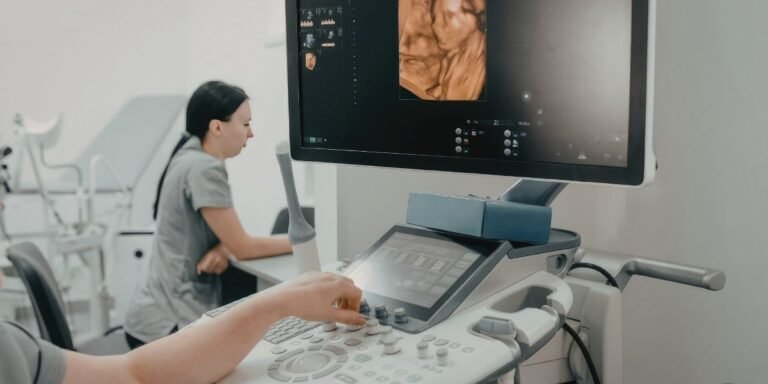
These two professionals’ daily routines vary based on the “patient volume” and the specific structures they image. When comparing cardiac sonography vs diagnostic medical sonography, the clinical scope is perhaps the most visible difference.

Areas of Focus in Diagnostic Medical Sonography

A professional in a diagnostic medical sonography career usually handles “general” ultrasound. This includes:

  • Abdominal Imaging: Evaluating the liver, gallbladder, pancreas, and spleen.
  • Obstetrics and Gynaecology (OB/GYN): Monitoring fetal development and female reproductive health.
  • Small Parts: Imaging the thyroid, testes, or breasts.
  • Vascular Ultrasound: Checking for blood clots or blockages in the extremities.

Areas of Focus in Cardiac Sonography

In a career in cardiac sonography, the focus narrows but deepens. Daily tasks involve:

  • Heart Chambers and Valves: Measuring the size of the heart and ensuring valves open and close correctly.
  • Blood Flow Analysis: Using Doppler technology to track the velocity and direction of blood.
  • EKG Integration: Monitoring a patient’s heart rhythm simultaneously with the ultrasound image.
  • Stress Echoes: Imaging the heart while the patient exercises to assess how it performs under pressure.

Career Opportunities in Sonography: Comparing the Paths

Career Opportunities in Sonography: Comparing the Paths

Both fields offer robust career opportunities across Canada, especially as the ageing population requires more diagnostic screenings.

Diagnostic Medical Sonography Career Paths

Graduates often find that diagnostic medical sonography career offers high versatility. You might start as a generalist and later earn additional credentials in breast or vascular imaging. Because the scope is so broad, there is rarely a dull moment, as every patient presents a different anatomical puzzle.

Cardiac Sonography Career Paths

A career in cardiac sonography is ideal for those who want to be part of a specialized cardiac care team. You might work closely with cardiologists in specialized heart clinics or assist in surgical settings. There are also paths into pediatric echocardiography, focusing on congenital heart defects in newborns.

Typical Work Environments (Hospitals vs. Private Clinics)

  • Hospitals: Both types of sonographers work here. Hospitals usually handle higher-acuity cases, emergency room calls, and bedside scanning in the Intensive Care Unit (ICU).
  • Private Clinics: General diagnostic medical sonography is very common in community clinics. Cardiac sonographers also work in private clinics, though these are often specialized “Heart Centers” that focus solely on cardiovascular health.

Salary Guide: Which Specialization Pays More?

Salary is a big factor to consider when weighing cardiac sonography vs diagnostic medical sonography. Both are well paid in Ontario, but specialization tends to have a higher ceiling.

Role

Entry Level (Annual)

Mid-Senior Level (Annual)

Hourly Average (Ontario)

Diagnostic Medical Sonographer

$65,000 – $75,000

$85,000 – $100,000+

$34 – $48

Cardiac Sonographer

$70,000 – $80,000

$90,000 – $115,000+

$38 – $52

Entry-Level vs. Senior Salary Expectations

Initially, the pay gap between the two is narrow. However, because cardiac sonography is considered a high-level specialty, senior practitioners in cardiac labs or those with advanced certification in fetal echo often command the highest wages in the field.

Factors Influencing Sonographer Compensation

Several factors impact your earning potential in these career opportunities:

  1. Geographic Location: Major hubs like Toronto or Ottawa often offer higher rates to match the cost of living.
  2. Shift Differentials: Working evenings, weekends, or being “on call” in a hospital setting increases take-home pay.
  3. Certification: Being registered with Sonography Canada is mandatory for the best-paying positions.

Choosing the best sonography career path depends on your interests, lifestyle preferences, and long-term goals. Evaluate specialties, work environments, and growth opportunities to find the right fit.

Educational Requirements & Certification in Canada

Educational Requirements & Certification in Canada

To enter a diagnostic medical sonography career or its cardiac counterpart, you must complete a program at an accredited institution.

Sonography Canada Certification Requirements

Regardless of your chosen path, you must pass national certification exams. These exams ensure that you meet the high standards required to practice safely in Canada. For general ultrasound, you take the Core and General exams. For cardiac, you focus on the Cardiac specialization exams.

Choosing the Right Diploma Program at Pharma Medical College

Pharma Medical College offers comprehensive training designed to prepare students for these exact challenges. By choosing a focused diploma program, you gain the hands-on scanning hours necessary to feel confident during your clinical placements and eventual certification exams.

If you are wondering whether prior experience is needed before enrolling for Sonography Diploma, it’s important to understand the typical entry requirements and expectations for these programs.


Comparison of Diagnostic Medical Sonography vs. Cardiac Sonography Specializations

Feature

Diagnostic Medical Sonography

Cardiac Sonography

Primary Focus

Multiple organs (Liver, Pelvis, etc.)

The Heart and Great Vessels

Common Tools

2D/3D Ultrasound, Doppler

2D Echo, Colour Doppler, M-Mode

Patient Interaction

Brief to Moderate

Intensive (often involves 45-60 min scans)

Physical Demand

High (standing/reaching)

High (repetitive scanning motions)

Variety

Very High (different organs daily)

Focused (variations of heart pathology)

Which One is Right for You? (Comparison Checklist)

Still undecided? Use this checklist to see where your interests lie.

Choose Diagnostic Medical Sonography if:

  • You enjoy variety and want to see different parts of the body every day.
  • You are interested in prenatal care and women’s health.
  • You like the idea of working in diverse settings, from small clinics to large hospitals.

Choose Cardiac Sonography if:

  • You are fascinated by the physics of blood flow and the “mechanics” of the heart.
  • You prefer to become a master of one specific, complex organ system.
  • You enjoy a high-tech environment where you integrate ultrasound with EKG data.

Start Your Healthcare Journey at Pharma Medical College

Start Your Healthcare Journey at Pharma Medical College

The demand for skilled professionals is at an all-time high. Whether you choose a diagnostic medical sonography course for its versatility or a cardiac sonography course for its specialized nature, you are entering a field that saves lives every day. At Pharma Medical College, we provide the environment and expertise to turn your interest into a profession.

Choosing between cardiac sonography and diagnostic medical sonography is the first step toward a fulfilling future. Both paths offer excellent career opportunities and the chance to make a tangible difference in patient outcomes. Ready to take the next step? Explore our programs today and find your place in the future of healthcare.

Take the first step toward your healthcare career, apply today or contact us to learn more about our programs. 

FAQs About Medical Esthetician vs Esthetician

Difficulty is subjective. Many find cardiac sonography more challenging because the heart is always moving, requiring faster hand-eye coordination. However, diagnostic sonography requires memorizing the anatomy of many more organ systems.

The fundamental physics is the same. However, cardiac ultrasound machines often have specialized software for measuring heart volume and “strain” (the stretching of heart muscle), which are not used in general scans.

Usually, no. While they understand ultrasound physics, they lack the specialized training in cardiac pathology and EKG interpretation. Most employers require specific cardiac certification for these scans.

Most diploma programs range from 18 to 24 months, including intensive clinical placements where you gain real world experience.

Hospitals often have a more unpredictable, fast-paced workload due to emergencies. Private clinics usually have a set schedule, but may have a higher volume of “routine” patients back-to-back.

Connect with Us for Details on Cardiac Sonography vs Diagnostic Medical Sonography

Innovation at Its Best: Discovering Food Safety & Quality Program at Pharma Medical Science College

Feature Image
Feature Image

Innovation at Its Best: Discovering Food Safety & Quality Program at Pharma Medical Science College

Welcome to Pharma Medical Science College Of Canada, where the future leaders of the food safety and quality sector are nurtured. You’ve come to the right place if you’re considering a career in this dynamic and crucial field. This blog aims to shed light on our esteemed Food Safety & Quality program, providing the information you need to make an informed decision.

About the Program

About the Program

The intricacies of food safety and quality control are vast, demanding a multifaceted approach to education. Pharma Medical Science College Of Canada’s program has been meticulously crafted to cater to this need. We delve deep into topics ranging from food microbiology and contamination prevention to regulatory compliance and quality assurance protocols.

At Pharma Medical Science College Of Canada, our Food Safety & Quality program is meticulously designed to equip students with the knowledge, skills, and expertise required to ensure the safety and quality of food products. Our curriculum encompasses a blend of theoretical knowledge, practical training, and industry insights, providing that our graduates are well-prepared to navigate the challenges of this ever-evolving field.

Course Benefits

Course Benefits
  1. Comprehensive Curriculum: Our program covers various topics, including food microbiology, food safety regulations, quality assurance, risk assessment, and more. This comprehensive approach ensures that students acquire a holistic understanding of the industry.
  2. Hands-on Training: At Pharma Medical Science College Of Canada, we believe in learning by doing. That’s why our program incorporates hands-on training sessions, laboratory experiments, and industry internships, allowing students to gain practical experience and develop essential skills.
  3. Industry-Relevant Skills: Our curriculum is designed in collaboration with industry experts, ensuring that students acquire skills and knowledge that are highly relevant and in demand in the job market.

Why Choose Pharma Medical Science College Of Canada?

Pharma Medical Science College Of Canada
  • Holistic Approach: Our curriculum amalgamates theoretical knowledge with practical insights. Through laboratory experiments, case studies, and industry interactions, students gain a 360-degree perspective of the field.
  • Expert Faculty: Our esteemed faculty comprises industry veterans, researchers, and scholars who bring experience and expertise to the classroom. Their guidance is instrumental in shaping students into competent professionals.
  • Global Perspective: Understanding global food safety standards and practices is crucial in today’s interconnected world. Our program offers insights into international regulations, enabling students to navigate the global landscape easily.

Admission Requirements

Applicants must have a Grade 12 level education or a university degree. They can also be approved if they have a college diploma from a science program and demonstrated competency in English.

Campus Life

Campus Life

Nestled in the heart of Canada, our state-of-the-art campus provides students with a conducive learning environment equipped with modern facilities, laboratories, and resources. From spacious classrooms to cutting-edge research facilities, we ensure our students have access to everything they need to excel academically and professionally.

Moreover, our campus boasts a vibrant community of students from diverse backgrounds, fostering a culture of collaboration, innovation, and mutual growth. With various clubs, organizations, and events happening throughout the year, there’s always a bright moment at Pharma Medical Science College Of Canada!

Real-world Experience

Real-world Experience

Our program emphasizes practical learning, providing students with:

  • Hands-on Training: Laboratory sessions, field visits, and internships offer invaluable real-world experience.
  • Industry Collaboration: Collaborative projects with leading organizations enable students to tackle real-world challenges, fostering innovation and problem-solving skills.

Connect with Us for Details on Toronto's Food Safety & Quality Program!

Life at Pharma Medical Science College Of Canada

Life at Pharma Medical Science College Of Canada

State-of-the-art Facilities

Our campus is equipped with modern facilities, including:

  • Advanced Laboratories: State-of-the-art labs facilitate hands-on learning and research.
  • Resource Centers: Libraries, digital resources, and study areas cater to academic and research needs.
  • Recreational Spaces: Cafeterias, sports facilities, and green spaces foster a vibrant and conducive learning environment.
Beyond Academic Excellence

Student Life

At Pharma Medical Science College Of Canada, we prioritize holistic development:

  • Diverse Community: A melting pot of cultures, backgrounds, and perspectives enriches the learning experience.
  • Extracurricular Activities: Clubs, societies, and events promote leadership, teamwork, and personal growth.
  • Career Services: Our dedicated team offers guidance on internships, placements, and career development, ensuring students are well-prepared for the professional world.

Charting Career Pathways

Charting Career Pathways

Endless Opportunities

Food processing is a vast industry. It affects every person and is related to many areas. Opportunity in this industry is abundant. This program covers the whole procedure of food processing. After students finish this program, they work in many positions in any of these industries: 

  • Food products industry
  • Food story
  • Federal and provincial governments
  • Pharmaceutical companies (industry)
  • Cosmetic industry
  • Chemical products industry
  • Medical and research laboratories
  • Environmental laboratories
  • Hotel and restaurant

Job Placement & Career Opportunities

Job Placement & Career Opportunities

One of the most significant advantages of pursuing our Food Safety & Quality program is the many job opportunities available upon graduation. With the growing emphasis on food safety and quality assurance in the food industry, there is a high demand for skilled professionals.

Pharma Medical Science College Of Canada has a dedicated career services team that works tirelessly to connect students with leading organizations, companies, and institutions in the food industry. From multinational corporations to innovative startups, our graduates are well-positioned to secure rewarding positions in various sectors, including food production, manufacturing, retail, consultancy, and regulatory agencies.

Alumni Success Stories

Our alumni network is a testament to the success and effectiveness of our Food Safety & Quality program. Over the years, our graduates have achieved remarkable success, holding prestigious positions in renowned organizations and making significant contributions to the industry.

From food safety inspectors and quality assurance managers to regulatory affairs specialists and consultants, our alums are making a difference in various sectors, driving innovation, and ensuring the highest standards of food safety and quality.

What Pharma Medical Science College Of Canada Provides

What Pharma Medical Science College Of Canada Provides
  1. Expert Faculty: Our faculty members are industry experts, researchers, and scholars with vast experience and knowledge in food safety and quality. They are committed to providing students guidance, mentorship, and support throughout their academic journey.
  2. Research Opportunities: At Pharma Medical Science College Of Canada, we encourage innovation and research. Our students have the opportunity to collaborate on groundbreaking research projects, publish their findings, and contribute to advancements in the field of food safety and quality.
  3. Professional Development: Besides academic excellence, we emphasize the importance of professional development. From resume writing workshops and interview preparation sessions to networking events and industry seminars, we equip our students with the skills, knowledge, and confidence to succeed in the competitive job market.

Conclusion

Conclusion

The Food Safety & Quality program at Pharma Medical Science College Of Canada is your gateway to a rewarding and fulfilling career in the food industry. With a comprehensive curriculum, hands-on training, industry-relevant skills, and a supportive learning environment, we are committed to empowering our students to become future leaders, innovators, and change-makers in food safety and quality.

We invite you to join our community, embark on this exciting journey, and make a lasting impact on the industry, society, and the world at large. For more information about our program, admission requirements, and application process, please visit our website or contact our admissions team.

Thank you for considering Pharma Medical Science College Of Canada for your academic and professional aspirations. We look forward to welcoming you to our esteemed institution and helping you achieve your goals and dreams.

What is the focus of the Food Safety & Quality Program at Pharma Medical Science College?

The program at Pharma Medical Science College covers a range of topics including food microbiology, safety regulations, quality assurance, and risk assessment. It combines theoretical knowledge with practical training, preparing students for a dynamic career in food safety and quality.

What are the benefits of pursuing this program at Pharma Medical Science College?

Benefits include a comprehensive curriculum, hands-on training, and acquisition of industry-relevant skills. Students engage in laboratory experiments, industry internships, and gain insights from expert faculty, ensuring well-rounded professional readiness.

Who can apply for this program and what are the admission requirements?

Applicants must have a Secondary School Diploma (OSSD) or equivalent, which can include a university degree or a college diploma in a science program. Competency in English is also a prerequisite for admission.

What kind of career opportunities can graduates expect after completing this program?


Graduates can pursue careers in various sectors such as the food products industry, government agencies, pharmaceuticals, cosmetics, environmental labs, and more. The program equips them for roles like quality assurance managers, food safety inspectors, and consultants.

How does Pharma Medical Science College support students beyond academic education?

The college offers a vibrant campus life with state-of-the-art facilities, a diverse community, and extracurricular activities. Additionally, it provides career services for internships, job placements, and professional development, ensuring a holistic growth experience for students.

Connect with Us for Details on Toronto's Food Safety & Quality Program!