How Much Do Medical Health Care Courses and Diplomas in Canada Typically Cost, Including Tuition Fees?

Feature Image

Canada holds a strong reputation for its healthcare education and medical health programs. Each year, students arrive from around the globe, drawn by the country’s high academic standards, strong clinical training, and career opportunities in the health sector. With rising demand for professionals in nursing, pharmacy, lab technology, and personal care, healthcare training in Canada continues to expand.

When choosing from the many healthcare courses in Canada, students, parents, and advisors often ask: What does it actually cost to study these programs? This guide breaks down everything—from tuition fees and textbooks to housing and program comparisons. Whether you’re considering online healthcare programs, certifications, or full-time diplomas, knowing the complete cost helps with planning and decision-making.

Key Factors That Influence Medical and Health Care Program Costs
Key Factors That Influence Medical and Health Care Program Costs

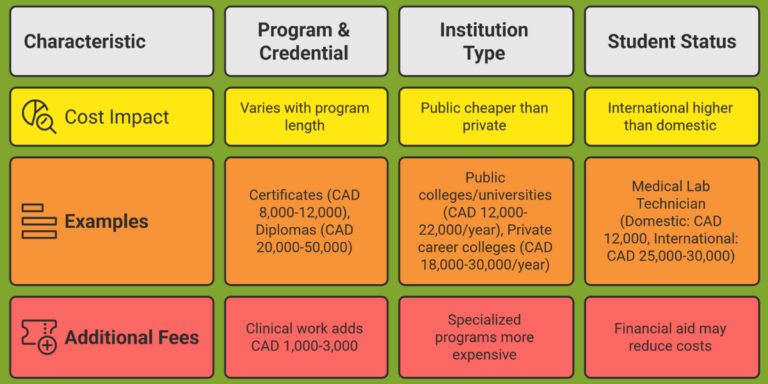
When considering the cost of medical courses in Canada, several factors contribute to the significant price differences between programs. Tuition and other expenses can change depending on where, what, and how you study.

Type of Program and Credential

The kind of credential has a big impact on cost. Short-term certificate programs are quicker and less expensive to complete than longer diploma or degree options. Here’s a breakdown of average program costs by credential type:

  • Medical Assistant Course / Pharmacy Assistant Certificate Course (under 1 year): CAD 8,000 – 12,000 total
  • Diploma in Practical Nursing (2 years): CAD 20,000 – 50,000 total
  • Diagnostic Medical Sonography Diploma Program (2 years): CAD 25,000 – 50,000 total
  • Physiotherapist Assistant & Occupational Therapist Assistant Diploma: CAD 12,000 – 22,000
  • Diploma in Healthcare Management: CAD 15,000 – 25,000

Programs like Physiotherapist Assistant & Occupational Therapist Assistant, or a Diploma in Healthcare Management, often include clinical work, adding CAD 1,000 – 3,000 in lab and practicum fees to the total expense.

Note: Tuition estimates listed here can differ based on delivery mode, program updates, and local policies. Always verify with your chosen institution.

Type of Institution (Public vs. Private)

Where you study matters. Public colleges and universities usually have lower tuition rates than private career schools. Here is a breakdown of average tuition costs by institution type:

  • Public Colleges/Universities: CAD 12,000 – 22,000 per year
  • Private Career Colleges: CAD 18,000 – 30,000 per year
  • Specialized Private Programs (e.g., Medical Esthetics, Acupuncture): CAD 25,000 – 40,000 total program cost

Private institutions may offer fast-track or niche programs like Medical Esthetics Diploma Programs or Acupuncture Diploma Training Programs, which tend to be more expensive due to specialized training and shorter durations.

Note: Public and private college fees are influenced by program format and funding structures. Check institutional websites for current rates.

Domestic vs. International Student Tuition

One of the biggest pricing differences lies between domestic and international students. International students often pay one and a half to three times more than Canadian citizens or residents. Here is a breakdown of sample tuition costs by student type:

Medical Laboratory Technician Training Program

  • Domestic: CAD 12,000
  • International: CAD 25,000–30,000

Registered Massage Therapist Program

  • Domestic: CAD 15,000–20,000
  • International: CAD 25,000–35,000

Pharmacy Technician Diploma

  • Domestic: CAD 15,000–18,000
  • International: CAD 25,000–32,000

Some institutions offer financial support, scholarships, or tailored entry pathways to help ease the cost for international learners.

Note: International tuition policies are subject to frequent changes. For precise figures, consult the admissions department of each school.

Average Tuition Costs for Medical and Health Care Diplomas & Certificates

Average Tuition Costs for Medical and Health Care Diplomas & Certificates

Tuition costs can vary widely between programs. Here’s a breakdown of typical fees for some of the most sought-after health care courses in Canada.

General Cost Estimates

  • Undergraduate diploma programs: CAD 15,000 to 36,000 per year
  • Health Care Assistant certificate programs: Free in select provinces or up to CAD 9,518 annually
  • Diploma in Practical Nursing: CAD 10,000 to 40,000 per year
  • Pharmacy Technician Diploma: Around CAD 17,049 per year
  • Medical Laboratory Technician Training Program: CAD 9,575 to 18,825 per year

Total costs over the course of study may range from CAD 20,000 to 80,000, depending on program length and institution.

Note: These costs serve as broad guidelines. Confirm current fees directly with your intended college or program advisor.

Other In-Demand Medical Diploma Programs

  • Medical Assistant Course Cost: CAD 8,000 to 18,000 per year
  • Physiotherapist Assistant & Occupational Therapist Assistant: CAD 12,000 to 22,000 per year
  • Medical Office Administration Diploma Program: CAD 8,000 to 16,000 per year
  • Diagnostic Cardiac Sonography Diploma Program: CAD 20,000 to 25,000 per year
  • Diagnostic Medical Sonography Diploma Program: CAD 22,000 to 25,000 per year
  • Acupuncture Diploma Training Program: CAD 15,000 to 20,000 per year
  • Registered Massage Therapist Program: CAD 15,000 to 25,000 per year
  • Personal Support Worker Program: CAD 8,000 to 12,000 per year

These medical diploma programs for international students often include additional registration, lab, and administrative fees ranging from CAD 500 to 2,000.

Note: Fees can vary from year to year and depend on your province and chosen college. Refer to official sources for accurate data.

Online and Hybrid Healthcare Programs: Are They Cheaper?
Online and Hybrid Healthcare Programs: Are They Cheaper?

Online learning continues to gain popularity, offering increased flexibility and accessibility. For students considering online healthcare programs, affordability is another strong advantage.

Tuition Savings and Accessibility

Online healthcare programs often cost 10 to 30 percent less than traditional classroom-based programs. Here is a breakdown of typical savings:

  • In-person Medical Office Administration Diploma Program: CAD 15,000
  • Online version: CAD 10,000 – 12,000 → Savings: CAD 3,000 – 5,000
  • Relocation and commuting costs saved: CAD 5,000 – 10,000 annually
  • Total potential savings with online format: CAD 8,000 – 15,000 per year

For those balancing work or family, these programs are a practical way to lower healthcare costs in Canada.

Note: Online program pricing may vary by institution and access to resources. Please confirm with the program provider.

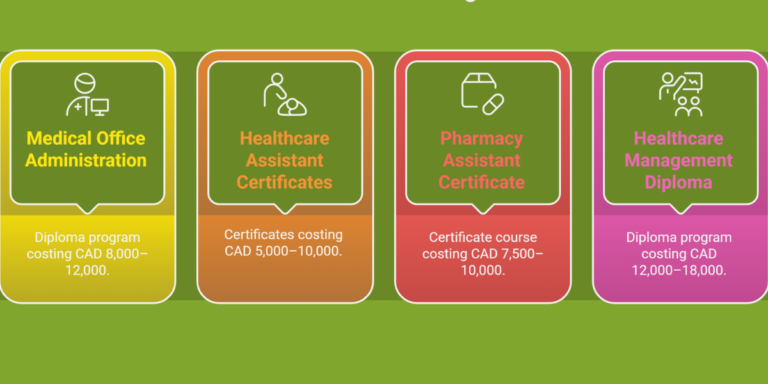
Popular Online Programs

Some well-regarded online offerings include:

  • Medical Office Administration Diploma Program: CAD 8,000–12,000
  • Healthcare assistant certificates: CAD 5,000–10,000
  • Pharmacy Assistant Certificate Course: CAD 7,500–10,000
  • Diploma in Healthcare Management Fees: CAD 12,000–18,000

These programs match the curriculum and value of in-person courses while reducing costs and improving accessibility.

Note: Tuition amounts listed reflect commonly available ranges and may not include all fees. Always confirm with the online program provider.

Connect with Us for Details on the Medical Health Care Courses and Diplomas in Canada

Textbooks, Supplies, and Additional Expenses

Textbooks, Supplies, and Additional Expenses

Education expenses don’t stop at tuition. Supplies, textbooks, and practicum fees add to the cost of training in health care.

Textbook Costs in Canada

Students usually spend between CAD 800 and 1,500 per year on textbooks. Here is a breakdown of typical textbook expenses:

  • General textbooks for healthcare courses: CAD 100 – 200 each
  • Specialized texts for medical programs (e.g., sonography, esthetics): CAD 250 – 300 each
  • Annual textbook budget: CAD 800 – 1,500
  • Savings options: Used books, rental programs, or e-book versions

Courses like the Diagnostic Medical Sonography Diploma Program or the Medical Esthetics Diploma Program often require multiple specialized texts, which can increase the annual textbook budget significantly.

Note: Textbook prices are approximate and may vary by course edition and format. Check your course syllabus or college bookstore.

Equipment and Clinical Supplies

Programs such as the Medical Laboratory Technician Training Program or the Registered Massage Therapist Program often require tools like stethoscopes, scrubs, lab kits, and personal equipment. Here’s a breakdown of typical equipment and supply costs:

  • Stethoscope: CAD 80 – 150
  • Lab coat/scrubs: CAD 60 – 120
  • Medical/lab kits: CAD 100 – 250
  • Software or simulation tools (if applicable): CAD 50 – 200
  • Total estimated equipment cost per student: CAD 300 – 600

Some institutions include these items in tuition fees, while others require separate purchases by the student.

Note: Equipment costs vary based on program type and institutional requirements. Always request a materials list for up-to-date pricing.

Licensing and Practicum Fees

Many programs include unpaid clinical placements. These provide valuable experience but require students to plan for expenses while not earning income. Here’s a breakdown of typical practicum and licensing costs:

  • Living expenses during unpaid practicum: CAD 2,000 – 5,000 (depending on duration and location)
  • Certification exam fees: CAD 300 – 1,000 (varies by profession)
  • Travel to practicum sites (if off-campus): CAD 100 – 500
  • Uniforms or additional insurance (if required): CAD 50 – 200

These should all be considered as part of the total healthcare certification cost in Canada.

Note: Licensing and practicum-related costs depend on program structure and location. Consult your school for exact figures.

Living Expenses While Studying in Canada

Living Expenses While Studying in Canada

Living costs are a major consideration for students planning to attend medical health programs. From rent to transit, expenses can vary by city and lifestyle.

Monthly Living Costs

Most students need between CAD 900 and 1,500 per month to cover housing, food, transportation, phone, and personal expenses. Here’s a breakdown of typical monthly living costs:

  • Rent (Toronto/Vancouver): CAD 800 – 1,200
  • Rent (Winnipeg/Halifax or smaller cities): CAD 500 – 900
  • Food and groceries: CAD 300 – 500
  • Transit pass: CAD 80 – 120
  • Phone and internet: CAD 50 – 100
  • Personal/miscellaneous expenses: CAD 100 – 300

These figures may vary depending on lifestyle, housing choice, and city, but they help estimate monthly budgeting for students in Canada.

Total Annual Cost (Tuition + Living)

  • Domestic students: CAD 18,000 to 35,000 annually
  • International students: CAD 25,000 to 60,000 annually

When exploring affordable medical courses in Canada, it’s important to calculate the full cost of attendance, not just tuition. Including supplies, books, and housing gives a more accurate budget.

Average Cost of University Courses and Medical School in Canada

Average Cost of University Courses and Medical School in Canada

University degrees and medical school programs involve a different level of investment. These options are ideal for students pursuing licensed professional paths.

University Courses

Health-related university courses usually cost between CAD 500 and 1,500 each. Here’s a breakdown of associated costs:

  • Cost per course: CAD 500 – 1,500
  • Full-time semester tuition: CAD 6,000 – 12,000
  • Annual university tuition (two semesters): CAD 12,000 – 24,000
  • Additional lab/clinical fees (if applicable): CAD 300 – 1,000 per course

Classes with labs or clinical training tend to be more expensive. These courses serve as building blocks for many careers in medical health programs.

Average Tuition for Medical School in Canada

  • Domestic students: CAD 12,000 to 28,000 per year
  • International students: CAD 25,000 to 70,000 per year

Over four to five years, total tuition costs range from CAD 60,000 to 150,000 for domestic students and CAD 120,000 to 300,000 for international students. Additional living and exam costs apply.

Cost Comparisons by Province

Cost Comparisons by Province

Program costs and living expenses vary across Canadian provinces. Regional comparisons can help students choose a location that fits their budget.

Ontario and BC

Ontario and British Columbia offer a broad range of medical diploma programs for international students. Here’s a breakdown of typical costs in these provinces:

  • Tuition (per year): CAD 15,000 – 30,000
  • Rent (shared accommodation): CAD 800 – 1,200/month
  • Utilities and Internet: CAD 100 – 150/month
  • Groceries and food: CAD 300 – 500/month
  • Public transportation: CAD 100 – 150/month
  • Total estimated living expenses: CAD 1,200 – 1,800/month or CAD 14,400 – 21,600/year

Higher demand and urban cost of living contribute to elevated tuition and expenses in cities like Toronto and Vancouver.

Alberta and the Prairies

In Alberta, programs like Health Care Assistant certificate training are sometimes subsidized. Here’s a breakdown of typical costs in Alberta and the Prairie provinces:

  • Health Care Assistant Program Tuition: CAD 6,000 – 12,000 per year (may be subsidized)
  • Rent (shared or student housing): CAD 500 – 900/month
  • Utilities and Internet: CAD 80 – 120/month
  • Groceries and food: CAD 250 – 400/month
  • Transportation (public transit): CAD 70 – 110/month
  • Total estimated living expenses: CAD 800 – 1,100/month or CAD 9,600 – 13,200/year

Lower rent and cost of living in the Prairie provinces help reduce the overall Canadian healthcare program’s tuition burden.

Quebec and Atlantic Provinces

Quebec offers low tuition, especially in French-language institutions. Here’s a breakdown of typical education and living costs in Quebec and the Atlantic provinces:

  • Tuition (Quebec – domestic students): CAD 3,000 – 9,000/year
  • Tuition (Quebec – international students): CAD 10,000 – 17,000/year
  • Rent (shared or student housing): CAD 500 – 800/month
  • Utilities and Internet: CAD 80 – 120/month
  • Groceries and food: CAD 250 – 400/month
  • Transportation: CAD 60 – 100/month
  • Total estimated living expenses: CAD 900 – 1,200/month or CAD 10,800 – 14,400/year
  • Total annual cost (including tuition): CAD 18,000 – 28,000/year

The Atlantic provinces, such as Nova Scotia and New Brunswick, offer similar programs and costs, making them attractive for budget-conscious students.

Scholarships, Government Support, and Financial Aid

Scholarships, Government Support, and Financial Aid

Financial assistance makes education more accessible. Many students can reduce college healthcare fees in Canada through government or institutional support.

Canadian Financial Aid Options

Domestic students can apply for grants and loans through programs like OSAP, Alberta Student Aid, or StudentAid BC. Here’s a breakdown of typical financial support amounts:

  • OSAP (Ontario): Up to CAD 12,000 – 15,000/year depending on need and program
  • Alberta Student Aid: Up to CAD 10,000 – 13,300/year (loan and grant combined)
  • StudentAid BC: CAD 7,000 – 12,000/year
  • Eligible uses: Tuition, textbooks, and living expenses for programs like the Pharmacy Assistant Certificate Course and Medical Assistant Course

These funds often provide enough coverage for full tuition or a large portion of education-related costs.

Institutional Scholarships and Bursaries

Colleges often provide need-based and merit-based awards that help reduce education costs. Here’s a breakdown of typical scholarship amounts:

  • General scholarship range: CAD 500 – 5,000 per year
  • Medical Laboratory Technician Training Program scholarships: CAD 1,000 – 3,000
  • Nursing program scholarships: CAD 1,500 – 4,000
  • Pharmacy program scholarships: CAD 2,000 – 5,000

Students in high-demand fields like Medical Laboratory Technician Training Program, Nursing, or Pharmacy frequently qualify for additional funding, making these programs more accessible.

International Student Support

International students may qualify for entrance scholarships, bursaries, or work-study programs. Here’s a breakdown of common cost-saving opportunities:

  • Entrance scholarships: CAD 1,000 – 5,000/year depending on merit and institution
  • Bursaries (need-based): CAD 500 – 3,000/year
  • Work-study program earnings: CAD 3,000 – 6,000/year
  • Employer sponsorships or tuition reimbursement: CAD 2,000 – 10,000/year (based on agreements)

These supports can significantly reduce the financial burden of medical diploma programs for international students.

Are Healthcare Diplomas Worth the Investment?

Are Healthcare Diplomas Worth the Investment?

Healthcare diplomas in Canada offer excellent value for students looking to quickly enter a growing industry. These programs tend to be shorter and more affordable than full university degrees, yet they lead to strong job prospects and competitive salaries. Here’s a closer look at what makes them a worthwhile investment:

Job Placement Rates

Many diploma programs report employment rates of 80% or higher within 6 months of graduation. Fields such as Personal Support Work, Pharmacy Assistance, and Medical Lab Technology have steady demand across provinces.

Entry-Level Salary Ranges

Graduates of healthcare diploma programs can expect to earn between CAD 35,000 and CAD 55,000+ annually in their first job. For example:

  • Medical Office Administrators: CAD 38,000 – 48,000
  • Pharmacy Technicians: CAD 42,000 – 55,000
  • Diagnostic Medical Sonographers: CAD 55,000 – 75,000
  • Personal Support Workers: CAD 35,000 – 45,000
  • Physiotherapist & Occupational Therapist Assistants: CAD 38,000 – 52,000
  • Medical Laboratory Technicians: CAD 40,000 – 55,000
  • Medical Assistants: CAD 36,000 – 48,000
  • Registered Massage Therapists: CAD 45,000 – 60,000
  • Acupuncture Practitioners: CAD 45,000 – 65,000
  • Healthcare Management Assistants: CAD 50,000 – 70,000

Permanent Residency Opportunities

For international students, many programs qualify for post-graduation work permits (PGWP), helping students accumulate Canadian work experience. This can lead to permanent residency under programs like the Canadian Experience Class (CEC) or Provincial Nominee Programs (PNP).

Note: Salary ranges and job outcomes depend on location, employer demand, and specific program credentials. Check with program advisors or job boards for current opportunities.

Choosing the Right Program Based on Budget and Goals

Choosing the Right Program Based on Budget and Goals

Careful planning enables students to select programs that align with both their career and financial goals. It’s essential to consider both the long-term benefits and the initial costs.

Cost vs. Career Outcome

Programs like the Diagnostic Cardiac Sonography Diploma Program, Acupuncture Diploma Training Program, or Pharmacy Assistant Certificate Course require a larger financial investment but often lead to higher earnings and job stability. Graduates can expect entry-level salaries ranging from CAD 45,000 to 75,000 annually, depending on role and location.

Permanent Residency and Work Pathways

Many medical diploma programs for international students qualify for work permits and contribute toward permanent residency eligibility. These added benefits make certain programs more appealing despite higher tuition. Estimated costs may be recovered through full-time employment within 2–3 years post-graduation.

Parent, Advisor, and Professional Considerations

Parents and advisors can help students evaluate all costs, not just tuition. Planning tools, financial aid resources, and clear career goals make a difference when selecting from health care courses in Canada. A detailed budget spreadsheet is helpful for comparing schools, fees, supplies, and housing across multiple programs.

Why Choose Pharma-medical Science College of Canada for Your Healthcare Education?

Why Choose Pharma-medical Science College of Canada for Your Healthcare Education?

Pharma-Medical Science College of Canada offers comprehensive medical health programs with a focus on hands-on learning and industry-relevant skills. Programs meet the needs of the healthcare, pharmaceutical, and food sectors.

Our tuition is competitive, and many students qualify for assistance through OSAP, Second Career, and ODSP. These supports help us offer accessible healthcare education to a diverse student population.

We welcome learners from around the world and offer comprehensive support for medical diploma programs for international students. Our staff helps students navigate study permits, job training, and career placement.

Graduates from our college find employment across the healthcare and pharmaceutical fields. With expert instructors and practical labs, students gain the skills needed for immediate workforce entry. Many of our graduates secure employment within 3–6 months of completing their training.

Conclusion

The cost of medical courses in Canada varies based on program type, location, and student status. From certifications to full medical degrees, options exist for a wide range of goals and budgets.

By reviewing tuition, living expenses, and available aid, students can find affordable medical courses in Canada that support long-term success. Take time to research programs, connect with admissions advisors, and apply early to secure financial support and maximize career opportunities.

Start your healthcare journey with confidence at Pharma-medical Science College of Canada. Apply today and take advantage of our affordable, career-focused programs designed for local and international students.

Summary: Please note that the cost figures throughout this article are approximate and intended to serve as general guidelines. Actual fees may differ based on program duration, location, institution, and delivery method. Always check directly with the program provider for the most current and accurate information.


Connect with Us for Details on the Medical Health Care Courses and Diplomas in Canada

Want to Study a Medical Healthcare Course in Canada? Here Are Some Options to Consider

Feature Image

Understanding how long a pharmacy assistant course is in Canada is critical for planning your educational and career path. Whether you’re a student exploring healthcare roles, a professional considering a career switch, or a parent helping your child make informed decisions, knowing the timeline helps align expectations with goals.

The healthcare and pharmaceutical sectors are growing across the country, increasing demand for skilled pharmacy assistants. With strong job prospects, this role presents a stable and fulfilling career opportunity.

This article is ideal for students, working adults, career advisors, and parents looking to gain insight into training and job requirements in the pharmacy assistant field.

Why Study a Healthcare Course in Canada?

A woman sits at a desk with a laptop, focused on her studies in a healthcare course.

Canada maintains high academic standards and is known for its modern, technology-driven training environments. Students enrolling in a healthcare course in Canada benefit from rigorous curricula, hands-on experience, and exposure to cutting-edge healthcare practices.

The demand for healthcare professionals is growing steadily due to Canada’s aging population and the increasing focus on health and wellness. From rural areas to urban centers, qualified healthcare workers are in high demand, making it an excellent time to pursue a healthcare course in Canada.

Canada also provides attractive post-graduation pathways. Students completing a healthcare course in Canada can apply for Post-Graduation Work Permits (PGWP), which often lead to permanent residency opportunities.

Moreover, the country’s multicultural society and inclusive academic environment make it a welcoming destination for international students. Institutions provide support services to help students integrate and succeed.

Overview of Medical Healthcare Courses and Diplomas in Canada

Microscope and test tubes on a lab bench, representing medical and diagnostic training in healthcare programs.

Diagnostic and Clinical Programs

These programs train students to support physicians in diagnosis and treatment. Popular options include

Diagnostic Medical Sonography Program

The diagnostic medical sonography program is a practical healthcare course in Canada that trains students in ultrasound imaging of internal organs. This course opens career paths in hospitals, clinics, and private diagnostic facilities across the country.

Program Details:

  • Course Name: Diagnostic Medical Sonography Program
  • Program Length: 100 weeks of instructor-led full-time training and clinical practice
  • Practicum Duration: 32 weeks, Local Clinic and hospital
  • Application Fees: CAD $100
  • Tuition Fees: Approximately CAD $18,000 – $22,000 per year
  • IELTS Overall: 6.5 (No band less than 6.0)
  • TOEFL Overall: 88 (with no section below 20)
  • PTE Overall: 58

Diagnostic Cardiac Sonography Program

The diagnostic cardiac sonography program is a specialized healthcare course in Canada that trains students in heart imaging techniques. It prepares graduates for careers in cardiology departments of hospitals, clinics, and diagnostic centers.

Program Details:

  • Course Name: Diagnostic Cardiac Sonography Program
  • Program Length: 78 weeks of instructor-led full-time training and clinical practice
  • Practicum Duration: 22 weeks, Local Clinic and hospital
  • Application Fees: CAD $100
  • Tuition Fees: Approximately CAD $18,000 – $22,000 per year
  • IELTS Overall: 6.5 (No band less than 6.0)
  • TOEFL Overall: 88 (with no section below 20)
  • PTE Overall: 58

Medical Laboratory Technician Program:

The medical laboratory technician program is a foundational healthcare course in Canada that trains students to collect, handle, and analyze clinical samples. This course is ideal for those looking to work in medical labs, hospitals, and diagnostic centers.

Program Details:

  • Course Name: Medical Laboratory Technician Program
  • Program Length: 49 weeks of instructor-led full-time training with Co-op
  • Practicum Duration: 200 hours, Local Clinic and hospital co-op
  • Application Fees: CAD $100
  • Tuition Fees: Approximately CAD $14,000 – $18,000 per year
  • IELTS Overall: 6.0 (minimum 5.5 in each band)
  • TOEFL Overall: 80 (with no section below 18)
  • PTE Overall: 54

Physiotherapist Assistant and Occupational Therapist Assistant:

A group of doctors and nurses standing together in a hospital room, collaborating on patient care and treatment plans.

The physiotherapist assistant and occupational therapist assistant program is a practical healthcare course in Canada that equips students to support licensed therapists in rehab settings. Graduates work in hospitals, rehabilitation centers, and long-term care facilities.

Program Details:

  • Course Name: Physiotherapist Assistant Program, Occupational Therapist Assistant
  • Program Length: 48 weeks (1105 hours) instructor-led full-time training with Co-op
  • Practicum Duration: 320 hours in physiotherapy clinics and rehabilitation centers
  • Application Fees: CAD $100
  • Tuition Fees: Approximately CAD $16,000 – $20,000 per year
  • IELTS Overall: 6.5 (No band less than 6.0)
  • TOEFL Overall: 88 (with no section below 20)
  • PTE Overall: 58

Each of these is a valuable healthcare course in Canada, offering strong job prospects and professional development.

Patient and Personal Care Programs

These courses emphasize direct patient interaction and care:

Personal Support Worker Program  (PSW):

The personal support worker program (PSW) is a vital healthcare course in Canada that trains students to support elderly and disabled individuals with daily living activities in homes and long-term care settings.

Program Details:

  • Course Name: Personal Support Worker Program (PSW)
  • Program Length: 28 weeks (700 hours), instructor-led full-time training with co-op
  • Practicum Duration: 310 hours, co-op placement in both a long-term care facility and a community facility
  • Application Fees: CAD $100
  • Tuition Fees: Approximately CAD $12,000 – $16,000
  • IELTS Overall: 6.0 (minimum 5.5 in each band)
  • TOEFL Overall: 80 (with no section below 18)
  • PTE Overall: 54

Massage Therapy Diploma Program (RMT):

A group of women receiving therapeutic massages in a serene room, promoting relaxation and wellness.

The massage therapy diploma program is a specialized healthcare course in Canada designed to teach therapeutic massage techniques that aid in rehabilitation. Graduates are equipped to work in clinics, wellness centers, and physiotherapy practices.

Program Details:

  • Course Name: Massage Therapy Diploma Program (RMT)
  • Program Length: Full Time, 88 weeks of instructor-led full-time training
  • Clinic Practice: 315 hours at a college Massage clinic
  • Application Fees: CAD $100
  • Tuition Fees: Approximately CAD $14,000 – $18,000 per year
  • IELTS Overall: 6.0 (minimum 5.5 in each band)
  • TOEFL Overall: 80 (with no section below 18)
  • PTE Overall: 54

Acupuncture:

The acupuncture program is a holistic healthcare course in Canada designed to train students in traditional Eastern therapies. It’s in high demand across wellness centers, clinics, and integrative health practices.

Program Details:

  • Course Name: Acupuncture
  • Program Length: 89 weeks (2200 hours) instructor-led full-time training
  • Clinic Practice: 600 hours at a college Acupuncture clinic
  • Application Fees: CAD $100
  • Tuition Fees: Approximately CAD $15,000 – $20,000 per year
  • IELTS Overall: 6.5 (No band less than 6.0)
  • TOEFL Overall: 88 (with no section below 20)
  • PTE Overall: 58

Medical Esthetics Diploma:

The medical esthetician diploma is a specialized healthcare course in Canada that blends cosmetic procedures with clinical skincare knowledge. It prepares students for careers in dermatology clinics, medical spas, and wellness centers.

Program Details:

  • Course Name: Medical Esthetics Diploma
  • Program Length: 66 weeks (1350 hours) instructor-led full-time training
  • Clinic Practice: On College Medical and Esthetics clinic
  • Application Fees: CAD $100
  • Tuition Fees: Approximately CAD $13,000 – $17,000 per year
  • IELTS Overall: 6.0 (minimum 5.5 in each band)
  • TOEFL Overall: 80 (with no section below 18)
  • PTE Overall: 54

Choosing a healthcare course in Canada from this category is ideal for those passionate about patient care and holistic health.

Pharmacy and Healthcare Office Programs

Four students engaged in a discussion at a table, each using a laptop, focused on their pharmacy and healthcare studies.

For those interested in administrative or pharmaceutical roles:

Pharmacy Assistant:

The pharmacy assistant program is a practical healthcare course in Canada that prepares students to assist pharmacists with medication dispensing, inventory control, and patient communication in pharmacies and healthcare settings.

Program Details:

  • Course Name: Pharmacy Assistant Program
  • Program Length: 34 weeks (900 hours) instructor-led full-time training with Co-op
  • Practicum Duration: 6 weeks, for a total of 240 hours
  • Application Fees: CAD $100
  • Tuition Fees: Approximately CAD $13,000 – $16,000
  • IELTS Overall: 6.0 (minimum 5.5 in each band)
  • TOEFL Overall: 80 (with no section below 18)
  • PTE Overall: 54

Medical Office Administration Diploma Program:

The medical office administration diploma program is a foundational healthcare course in Canada focused on training students in administrative tasks like medical billing, scheduling, and patient records management in healthcare environments.

Program Details:

  • Course Name: Medical Office Administration Diploma Program
  • Program Length: 40 weeks (970 hours) instructor-led full-time training with Co-op
  • Practicum Duration: 6 weeks, for a total of 240 hours
  • Application Fees: CAD $100
  • Tuition Fees: Approximately CAD $12,000 – $15,000
  • IELTS Overall: 6.0 (minimum 5.5 in each band)
  • TOEFL Overall: 80 (with no section below 18)
  • PTE Overall: 54

These are great entry points into the healthcare system and are in demand across clinics and hospitals.

Connect with Us for Details on the Medical Healthcare Course in Canada

Food, Cosmetic Science & Pharmaceutical Courses in Canada

A unique subset of healthcare education focuses on food science and pharmaceutical production. Students can explore options such as:

Food, Nutrition and Health Diploma:

The Food, Nutrition, and Health Diploma program is a science-based healthcare course in Canada focused on dietary planning, public health, and nutrition science, preparing students for work in the healthcare, wellness, and food industry sectors.

Program Details:

  • Course Name: Food, Nutrition and Health Diploma
  • Program Length: 48 weeks (1001 hours) instructor-led full-time training
  • Application Fees: CAD $100
  • Tuition Fees: Approximately CAD $15,000 – $20,000 per year
  • IELTS Overall: 6.5 (No band less than 6.0)
  • TOEFL Overall: 88 (with no section below 20)
  • PTE Overall: 58

Food Safety & Quality:

A woman in a lab coat holds a paper displaying a food safety chart, emphasizing quality control in the food industry.

The Food Safety & Quality program is a specialized healthcare course in Canada that focuses on food regulations and quality control. It prepares students for roles in food inspection, safety compliance, and regulatory affairs in the food industry.

Program Details:

  • Course Name: Food Safety & Quality
  • Program Length: 40 weeks (810 hours) instructor-led full-time training
  • Practicum Duration: Hands-on practice in a college laboratory
  • Application Fees: CAD $100
  • Tuition Fees: Approximately CAD $14,000 – $18,000 per year
  • IELTS Overall: 6.5 (No band less than 6.0)
  • TOEFL Overall: 88 (with no section below 20)
  • PTE Overall: 58

Pharmaceutical Quality Assurance & Quality Control:

A person in a lab coat holds two test tubes, symbolizing pharmaceutical quality assurance and control in a lab setting.

The pharmaceutical quality assurance & quality control program is a career-focused healthcare course in Canada that emphasizes maintaining drug safety during manufacturing. Graduates are trained for roles in pharmaceutical labs, QA departments, and regulatory settings.

Program Details:

  • Course Name: Pharmaceutical Quality Assurance & Quality Control
  • Program Length: 46 weeks (920 hours), instructor-led full-time training
  • Practicum: Hands-on practice in a college laboratory
  • Application Fees: CAD $100
  • Tuition Fees: Approximately CAD $14,000 – $18,000 per year
  • IELTS Overall: 6.5 (No band less than 6.0)
  • TOEFL Overall: 88 (with no section below 20)
  • PTE Overall: 58

Pharmaceutical Quality Assurance & Regulatory Affairs:

The pharmaceutical quality assurance & regulatory affairs program is a compliance-focused healthcare course in Canada that prepares students to manage drug regulations and industry standards in pharmaceutical companies and health agencies.

Program Details:

  • Course Name: Pharmaceutical Quality Assurance & Regulatory Affairs
  • Program Length: 28 weeks (560 hours), instructor-led full-time training
  • Application Fees: CAD $100
  • Tuition Fees: Approximately CAD $14,000 – $18,000 per year
  • IELTS Overall: 6.5 (No band less than 6.0)
  • TOEFL Overall: 88 (with no section below 20)
  • PTE Overall: 58

Pharmaceutical Manufacturing Technology:

The pharmaceutical manufacturing technology program is a technical healthcare course in Canada focused on drug production techniques, preparing students for careers in pharmaceutical manufacturing facilities and quality control labs.

Program Details:

  • Course Name: Pharmaceutical Manufacturing Technology
  • Program Length: 43 weeks (950 hours), instructor-led, theoretical and practical full-time training
  • Practicum: Hands-on practice in Manufacturing Laboratory
  • Application Fees: CAD $100
  • Tuition Fees: Approximately CAD $14,000 – $18,000 per year
  • IELTS Overall: 6.5 (No band less than 6.0)
  • TOEFL Overall: 88 (with no section below 20)
  • PTE Overall: 58

Pharmaceutical Quality Control Technician Program:

The pharmaceutical quality control program is a specialized healthcare course in Canada focused on testing and validating product quality before market release. It prepares students for roles in pharmaceutical labs, QA departments, and manufacturing compliance.

Program Details:

  • Course Name: Pharmaceutical Quality Control Technician Program
  • Program Length: 26 weeks (520 hours) instructor-led full-time training
  • Practicum: Hands-on practice in a college laboratory
  • Application Fees: CAD $100
  • Tuition Fees: Approximately CAD $14,000 – $18,000 per year
  • IELTS Overall: 6.5 (No band less than 6.0)
  • TOEFL Overall: 88 (with no section below 20)
  • PTE Overall: 58

These programs are among the most technical and specialized healthcare courses in Canada, combining science with regulation.

Community & Human Services Diploma Programs

Community-oriented programs serve vulnerable populations and support social well-being:

Community Service Worker:

The community service worker program is a community-focused healthcare course in Canada that trains students to support vulnerable populations through roles in shelters, support centers, and outreach organizations.

Program Details:

  • Course Name: Community Service Worker
  • Program Length: 36 weeks (850 hours) instructor-led full-time training with Co-op
  • Practicum Duration: 8 weeks, for a total of 280 hours
  • Application Fees: CAD $100
  • Tuition Fees: Approximately CAD $12,000 – $16,000
  • IELTS Overall: 6.0 (minimum 5.5 in each band)
  • TOEFL Overall: 80 (with no section below 18)
  • PTE Overall: 54

Early Childcare Assistant:

A woman and a child sit together on a couch, engaged in a nurturing and supportive moment.

The early childcare assistant program is a career-oriented healthcare course in Canada that prepares students to work with children in early education and care settings, such as daycare centers and preschools.

Program Details:

  • Course Name: Early Childcare Assistant
  • Program Length: 36 weeks (845 hours), instructor-led full-time training With Co-op
  • Practicum Duration: 8 weeks, for a total of 320 hours
  • Application Fees: CAD $100
  • Tuition Fees: Approximately CAD $12,000 – $15,000
  • IELTS Overall: 6.0 (minimum 5.5 in each band)
  • TOEFL Overall: 80 (with no section below 18)
  • PTE Overall: 54

Advanced Esthetics Diploma:

The advanced esthetics diploma program is a specialized healthcare course in Canada that merges advanced skincare techniques with client service skills for careers in medical spas, dermatology clinics, and cosmetic practices.

Program Details:

  • Course Name: Advanced Esthetics Diploma
  • Program Length: 42 weeks (1020 hours) instructor-led full-time training
  • Clinic Practice: On the college’s Medical and Esthetics clinic
  • Application Fees: CAD $100
  • Tuition Fees: Approximately CAD $13,000 – $17,000 per year
  • IELTS Overall: 6.0 (minimum 5.5 in each band)
  • TOEFL Overall: 80 (with no section below 18)
  • PTE Overall: 54

For those drawn to social impact, these represent a rewarding type of healthcare course in Canada.

Choosing the Right Healthcare Course in Canada

A group of nurses stands together in front of a large window, smiling and dressed in scrubs, showcasing teamwork in healthcare.

It’s important to align your choice of program with your long-term career goals. Are you interested in working in clinical settings, administrative offices, research labs, or wellness centers? A healthcare course in Canada can help you explore all these avenues.

Program duration and certification requirements vary, so consider the length and outcome of the course. Some programs require licensing exams or further bridging education.

Hands-on training is a cornerstone of Canadian healthcare education. Look for programs offering internships, practicums, or co-op placements to gain real-world experience.

Lastly, factor in the cost of tuition, housing, and living expenses. These can vary significantly across provinces. A healthcare course in Canada in a smaller city may offer lower costs than in major urban centers.

Admissions Process and Requirements

A group of nurses stands together in front of a large window, smiling and dressed in scrubs, showcasing teamwork in healthcare.

Admission to a healthcare course in Canada typically requires:

  • A high school diploma with a strong background in science and math
  • English language proficiency scores (IELTS, TOEFL, or equivalent)
  • Additional documents like police checks, immunization records, and medical forms for clinical placements

Many institutions offer scholarships, bursaries, and financial aid to both domestic and international students. Always check application deadlines, which can differ by program and college.

International Student Considerations

International students must apply for a study permit and ensure their program qualifies for a Post-Graduation Work Permit (PGWP). A healthcare course in Canada that meets PGWP criteria can provide a pathway to permanent residency.

Life in Canada offers safety, cultural diversity, and high-quality healthcare. International students can access campus support services, health coverage, and language assistance.

Preparing for cultural adjustment, weather differences, and academic expectations will help ensure a smooth transition into your healthcare course in Canada.

Job Outlook and Career Pathways

Graduates of a healthcare course in Canada can pursue roles like

  • Personal Support Worker (PSW)
  • Medical Laboratory Technician
  • Pharmacy Assistant
  • Sonographer
  • Community Support Worker

Salaries vary by profession and region, but most healthcare roles offer strong growth potential. Licensing bodies may require international professionals to take bridging programs.

The PGWP allows students to gain Canadian work experience post-graduation. This work experience is often critical when applying for permanent residency under immigration streams like the Canadian Experience Class (CEC).

Why Choose Pharma – Medical Science College of Canada

A woman proudly holds her ultrasound photo, smiling as she shares her pregnancy news.

Pharma-Medical Science College of Canada is a trusted name in Ontario’s private career college landscape. Specializing in healthcare education, we offer a wide range of diploma programs tailored to today’s job market.

Our graduates are recognized across North America’s healthcare and pharmaceutical industries. We provide financial aid options such as OSAP, Second Career, and more.

With experienced instructors and high job placement rates, our students are well-prepared for real-world careers. As a top destination for international applicants, we also support skilled newcomers integrating into the Canadian workforce.

If you’re considering a healthcare course in Canada, Pharma-Medical Science College should be on your list.

Conclusion

Canada offers a wide array of healthcare education opportunities for domestic and international students alike. Whether you’re interested in diagnostics, patient care, pharmaceuticals, or community services, there’s a healthcare course in Canada that fits your career aspirations.

Start early by researching programs, comparing costs, and reviewing admission requirements. A successful and fulfilling career in healthcare starts with careful planning and informed choices.

Ready to take the next step? Contact our program advisors today or start your application for a healthcare course in Canada that could change your life.

Connect with Us for Details on the Medical Healthcare Course in Canada

The Path to Cardiac Sonography: What You’ll Learn in Our Program

Feature Image

At Pharma Medical Science College of Canada, we know the value of trained professionals in the healthcare sector. One of the most sought-after professions these days is cardiac sonography, which is a specialty in the medical field and very essential for the diagnosis and evaluation of heart conditions. Cardiac sonographers use advanced ultrasound technology to create images of the heart, helping cardiologists identify cardiovascular diseases and develop treatment plans.

Our accredited cardiac sonography program is designed to equip students with the knowledge, hands-on training, and clinical experience necessary to excel in this profession. The program is structured to provide in-depth theoretical learning, practical training, and real-world experience that ensures students are job-ready upon graduation. If you’re considering a career in medical imaging and want to make a difference in people’s lives, our diagnostic cardiac sonography program is the right choice.

What Does a Cardiac Sonographer Do?

A doctor examines a man during a medical consultation, focusing on heart health and treatment options.

Cardiac sonographers, also known as echocardiographers, specialize in using ultrasound technology to examine the heart’s structure and function. They closely work with cardiologists and other health care practitioners to detect and diagnose heart-related conditions. Their primary responsibility is to operate ultrasound equipment, capture high-quality images, and interpret results to assist in patient diagnosis and treatment planning.

Key Responsibilities:

  • Conducting echocardiograms, which are non-invasive ultrasound tests used to assess heart health.
  • Performing Doppler studies to evaluate blood flow and detect abnormalities in circulation.
  • Assisting in stress echocardiography, where patients undergo imaging while exercising to assess heart function under stress conditions.
  • Explaining procedures to patients, answering their concerns, and ensuring they feel comfortable during examinations.
  • Documenting findings and working closely with cardiologists to provide accurate reports that aid in medical diagnosis.
  • Maintaining and troubleshooting ultrasound equipment to ensure it remains in optimal working condition.

“Tip: Effective communication is a crucial skill for cardiac sonographers, helping them guide patients through procedures with clarity. Learn more in our guide on How to Choose the Right Cardiac Sonography Program.”

Our diagnostic cardiac sonography program provides a well-rounded education that includes comprehensive theoretical knowledge, hands-on training, and real-world clinical experience. This creates confidence and the expertise of graduates to enter the workforce.

Comprehensive Theoretical Knowledge

A man and a woman converse in a hospital room, likely discussing cardiac health or treatment options.

Understanding the science behind cardiac sonography is the foundation of this profession. Our curriculum covers:

  • Anatomy and Physiology of the Heart: Learning about the structure and function of the heart, including its chambers, valves, and blood vessels, to better understand normal and abnormal cardiac functions.
  • Cardiovascular Diseases: Studying common heart conditions such as coronary artery disease, heart failure, valvular disorders, and congenital heart defects.
  • Medical Terminology and Ethics: Familiarizing students with medical language, patient confidentiality, and ethical considerations in healthcare.
  • Ultrasound Physics and Instrumentation: Gaining an in-depth understanding of how ultrasound waves work, image optimization, and safety precautions in sonography.

“Note: A deep understanding of cardiovascular anatomy is crucial for accurate ultrasound imaging and diagnosing abnormalities. Explore more in our guide on Your Journey to Diagnostic Cardiac Sonography Careers.”

Hands-on training with Advanced Equipment

A man stands beside a mannequin and a laptop, illustrating hands-on training in cardiac sonography with advanced equipment.

Practical experience is a core component of our accredited cardiac sonography program. Students get to work with state-of-the-art ultrasound machines and develop essential technical skills in a controlled learning environment before entering clinical settings.

Key Practical Skills:

  • Operating ultrasound machines and adjusting settings for optimal image clarity and diagnostic accuracy.
  • Conducting Doppler imaging to assess blood flow patterns and detect obstructions or abnormalities.
  • Identifying different types of echocardiographic views, including parasternal, apical, and subcostal views.
  • Practicing scanning techniques to detect heart abnormalities with precision while minimizing patient discomfort.
  • Learning how to handle real-time imaging challenges, including variations in patient anatomy and movement during procedures.

“Tip: Developing strong hand-eye coordination is essential for performing echocardiograms, as precise probe positioning directly impacts accuracy. Learn more in our guide on the best cardiac sonography program.”

Connect with Us for Details on the Cardiac Sonography Program

Clinical Internship & Practical Application

A woman receives a back massage, highlighting relaxation and wellness in a clinical setting.

One of the most valuable aspects of our diagnostic cardiac sonography program is the clinical internship. This is to allow students experience in the healthcare settings and allow them to get hands-on information under the guidance of health professionals.

What to Expect in Clinical Training:

  • Gaining experience in hospitals, diagnostic labs, and imaging centers, where students interact with real patients.
  • Observing and assisting licensed cardiac sonographers in performing echocardiograms and Doppler studies.
  • Developing critical thinking skills by analyzing imaging results and preparing preliminary reports.
  • Understanding the workflow of a cardiac imaging department and collaborating with cardiologists and other healthcare providers.
  • Learning how to interact professionally with patients and the medical staff concerning proper care and effective communication.

“Note: Hands-on clinical training is essential for certification eligibility, as most credentialing organizations require documented scanning experience.”

Industry-Recognized Certification & Career Prospects

Graduating from an accredited cardiac sonography program is the first step toward becoming a certified cardiac sonographer. Certification is often required by employers and ensures that professionals meet industry standards.

Certification Options:

  • American Registry for Diagnostic Medical Sonography (ARDMS): The Registered Diagnostic Cardiac Sonographer (RDCS) credential.
  • Cardiovascular Credentialing International (CCI): The Registered Cardiac Sonographer (RCS) certification.
  • Sonography Canada: Certification for professionals practicing in Canada.

Career Opportunities in Cardiac Sonography:

  • Hospitals: Working in specialized cardiology departments, assisting in diagnosing and monitoring heart diseases.
  • Diagnostic Imaging Centers: Conducting outpatient echocardiograms and cardiovascular assessments.
  • Private Clinics: Providing cardiac imaging services in non-hospital settings.
  • Research and Education: Teaching and training future cardiac sonographers while contributing to medical advancements.
  • Travel Sonography: Offering temporary sonography services at different healthcare facilities nationwide.

Job Market & Salary Expectations

With the increasing demand for cardiac sonographers, the job market remains strong. According to industry data:

City-Wise Salary Expectations for Cardiac Sonographers:

The median annual salary for cardiac sonographers varies depending on location and experience:

  • Toronto, ON: $80,000 – $95,000 (higher salaries with specialization).
  • Vancouver, BC: $78,000 – $92,000 (opportunities in both public and private sectors).
  • Calgary, AB: $75,000 – $90,000 (growing demand in hospitals and diagnostic centers).
  • Montreal, QC: $70,000 – $85,000 (strong bilingual job market).
  • Ottawa, ON: $72,000 – $88,000 (steady demand in government-funded healthcare facilities).
  • Winnipeg, MB: $65,000 – $80,000 (opportunities in specialized cardiac imaging).

Experienced professionals can earn even higher salaries, depending on specialization and additional certifications. Employment in this field is expected to grow by 14% over the next decade, outpacing many other healthcare professions.

“Tip: Pursuing additional certifications in specialized areas, such as pediatric echocardiography, can enhance job prospects and salary potential.”

Conclusion

Choosing a career in cardiac sonography means stepping into a field that blends cutting-edge technology with compassionate patient care. Our accredited cardiac sonography program at Pharma Medical Science College of Canada provides an in-depth education covering theoretical knowledge, hands-on training, and real-world clinical experience. Graduates are well-prepared to diagnose cardiovascular conditions using ultrasound technology and work alongside medical professionals in hospitals, diagnostic labs, and private clinics. With industry-recognized certifications and high job demand, this program opens doors to a rewarding and stable career in the healthcare sector.

Take the first step toward your future! Contact us today to learn more and enroll in our accredited cardiac sonography program.

Connect with Us for Details on the Cardiac Sonography Program

Don’t Miss Out: Explore Pharma-Medical College’s 2025 Class Schedule

Feature Image

Advancing your skills in healthcare and related industries is crucial for building a rewarding career. Whether you’re starting a new path or looking to enhance your expertise, selecting the right educational institution is essential. We at Pharma Medical Science College of Canada stand proud for delivering great quality education and support for diverse career options.

Our college is a trusted healthcare training leader, providing flexible scheduling and a student-focused approach while having campuses located in both Etobicoke and Toronto that ensure students get all the support and resources to reach excellence.

Why Choose Pharma-Medical Science College?

A group of doctors engaged in discussion around a table, collaborating on healthcare strategies and patient care solutions.

Comprehensive Program Variety

We have various programs that cater to all stages of careers. Whether you’re enrolling in the Personal Support Worker Program Toronto or the Advanced Esthetics Program, our courses prepare you for high-demand roles in the healthcare and wellness sectors. Programs like the Medical Office Administration Program and Pharmacy Assistant Program Toronto provide focused training that opens doors to meaningful careers.

Flexible Enrollment Options

Our continuous monthly intakes ensure you can begin your education when it suits you best. This flexibility is ideal for students balancing personal and professional responsibilities, whether they’re joining the Medical Laboratory Technician Program Toronto or the Personal Support Worker Program Etobicoke.

Convenient Locations

With campuses in Etobicoke and Toronto, accessibility is at the core of what we offer. From the Medical Esthetics Program Toronto to the Community Service Worker Program, you’ll find a supportive environment tailored to your success.

Key Programs and Start Dates in 2025

Healthcare Programs

Our healthcare programs are carefully designed to meet diverse interests and career aspirations to ensure that our students gain all the practical knowledge and skills they need to function effectively in healthcare.

Personal Support Worker Program: 

This program educates students in providing fundamental care and support to a person in all settings, ranging from long-term care facilities to private homes. The personal support worker program focuses on patient safety, effective communication, and hands-on care practices to ensure students are prepared for real-world challenges.

  • Start Dates: February 3, February 17

Medical Office Administration Program: 

Perfect for those aiming to support the administrative operations of healthcare settings, this program covers medical billing, scheduling, and patient record management. Graduates of the medical office administration program are highly sought after by clinics, hospitals, and private practices for their organization and attention to detail.

  • Start Date: February 3

Pharmacy Assistant Program Toronto:

Gain specialized skills to assist pharmacists with tasks such as dispensing medication, managing inventory, and providing exceptional customer service. This pharmacy assistant program blends theoretical and practical learning, preparing students for dynamic roles in retail pharmacies and healthcare facilities.

  • Start Date: February 17

Medical Laboratory Technician Program:

The Medical Laboratory Technician Program will feature major laboratory procedures, sample collection, and diagnostic testing, where students receive practical experience working under actual conditions in laboratories. Graduates of the Medical Laboratory Technician Program find rewarding careers in diagnostic labs, hospitals, and research institutions where their skills are in high demand.

  • Start Date: February 3

Nutrition, Food & Health Program:

Aimed at those passionate about promoting healthier lifestyles, Nutrition, Food & Health Program dives into nutrition science and dietary planning. Graduates are equipped to work in public health initiatives or community health programs, where they can make a meaningful difference.

  • Start Date: February 3

Food Safety & Quality Program (Evening Classes):

The Food Safety & Quality Program equips students with expertise in maintaining food safety and quality standards. This training encompasses essential areas in regulatory compliance and quality assurance that are critical to responsibilities in the food industries and public health sectors.

  • Start Date: February 3

Specialized Healthcare Training

A woman provides a therapeutic massage to a patient, showcasing specialized healthcare training in action.

Advanced programs at Pharma-Medical Science College of Canada provide in-depth training for students who wish to specialize in growing healthcare fields. Each program is formulated to provide the graduates with an absolute theoretical set of knowledge and hands-on experience in performing the work, which will culminate in a highly impactful career.

Diagnostic Medical Sonography Program:

Dive into the field of diagnostic imaging by learning to operate advanced ultrasound equipment and assist physicians in interpreting critical medical data. This diagnostic medical sonography program readies students for rewarding careers in hospitals, imaging centers, and diagnostic clinics, where their skills are indispensable for patients’ care and medical evaluations.

  • Start Date: April 7

Diagnostic Cardiac Sonography Program:

Focused on heart imaging and echocardiography techniques, this program trains students to specialize in cardiac diagnostics. From operating specialized equipment to analyzing heart health, the diagnostic cardiac sonography program is ideal for careers in cardiac units and cardiovascular diagnostic centers.

  • Start Date: March 3

Acupuncture Diploma Program:

The acupuncture Diploma Program brings together traditional Chinese medicine and modern healthcare applications and provides expertise in acupuncture techniques. Students gain skills to work in wellness centers, clinics, or private practices, making the acupuncture diploma program a holistic addition to healthcare services.

  • Start Date: March 22

Registered Massage Therapy:

The Registered Massage Therapy program provides training in therapeutic massage techniques, anatomy, and client care to address recovery and wellness. Graduates of Registered Massage Therapy excel in rehabilitation centers, wellness clinics, and independent practices. Building a career in patient care that lays foundations based on the improvement of people’s physical well-being is possible with the course.

  • Start Date: February 21

Connect with Us for Details on the Medical Healthcare Programs

Community and Early Childhood Support Programs

A diverse group of individuals in a room, proudly displaying cards, symbolizing community support and early childhood programs.

Prepare for careers with a meaningful impact on individuals and communities through our robust support programs. The programs provide the tools that allow students to support development and deliver services in a given field.

Early Childcare Assistant Program:

This program emphasizes the development of nurturing environments for children by focusing on communication, child development, and activity planning. Graduates of the early childcare assistant program are equipped to work in childcare centers, kindergartens, or private childcare settings.

  • Start Date: February 3

Community Service Worker Program:

Address social issues and connect individuals with essential services through this program. Trained through this community service worker program in advocacy, mental health support, and community outreach, students become crucial people in social services and community organizations.

Esthetics and Advanced Skills Training

A group of graduates seated at tables, celebrating their achievements in esthetics and advanced skills training.

The esthetics and beauty industry continues to thrive, offering numerous career opportunities for those with advanced training. Our programs combine theory and practical experience to ensure students stand out in this competitive field.

Advanced Esthetics Program:

Gain expertise in advanced skincare techniques, professional makeup artistry, and innovative beauty treatments. This advanced esthetics program is designed for individuals who aspire to work in high-end spas and salons or establish independent practices.

Medical Esthetics Program:

Specializes in non-invasive cosmetic treatments such as laser therapy, microdermabrasion, and chemical peels. The medical esthetics program provides hands-on training using the latest equipment, preparing students for careers in medical spas and clinics where healthcare and beauty intersect.

How to Enroll

A group of nurses engaged in discussion while seated around a table, fostering collaboration and teamwork.

The enrollment process at Pharma-Medical Science College of Canada is designed to be straightforward and accessible.

  1. Online Application: Visit our website to fill out the application form. Provide all required documentation for a smooth process.
  2. Campus Visits or Virtual Consultations: Schedule a visit to our Etobicoke or Toronto campus for a personalized tour. Virtual consultations are also available.
  3. Speak with an Advisor: Our advisors can guide you in selecting the right program, whether it’s the pharmacy assistant program or the personal support worker program.

Conclusion

Choosing the right education builds a fulfilling career. All our programs at Pharma-Medical Science College of Canada are relevant to preparing students for career success in the industries of health care, community support, and wellness. Whether you’re interested in the Medical Office Administration Program, the Advanced Esthetics Program, or the PSW, there is a program for you.

Don’t wait to take the next step. Look for our 2025 class schedule today and begin your way toward an exciting and fulfilling career.

Contact us now to learn more about programs like the community service worker program or medical laboratory technician program and secure your spot!

Connect with Us for Details on the Medical Healthcare Programs

🏆 Pharma-Medical Wins Toronto Readers Choice 2024 Diamond Award! 🌟

Feature Image

We’re thrilled to announce that Pharma-Medical Science College of Canada has been recognized as a Diamond Winner in the Toronto Readers Choice Awards 2024 for the second consecutive year! This prestigious honor is a reflection of the unwavering support from our students, faculty, and community who have continuously placed their trust in us.

Winning the Diamond Award two years in a row is a proud moment for all of us. It reaffirms our commitment to providing top-tier education, fostering a supportive learning environment, and
empowering our students to achieve their goals.

This recognition wouldn’t have been possible without the thousands of votes cast by our incredible community. Your belief in Pharma-Medical has propelled us to stand among the best in Toronto, and we are deeply grateful for your trust and confidence.

A Note from Dean Kathy Lee

Dear Pharma-Medical Students and Supporters,

It is an honor to witness our college being recognized yet again as a Diamond Winner. This award belongs to all of us—students, faculty, and staff—who have worked tirelessly to uphold the values of excellence and integrity in education.

Your dedication, hard work, and trust inspire us every day to aim higher. Together, we’ve built a community that supports each other, grows together, and shines brightly on the education
landscape.

Thank you for believing in Pharma-Medical Science College of Canada. Let’s continue to achieve greatness together!

Warm regards,
Kathy Lee
Dean, Pharma-Medical Science College of Canada

As we celebrate this milestone, we remain
committed to helping our students excel and grow. Thank you for making us
Toronto’s top choice once again! Let’s continue this journey of excellence!

Connect with Us for Details on the Medical And Healthcare Program

A Deep Dive into Medical Esthetician Programs in Ontario

Featured Image

Are you interested in a career that combines beauty and healthcare? The field of medical esthetics is booming as more people want to look good and keep their skin healthy. This exciting area focuses on improving the skin through safe, non-surgical treatments. As new technologies develop, there’s a growing need for skilled professionals.

If you’re looking to start or advance your career, the Medical Esthetics Diploma at Pharma Medical Science College of Canada offers the perfect blend of classroom learning and real-world practice. Our program is designed to prepare you for a successful career by teaching you everything you need to know, from the basics to the more advanced techniques.

In this blog, we’ll take you through what it means to be a medical esthetician, the benefits of this career, and what our program involves. We’ll also show you why our diploma is a great choice if you’re serious about making a difference in the beauty and healthcare industries. Ready to learn more about how you can get started? Let’s dive in!

Who is a Medical Esthetician?

A Medical Esthetician, also known as a clinical esthetician or paramedical esthetician, is a skincare specialist trained to perform advanced skincare treatments that go beyond the scope of traditional esthetics. They work under the supervision of dermatologists, plastic surgeons, or other healthcare professionals to provide medical-grade skincare treatments that improve the health and appearance of the skin.

A woman receiving a haircut from a machine at a medical esthetician's clinic.

What are the Key Responsibilities of a Medical Esthetician?

Medical Estheticians are responsible for a variety of tasks and procedures that help patients achieve healthier, more aesthetically pleasing skin. These responsibilities include:

  • Skin Treatments: They perform a range of skin treatments, such as chemical peels, microdermabrasion, and acne treatments. These procedures help exfoliate, rejuvenate, and treat various skin conditions.
  • Laser Therapies: Medical Estheticians are trained to use laser technology for hair removal, skin resurfacing, and treatment of pigmentation issues. Laser therapies require specialized knowledge and skill to ensure patient safety and efficacy.
  • Cosmetic Procedures: They assist in or perform non-invasive cosmetic procedures like microneedling, dermaplaning, and light therapy. These procedures aim to enhance the skin’s appearance and texture.
  • Patient Assessment: They assess patients’ skin conditions, discuss their concerns, and recommend appropriate treatments. This involves a thorough understanding of skin anatomy, conditions, and treatment options.
  • Post-Treatment Care: Medical Estheticians provide guidance on post-treatment care to ensure the best outcomes and minimize any potential side effects or complications.

What is The Importance of Medical Estheticians in the Healthcare and Beauty Industry?

Medical Estheticians play a crucial role in both the healthcare and beauty industries. Their work bridges the gap between medical treatments and cosmetic enhancements, providing patients with comprehensive skincare solutions. The importance of Medical Estheticians includes:

  • Improving Skin Health: Through advanced treatments and therapies, Medical Estheticians help patients achieve healthier skin, addressing issues such as acne, scars, hyperpigmentation, and signs of aging.
  • Enhancing Aesthetic Appearance: By performing cosmetic procedures, they help improve the aesthetic appearance of the skin, boosting patients’ confidence and self-esteem.
  • Supporting Medical Professionals: They work alongside dermatologists and plastic surgeons, providing essential support and expertise in skincare, which enhances patient care and treatment outcomes.
  • Educating Patients: Medical Estheticians educate patients on proper skincare routines, product usage, and lifestyle changes that can positively impact their skin health.

The comprehensive training provided by programs such as the Medical Esthetics Diploma at Pharma Medical Science College ensures that aspiring Medical Estheticians are equipped with the necessary skills and knowledge to excel in this rewarding field.

Benefits of Becoming a Medical Esthetician

The field of medical esthetics is experiencing significant growth due to the increasing demand for advanced skincare treatments and non-invasive cosmetic procedures. As a result, career opportunities for medical estheticians are plentiful and diverse. According to the Bureau of Labor Statistics, employment for skin care specialists, including medical estheticians, is projected to grow much faster than the average for all occupations over the next decade. This growth is driven by the rising popularity of anti-aging treatments and the broader acceptance of esthetic procedures.

Medical estheticians can find stable employment in various settings, including dermatology clinics, medical spas, plastic surgery offices, and wellness centers. The growing emphasis on wellness and self-care ensures a continuous demand for skilled professionals in this field.

“Research indicates that 70% of clients report significant improvements in skin conditions after treatments with licensed estheticians, underlining the clinical effectiveness of professional skincare.”

Personal and Professional Benefits

Becoming a medical esthetician offers numerous personal and professional benefits. One significant advantage is the lucrative career potential; medical estheticians often enjoy higher earning potential compared to traditional estheticians due to their specialized skills and the medical nature of their work. With experience and additional certifications, they can command premium salaries and advance to senior or managerial positions.

Another benefit is job satisfaction. Working as a medical esthetician provides a high level of job satisfaction as they help clients improve their skin health and appearance, which can be incredibly rewarding. Many take pride in making a positive impact on their clients’ lives, boosting their confidence and well-being.

Additionally, the field of medical esthetics is constantly evolving with new technologies and treatments, offering continuous opportunities for lifelong learning and professional development. Staying updated with the latest trends and techniques can lead to career advancement and specialization in areas such as laser treatments or advanced cosmetic procedures.

Diverse Work Environments

Medical estheticians have the flexibility to work in a variety of environments, each offering unique experiences and opportunities:

  • Clinics and Medical Spas: Many medical estheticians work in dermatology clinics or medical spas, where they perform advanced skincare treatments under the supervision of healthcare professionals. These settings provide a clinical environment focused on medical-grade treatments and procedures.
  • Plastic Surgery Offices: In plastic surgery offices, medical estheticians assist surgeons by providing pre- and post-operative skincare treatments. They play a crucial role in preparing patients for surgery and aiding in their recovery process, ensuring optimal skin health and healing.
  • Wellness and Day Spas: Some medical estheticians work in wellness and day spas, offering a combination of therapeutic and cosmetic services. These environments emphasize relaxation and holistic well-being, allowing estheticians to provide a range of treatments, from facials to body wraps.
  • Private Practices: Experienced medical estheticians may choose to open their own private practices, offering specialized services and building a loyal client base. This path provides greater autonomy and the potential for higher earnings.
A medical staff member using a laptop and stethoscope.

“A 2019 industry survey found that 40% of medical estheticians work in dermatology clinics, 25% in medical spas, and 15% in plastic surgery offices, illustrating the variety of employment settings available.”

The Medical Esthetics Diploma program at Pharma Medical Science College of Canada equips students with the skills and knowledge needed to excel in these diverse work environments. The program’s comprehensive curriculum and hands-on training prepare graduates for a successful and rewarding career in the dynamic field of medical esthetics.

What Does a Medical Esthetician Program Cover?

A comprehensive Medical Esthetician program covers a wide range of subjects to ensure students acquire both theoretical knowledge and practical skills. Typical coursework includes:

  • Anatomy and Physiology: Understanding the structure and function of the human body, with a focus on the skin, hair, and nails. This includes studying the integumentary system, which is essential for performing advanced skincare treatments.
  • Dermatology Fundamentals: Learning about various skin conditions, diseases, and disorders. This knowledge is crucial for identifying and treating different skin issues effectively.
  • Skincare Techniques: Training in basic and advanced skincare procedures, including facials, exfoliation, and moisturizing treatments. Students learn how to tailor treatments to individual skin types and conditions.
A medical staff member using a laptop and stethoscope.
  • Laser and Light Therapy: Instruction on the safe use of laser and light-based technologies for hair removal, skin resurfacing, and pigmentation correction. This includes understanding laser physics, safety protocols, and treatment techniques.
  • Chemical Peels and Microdermabrasion: Learning how to perform chemical peels and microdermabrasion treatments, which are essential for exfoliating and rejuvenating the skin.
  • Cosmetic Procedures: Training in non-invasive cosmetic procedures such as microneedling, dermaplaning, and injectable treatments (if allowed by local regulations).
  • Client Consultation and Assessment: Developing skills in conducting thorough skin assessments, understanding client needs, and creating personalized treatment plans.

“Studies show that programs combining hands-on training with classroom instruction increase competence and job readiness by over 50% compared to traditional, lecture-based courses.”

Why Choose a Medical Esthetics Diploma Program in Ontario?

Pursuing a career in medical esthetics? Ontario is a prime location to start your professional journey. Here are some compelling reasons to enroll in a Medical Esthetics Diploma program here:

  • Industry-Leading Curriculum: The programs in Ontario are crafted to align with the latest advancements in skincare and non-surgical aesthetic treatments. Students learn a blend of dermatological theories and practical cosmetic procedures, ensuring a comprehensive educational experience.
  • Hands-On Experience: These programs emphasize practical training, where students use cutting-edge technology and refine their techniques under the guidance of experienced professionals. This direct exposure prepares students to enter the workforce with confidence and competence.
  • High Demand for Skilled Professionals: Ontario’s vibrant healthcare and beauty sectors create numerous opportunities for qualified medical estheticians. Graduates find diverse employment opportunities across dermatology clinics, medical spas, and cosmetic surgery centers.
  • Supportive Learning Environment: With a commitment to student success, these programs offer small class sizes, personalized instruction, and extensive support services that help students thrive both academically and professionally.
  • Career Flexibility: A diploma in medical esthetics from Ontario provides a versatile foundation, enabling graduates to pursue various paths in the beauty and healthcare fields. The skills acquired are adaptable to changing industry needs, offering career longevity and growth.
  • Networking Opportunities: Studying in Ontario, a hub for medical esthetics, facilitates connections with industry leaders and peers. These relationships can lead to future job prospects and professional collaborations, enhancing career development.

Enrolling in a Medical Esthetics Diploma program in Ontario not only prepares you for a thriving career but also situates you in the center of Canada’s bustling beauty and healthcare industries. If you’re aiming for a rewarding and dynamic career path, this is where you can turn your ambitions into reality.

Connect with Us for Details on the Medical Esthetician Programs

Pharma Medical School of Canada: A Top Choice

Pharma Medical Science College of Canada is renowned for its commitment to providing top-tier healthcare education. With a focus on preparing students for successful careers in various medical and healthcare fields, the college offers a range of programs designed to meet the highest industry standards. The institution prides itself on fostering a learning environment that emphasizes practical experience, academic excellence, and professional development.

Unique Features and Strengths of the Medical Esthetics Diploma Program at Pharma Medical

The Medical Esthetics Diploma program at Pharma Medical Science College stands out due to its comprehensive approach to education and training. Key features include:

Integrated Curriculum: The program combines theoretical knowledge with practical skills, ensuring that students are well-prepared for the demands of the medical esthetics industry.

Experienced Faculty: The faculty comprises seasoned professionals with extensive industry experience, providing students with valuable insights and mentorship.

Hands-on Training: Emphasis is placed on practical experience, with students gaining hands-on training in state-of-the-art facilities equipped with the latest skincare technologies.

A website design for a medical aesthetics clinic showcasing modern, clean layout and professional imagery.

Overview of the Curriculum, Faculty Expertise, and Student Support Services

Curriculum:

The Medical Esthetics Diploma program covers a wide range of topics essential for a successful career in medical esthetics, including:

  • Anatomy and Physiology: Understanding the structure and function of the skin and related systems.
  • Dermatology: Learning about various skin conditions and their treatments.
  • Skincare Techniques: Training in advanced skin care procedures such as chemical peels, microdermabrasion, and laser therapies.
  • Client Consultation: Developing skills for assessing clients’ skin conditions and recommending appropriate treatments.

Faculty Expertise:

The faculty at Pharma Medical Science College consists of experienced professionals who bring real-world expertise to the classroom. Their extensive background in medical esthetics ensures that students receive a high-quality education that is both relevant and practical.

Student Support Services:

Pharma Medical Science College offers a range of support services to help students succeed, including:

  • Career Counseling: Assisting students with job placement and career development.
  • Academic Support: Providing tutoring and additional resources for academic success.
  • Personal Support: Offering counseling and support services to address students’ personal and professional needs.

Highlight the Modern Facilities and Equipment Available to Students

Pharma Medical Science College boasts modern facilities that are equipped with the latest technologies used in the medical esthetics field. This includes:

  • Advanced Skin Care Equipment: Students have access to cutting-edge devices used in treatments such as laser therapy, microdermabrasion, and chemical peels.
  • Simulation Labs: These labs provide a realistic environment where students can practice their skills on mannequins and real clients under supervision.
  • Resource Center: A comprehensive library and online resources offer students access to the latest research and industry publications.
A group of professionals collaborating on a project at a conference table.

By choosing Pharma Medical Science College of Canada, students are assured of receiving an education that combines academic rigor with practical experience, all within a supportive and well-equipped learning environment. This prepares graduates to excel in the dynamic and rewarding field of medical esthetics.

How to Apply for a Medical Esthetician Program

Step-by-Step Guide on the Application Process for Prospective Students

  1. Research Programs:

Start by researching various Medical Esthetician programs to find the one that best fits your career goals and educational needs. Consider factors such as curriculum, faculty, facilities, and location.

  1. Visit the College Website:

Visit the official website of the institution offering the program. For example, you can find detailed information about the Medical Esthetics Diploma program at Pharma Medical Science College.

  1. Check Admission Requirements:

Review the admission requirements for the program. This typically includes prerequisites, necessary documentation, and any other criteria set by the institution.

  1. Prepare Necessary Documents:
  • Gather all required documents. These usually include:
  • High school diploma or equivalent.
  • Transcripts from previous educational institutions.
  • Proof of English language proficiency (if applicable).
  • Letters of recommendation.
  • A resume or CV.
  1. Complete the Application Form:

Fill out the application form available on the college’s website. Ensure that all sections are completed accurately and thoroughly.

  1. Submit Application Fee:

Pay any required application fees. This can usually be done online through the institution’s website.

  1. Submit Your Application:

Submit the completed application form along with all necessary documentation by the specified deadline. Online submission is often available and preferred.

  1. Schedule an Interview (if required):

Some programs may require an interview as part of the admissions process. If so, schedule your interview promptly and prepare accordingly.

Detailed Information on Admission Requirements

Admission requirements for a Medical Esthetician program may vary by institution but generally include the following:

  • Educational Background: A high school diploma or equivalent is typically required. Some programs may also require specific coursework in subjects such as biology or chemistry.
  • Transcripts: Official transcripts from all previously attended educational institutions.
  • English Language Proficiency: Proof of English language proficiency for non-native speakers. This can be demonstrated through tests such as TOEFL or IELTS.
  • Letters of Recommendation: Letters from teachers, employers, or other professionals who can attest to your qualifications and suitability for the program.
  • Personal Statement: A personal statement outlining your interest in the field of medical esthetics, career goals, and reasons for choosing the program.
  • Resume/CV: An up-to-date resume or CV detailing your educational background, work experience, and any relevant skills or certifications.

Conclusion

Embarking on a career as a medical esthetician is both a promising and fulfilling path, offering numerous opportunities for personal and professional growth. With the increasing demand for advanced skincare treatments and the expanding scope of the beauty and healthcare industries, becoming a skilled medical esthetician is more relevant than ever. Comprehensive training programs, such as the Medical Esthetics Diploma at Pharma Medical Science College of Canada, equip students with the essential skills and knowledge required to excel in this dynamic field.

Through a detailed exploration of medical esthetician roles, responsibilities, and the benefits of pursuing this career, this blog has aimed to provide prospective students with valuable insights. By choosing a program that offers rigorous coursework, hands-on training, and state-of-the-art facilities, students can ensure they are well-prepared to meet industry standards and succeed in various work environments.

Pharma Medical Science College of Canada stands out as a top choice for those aspiring to enter the medical esthetics field, thanks to its commitment to excellence in education, experienced faculty, and supportive learning environment. With the right education and training, you can embark on a rewarding career that not only enhances the health and beauty of clients but also brings personal job satisfaction and professional stability.

Ready to embark on a rewarding career in medical esthetics? Apply to the Medical Esthetics Diploma program at Pharma Medical Science College of Canada today!

Connect with Us for Details on the Medical Esthetician Programs

6 Rewarding Healthcare Careers You Can Start in Just 10 Months or Less

Featured Image

Due to the growing demands of an aging population and advances in medical technology, the healthcare sector is still expanding quickly. Short-term healthcare programs offer a viable path for those seeking a quick entry into a fulfilling and stable career. These programs, which can be completed in ten months or less, provide the essential training and certifications to begin working in various healthcare roles. This article will explore six rewarding healthcare careers you can embark on through these expedited educational programs.

Pharmacy Assistant Program

Image of two women in a pharmacy shop reviewing a prescription, pharmacy assistants are essential in healthcare environments by aiding pharmacists and customers.

Pharmacy assistants play a vital role in healthcare environments. They support pharmacists by preparing medications, managing inventory, and assisting customers with prescriptions. Their duties often include labeling and packaging medications, maintaining pharmaceutical stock, and processing insurance claims. Pharmacy assistants typically work in pharmacies, hospitals, and healthcare clinics, where they ensure the efficient operation of the pharmacy.

Pharmacy assistants often enjoy the satisfaction of directly helping patients manage their health, making it a rewarding career choice.

Program Details

Depending on the institution, the pharmacy assistant program is designed to be completed within 34 weeks. The curriculum covers topics such as pharmacology, pharmaceutical calculations, and customer service skills. Students also learn about the legal and ethical aspects of pharmacy practice, preparing them for the diverse tasks they will encounter in the field.

Career Prospects

Pharmacy assistants are in high demand due to the growing number of pharmacies and pharmacists’ expanding role in patient care. The job outlook for pharmacy assistants is positive, with steady growth expected over the next decade. Salaries range from $30,000 to $40,000 annually, depending on location and experience. Opportunities for advancement include becoming a certified pharmacy technician or furthering education to become a pharmacist.

Tip: To maximize career opportunities, consider obtaining certification from a recognized body such as the Pharmacy Technician Certification Board (PTCB).

Real-World Applications

Pharmacy assistants often find their roles dynamic and engaging, handling everything from medication preparation to direct customer interaction. For instance, in a busy retail pharmacy, an assistant might spend the morning managing stock and the afternoon assisting customers with prescription pickups. Success stories abound of individuals who started as pharmacy assistants and progressed to more advanced roles within the pharmaceutical field.

Physician Assistants (PAs) are projected to grow 28% from 2021 to 2031, with a median wage of $121,530 annually and $58.43 per hour as of May 2021. On average, the Bureau of Labor Statistics (BLS) anticipates approximately 12,700 new openings for PAs each year.

Work-Life Balance and Flexibility

One significant benefit of working as a pharmacy assistant is the job’s flexibility. Many pharmacies operate extended hours, including nights and weekends, providing opportunities for part-time work or shifts that accommodate personal schedules. This flexibility makes it an attractive option for individuals balancing work with other commitments, such as family or further education.

Note: While the role can be demanding, it offers a great introduction to the healthcare sector, with many assistants using it as a stepping stone to more advanced careers.

Personal Support Workers Program

A PSW assisting an elderly man in bed, providing essential care with personal hygiene, mobility, meal prep, and emotional support.

Personal Support Workers (PSWs) provide essential care to people who need help with daily workouts due to illness, disability, or aging. PSWs work in various settings, including private homes, long-term care facilities, and hospitals. Their responsibilities include assisting with personal hygiene, mobility, meal preparation, and emotional support, ensuring the well-being and comfort of their clients.

PSWs are often the unsung heroes of the healthcare system, delivering crucial care and help to those who need it most.

Program Details

The Personal Support Workers program can typically be completed in 28 weeks. The curriculum covers personal care, safety and mobility, nutrition, and communication skills. Students gain hands-on experience through clinical placements, where they apply their knowledge in real-world settings under the supervision of experienced professionals.

Career Prospects

There is a growing demand for Personal Support Workers due to the aging population and increasing need for home care services. The average annual salary for PSWs ranges from $30,000 to $40,000, with opportunities for higher earnings based on experience and location. Career advancement can include specialized training in palliative care or transitioning to nursing or healthcare management roles.

Tip: Building strong communication skills and developing empathy are key to succeeding as a PSW, as these qualities help you understand and address each client’s unique needs.

Real-World Applications

PSWs play a crucial role in the healthcare system, providing compassionate care and support to those in need. Their daily tasks may include helping clients with bathing, dressing, feeding, and providing companionship and emotional support. Many PSWs find their work deeply rewarding, knowing that they make a significant difference in the lives of their clients.

Making a Difference Every Day

One of the most fulfilling aspects of being a PSW is the direct impact on clients’ quality of life. PSWs build strong relationships with those they care for, offering both physical assistance and emotional support. This personal connection makes the work incredibly meaningful and satisfying.

Note: The role requires physical stamina and emotional resilience, but the rewards of making a tangible difference in someone’s life are immense.

Pharmaceutical Quality Control Program

A group of pharmaceutical quality control professionals in lab coats working on a computer.

Pharmaceutical quality control professionals ensure that pharmaceutical products meet established quality, safety, and efficacy standards. They conduct various tests and inspections throughout production to detect and address any issues. This role is crucial for maintaining the integrity of the pharmaceutical supply chain and protecting public health.

Quality control roles are ideal for individuals with a keen eye for detail and a passion for maintaining high standards in healthcare products.

Program Details

The pharmaceutical quality control program is typically completed in 26 weeks. The curriculum includes microbiology, chemistry, laboratory techniques, and regulatory standards courses. Students learn how to perform quality tests, analyze results, and implement corrective actions to ensure compliance with industry regulations.

Career Prospects

Quality control professionals are in high demand in the pharmaceutical industry, and their job prospects are solid due to the ongoing need for stringent quality assurance measures. The average annual salary for quality control technicians is around $50,000, and there are opportunities for advancement to higher-level positions such as quality assurance manager or regulatory affairs specialist.

Tip: Gaining experience with different types of laboratory equipment and quality control software can enhance employability and career progression.

Real-World Applications

In a pharmaceutical company, quality control professionals might spend their days conducting laboratory tests, reviewing production processes, and collaborating with other departments to resolve quality issues. Their work ensures that only safe and effective products reach the market, significantly impacting public health.

According to the U.S. Bureau of Labor Statistics (BLS), employment of quality control inspectors is projected to decline by 4% from 2022 to 2032.

High Demand in the Growing Pharmaceutical Industry

The pharmaceutical industry is expanding rapidly, with new drugs and treatments being developed continuously. This growth drives the demand for skilled quality control professionals who can ensure that products meet all safety and efficacy standards. Working in this field offers job security and the opportunity to be at the forefront of medical advancements.

Note: Staying updated with the latest regulatory changes and industry trends is crucial for success in this field.

Medical Office Admin Program

Medical office administrators are necessary for the efficient operation of healthcare facilities. They manage administrative duties such as scheduling appointments, maintaining patient records, and handling insurance claims. This role requires strong organizational skills and managing multiple tasks simultaneously.

The role of a medical office administrator is ideal for those who enjoy working in a dynamic environment and interacting with patients.

Program Details

The medical office admin program can be completed in 40 weeks. The curriculum covers medical billing and coding, office management, and healthcare laws and ethics. Students also learn about electronic health records (EHR) systems and develop the administrative skills needed to run a medical office effectively.

Career Prospects

Medical office administrators are in high demand across different healthcare settings, including hospitals, clinics, and private practices. The average annual salary for this role is around $40,000, with the potential for higher earnings based on experience and location. Advancement opportunities include becoming a medical office manager or transitioning to specialized administrative roles.

Tip: Employers highly value proficiency in EHR systems and medical billing software, which can enhance job prospects.

Connect with Us for Details on the Healthcare Program

Real-World Applications

Medical office administrators ensure the smooth operation of healthcare facilities by managing patient flow, coordinating appointments, and handling administrative tasks. They often serve as patients’ first point of contact, making excellent communication and customer service skills essential.

The U.S. Bureau of Labor Statistics projects a 25% increase in employment for medical and health services managers from 2021 to 2031, much faster than the average for all occupations.

Diverse Job Opportunities Across Healthcare Settings

Medical office administrators are flexible and can work in various healthcare environments. From bustling hospitals to small private practices, the skills acquired in this program are applicable across many settings, providing a wide range of job opportunities and the potential for specialization.

Note: Strong interpersonal skills are crucial, as medical office administrators often deal with sensitive patient information and must handle it with discretion and professionalism.

Food Safety & Quality Program

Two food safety and quality professionals in lab coats holding a red liquid for safety testing.

Food safety and quality professionals ensure food products’ safety and regulatory compliance. They inspect food production processes, conduct safety tests, and implement quality control measures. This role is essential for protecting public health and maintaining consumer trust in food products.

Food safety professionals are pivotal in preventing foodborne illnesses, making this career challenging and rewarding.

Program Details

The food safety and quality program is typically completed in 40 weeks. The curriculum includes courses in food microbiology, safety regulations, and quality control techniques. Students learn how to conduct food safety audits, analyze food samples, and ensure compliance with industry standards.

Career Prospects

The need for stringent food safety measures and regulatory compliance drives the demand for food safety and quality professionals. The average annual salary for this role is around $55,000, with opportunities for advancement to positions such as quality assurance manager or food safety auditor.

Tip: Staying updated with the latest food safety regulations and obtaining certification from the FDA or USDA can enhance career prospects.

Real-World Applications

In the food industry, safety and quality professionals might work in food manufacturing plants, regulatory agencies, or food service establishments. Their tasks include:

  • Inspecting production lines.
  • Testing food samples for contaminants.
  • Implementing safety protocols to prevent foodborne illnesses.

Essential Role in Public Health and Safety

Food safety and quality professionals are at the forefront of protecting public health by ensuring safe food products. Their work prevents foodborne illnesses and ensures consumers trust what they eat. By maintaining rigorous standards, they play a crucial role in the food supply chain, ensuring products are free from impurities and meet all regulatory requirements.

Note: Attention to detail and a strong understanding of food science are essential skills for success in this field.

Pharmaceutical Quality Assurance & Regulatory Affairs Program

Pharmaceutical quality assurance and regulatory affairs professionals ensure that pharmaceutical products comply with all regulatory requirements and maintain high-quality standards. They oversee the production process, conduct audits, and manage documentation to ensure that products are safe and effective for consumer use.

Program Details

The pharmaceutical quality assurance and regulatory affairs program can be completed in 28 weeks. The curriculum covers regulatory policies, quality control, and compliance strategies. Students learn how to navigate regulatory frameworks and implement quality management systems within pharmaceutical companies.

Professionals in regulatory affairs play a vital role in ensuring that new drugs and treatments are safe and effective, contributing to public health and safety.

Career Prospects

With the pharmaceutical industry continually evolving, there is a growing demand for experts who can ensure compliance with regulatory standards. The average annual salary for this role is around $70,000, with opportunities for advancement to senior roles such as regulatory affairs manager or director.

Real-World Applications

In their daily work, quality assurance and regulatory affairs professionals may conduct internal audits, review production records, and coordinate with regulatory agencies to ensure compliance. Their efforts are crucial for bringing safe and effective pharmaceutical products to market.

Tip: Gaining experience with different regulatory environments and obtaining certifications from recognized bodies can enhance career opportunities.

Increasing Demand for Regulatory Compliance

As regulatory requirements become more stringent, the need for skilled professionals is increasing. Ensuring that products meet all legal and safety standards is important for preserving public trust and avoiding costly recalls or legal issues.

Note: Strong analytical skills and a meticulous approach to detail are crucial for success in regulatory affairs and quality assurance roles.

Your Path to Success at Pharma Medical Science College of Canada

Empowering Your Future in Healthcare

Pharma Medical Science College of Canada is dedicated to providing top-notch education and training in the healthcare field. Our college in Toronto offers programs tailored to the healthcare industry’s growing needs. As a premier pharma medical college, we specialize in preparing students for rewarding careers in pharmacy, Personal support workers, medical office administration, and more.

Why Choose Us?

Our pharma college in Toronto is known for its comprehensive curriculum and hands-on training, ensuring graduates are well-equipped to enter the workforce. We pride ourselves on our state-of-the-art facilities and experienced faculty, who are committed to guiding you every step of the way. Pharma Medical Science College provides the tools and support to succeed, whether you want to start a new career or advance in your current role.

Programs We Offer

From our pharmacy college in Toronto to our specialized medical programs, we offer a variety of courses planned to meet the demands of today’s healthcare professionals. Our programs are structured to provide both theoretical knowledge and practical experience, giving you a competitive edge in the job market.

Conclusion

Short-term healthcare programs offer a swift and effective path to the workforce, providing essential skills and certifications highly valued in various healthcare settings. Whether you’re interested in becoming a pharmacy assistant, diagnostic medical sonographer, or a professional in pharmaceutical quality control, medical office administration, food safety, or regulatory affairs, these programs can help you reach your career goals in less than a year.

Ready to take the next step in your healthcare career? Visit Pharma Medical Science College of Canada to learn more about our programs and how we can help you achieve your professional goals. Contact us today to discuss your future in healthcare and start your journey with us!

Connect with Us for Details on the Healthcare Program

What is the Difference Between an Occupational Therapist Assistant and a Physiotherapist?

Featured Image

Choosing a healthcare career can be incredibly rewarding when the role directly impacts the quality of life for individuals in need. Occupational Therapist Assistants Program (OTAs) and Physiotherapists Program offer the opportunity to contribute significantly to patient care and rehabilitation.

Both careers are essential in helping people overcome physical and functional challenges, ultimately enhancing their independence and well-being. This article explores the roles, educational paths, and daily impacts of physiotherapists and occupational therapist assistants, providing valuable insights for medical students considering these dynamic fields.

What is an Occupational Therapist Assistant?

An Occupational Therapist Assistant (OTA) supports Occupational Therapists in helping patients develop, recover, and improve the skills needed for daily living and working. OTAs are essential in assisting patients with activities of daily living (ADLs), ranging from basic self-care tasks like dressing & eating to more complex activities such as driving or managing finances.

A nurse assisting an elderly man in a wheelchair, demonstrating the fulfilling work of an OTA.

OTAs work with a diverse range of patients, including those recovering from injuries, those with chronic illnesses, and individuals with developmental disabilities. They use therapeutic techniques and adaptive equipment to help patients gain independence & improve their quality of life. The work of an OTA is both challenging and deeply fulfilling.

What is a Physiotherapist?

Physiotherapists, or physical therapists, specialize in assessing, diagnosing, and treating physical impairments, disabilities, and pain. They aim to restore and maximize patients’ physical function and well-being.

Physiotherapists work with many patients, including those recovering from surgery, sports injuries, or chronic conditions such as arthritis. They employ techniques to alleviate pain and improve mobility, including therapeutic exercise, manual therapy, and modalities like ultrasound and electrical stimulation.

Critical Differences Between OTAs and Physiotherapists

While OTAs and Physiotherapists aim to enhance patients’ quality of life, their roles, educational requirements, and approaches to patient care differ significantly.

Educational Paths and Qualifications

Becoming an OTA typically involves completing a two-year associate degree from an accredited program, followed by certification. In Canada, the average annual salary for an OTA ranges from CAD 44,000 to CAD 60,000, making it an accessible and financially rewarding career choice.

In contrast, Physiotherapists usually need a master’s degree in physiotherapy, which generally requires about six years of post-secondary education. This rigorous educational path equips them with the necessary expertise to diagnose and treat complex physical conditions. In Canada, physiotherapists earn an average annual salary between CAD 60,000 and CAD 90,000, reflecting the advanced skills and knowledge required for the role.

Employment for Occupational Therapy Assistants is projected to grow by 35% from 2019 to 2029, far surpassing the average for all occupations.

Approaches to Patient Care

OTAs focus on helping patients perform daily activities independently. They work closely with patients to design personalized intervention plans that enhance their ability to perform tasks essential for daily living. This often involves teaching patients how to use adaptive equipment, modifying their living environments, and providing exercises to improve fine motor skills.

Two physiotherapists shaking hands at a desk in front of a laptop, discussing rehabilitation programs and physical interventions.

Physiotherapists, on the other hand, concentrate on treating physical impairments and pain through physical interventions. They design and implement rehabilitation programs tailored to each patient’s needs, aiming to restore function, reduce pain, and prevent further injury. Their approach often includes hands-on techniques, such as manual therapy and specific exercise regimens, to promote healing and improve physical performance.

Connect with Us for Details on the Occupational Therapist Assistant program

Specializations and Lifelong Learning

Both OTAs and Physiotherapists have opportunities for specialization and continuous professional development. OTAs can specialize in pediatrics, geriatrics, mental health, or hand therapy, allowing them to tailor their careers to their interests and strengths.

Physiotherapists can pursue advanced certifications and specializations in sports medicine, orthopedics, neurology, and cardiovascular physiotherapy. These specializations enhance their expertise and open new career opportunities and pathways for lifelong learning and growth.

The Broader Impact

The demand for rehabilitation and therapy professionals is growing, driven by an aging population & increasing awareness of physical health. According to recent statistics, job satisfaction and career stability in these fields are high, with diverse opportunities available in hospitals, clinics, schools, and private practices.

In Canada, the healthcare sector continues to expand, with a significant need for skilled OTAs and Physiotherapists. This growth provides a stable and promising career outlook for those entering these professions.

Why Choose These Careers?

Embarking on a career journey as an Occupational Therapist Assistant (OTA) or a Physiotherapist extends far beyond financial gain. These professions offer many intrinsic rewards and opportunities that enrich personal and professional lives.

1. Solid Work-Life Balance: 

One of the most enticing factors in pursuing a career as an OTA or Physiotherapist is achieving a solid work-life balance. Unlike some healthcare professions that demand long, unpredictable hours, OTAs and Physiotherapists often have more structured schedules, allowing time to pursue personal interests, spend with family, and engage in hobbies outside work. This balance fosters overall well-being and prevents burnout, ensuring practitioners can maintain their passion and energy for helping others over the long term.

Only 1% of workers in Denmark work over 50 hours per week, highlighting balanced work hours for healthcare professionals like OTAs and Physiotherapists.

2. Opportunities in Various Settings:

The versatility of OTAs and Physiotherapists extends beyond the clinical setting. While many professionals work in hospitals or rehabilitation centers, there are ample opportunities to explore diverse settings such as schools, community centers, nursing homes, and corporate wellness programs.

This diversity keeps the work environment fresh and engaging and allows practitioners to tailor their career paths to their interests and passions. Whether working with children in schools, assisting elderly adults in nursing homes, or supporting athletes in sports clinics, there’s a niche for every practitioner to thrive and make a meaningful impact.

21.6% of OTAs work in schools, showcasing the significant role these professionals play in supporting children’s educational and developmental needs in educational settings.

3. Tangible Difference in People’s Lives:

At the core of both OTA and Physiotherapist roles lies the profound opportunity to make a tangible difference in people’s lives. Every day, practitioners have the privilege of witnessing the transformative power of their interventions as patients regain mobility, independence, and confidence. 

Whether it’s helping a stroke survivor relearn essential daily activities, guiding a patient through post-surgery rehabilitation, or empowering someone to manage chronic pain effectively, the impact of these professions extends far beyond the physical realm. The joy of seeing patients achieve their goals and witnessing their improved quality of life is a constant reminder of the meaningfulness of the work.

87% of patients receiving occupational therapy report significant improvements in their ability to perform daily activities and an enhanced quality of life.

4. Personal and Professional Fulfillment:

For individuals driven by a passion for helping others and a deep-seated interest in healthcare, pursuing a career as an OTA or Physiotherapist offers unparalleled personal and professional fulfillment. The satisfaction derived from knowing that one’s efforts directly contribute to enhancing the well-being and independence of others is immeasurable. Additionally, the continual opportunities for growth, learning, and professional development within these fields ensure practitioners constantly evolve and expand their skill sets, leading to a lifelong journey of fulfillment and impact.

Aspiring professionals looking to follow a career in occupational therapy or physiotherapy can take the first step by exploring educational programs at accredited institutions. These programs provide the necessary knowledge & skills to excel in the field, laying a solid foundation for a rewarding career.

Employment for Occupational Therapy Assistants is projected to grow by 35% from 2019 to 2029, far surpassing the average for all occupations.

Unlock Your Potential with Pharma Medical Science College of Canada

Are you ready to embark on a journey of impact and fulfillment in healthcare? Look no further than Pharma Medical Science College of Canada, your gateway to rewarding careers as an Occupational Therapist Assistant (OTA) or a Physiotherapist.

At Pharma Medical Science College, we are committed to providing top-tier education that equips students with the knowledge, skills & hands-on experience needed to excel in the dynamic fields of occupational therapy and physiotherapy. Our accredited Occupational Therapist Assistant Program (OTA) or a Physiotherapist Program offer comprehensive curricula taught by experienced faculty members committed to nurturing the next generation of healthcare professionals.

By choosing Pharma Medical Science College, you’ll gain access to:

  1. Cutting-Edge Education: Our state-of-the-art facilities and innovative teaching methods confirm that students receive a high-quality education that meets the demands of the maturing healthcare landscape.
  2. Hands-On Training: Through clinical placements, internships, and practical workshops, students can apply their knowledge in real-world settings, gaining invaluable experience and confidence in their skills.
  3. Supportive Community: Join a spirited community of like-minded people who share your fondness for helping others and making a difference in the world. Our supportive faculty & staff are committed to helping you flourish every step of the way.
  4. Career Opportunities: With the healthcare sector experiencing unprecedented growth, there has never been a better time to pursue a career in occupational therapy or physiotherapy. Our programs prepare graduates for career opportunities in hospitals, clinics, schools, rehabilitation centers, and beyond.

Pharma Medical Science College has a program tailored to your needs and aspirations, whether you’re a recent high school graduate, a career changer, or a seasoned specialist looking to raise your skills. Explore our educational programs today and take the first step towards a fulfilling career.

Join Pharma Medical Science College of Canada

At Pharma Medical Science College of Canada, we provide the necessary knowledge, skills, and support to excel in the dynamic fields of occupational therapy and physiotherapy. Our accredited programs lay a solid foundation for a rewarding career, empowering you to make a significant impact in the lives of others.

Conclusion

Occupational Therapist Assistants and Physiotherapists are essential in enhancing patients’ lives, each bringing unique skills and approaches to healthcare. Both professions offer fulfilling career paths marked by personal and professional growth, job stability, and the opportunity to make a significant impact. For medical students considering these dynamic and gratifying fields, now is an excellent time to explore these career options.

Are you ready to make a difference in the lives of others? Explore the rewarding careers of the Occupational Therapist Assistants Program and Physiotherapists Program at Pharma Medical Science College of Canada. Contact us to learn more about our programs & how you can start your journey today.

Connect with Us for Details on the Occupational Therapist Assistant program

Curious About Massage Therapy? Key Steps to Become a Registered Massage Therapist

Woman in green shirt standing in room.

In recent years, Canada has experienced a significant surge in demand for Registered Massage Therapists (RMTs), driven by an increasing recognition within the healthcare sector of the substantial benefits massage therapy offers. This therapy is now routinely included in comprehensive care plans, effectively addressing a range of issues from acute injuries to chronic pain and stress management. Concurrently, there has been a growing shift towards holistic health practices, with a broader societal trend favoring natural and sustainable health solutions. This movement underscores the importance of maintaining balance and wellness through non-invasive, preventive care, positioning massage therapy as a crucial component of holistic health regimes. As more people explore how to become massage therapist professionals in Canada, the field continues to expand, creating promising opportunities for those passionate about wellness and hands-on healing.

A woman sitting at a table with a bottle of lotion, ready to moisturize her skin and enjoy a moment of self-care.

This convergence of traditional and holistic healthcare approaches is reshaping Canada’s wellness and therapy landscape. As RMTs continue to gain recognition for their pivotal role in enhancing physical and mental health, their integration into healthcare is expected to deepen further, aligning with the public’s escalating preference for comprehensive and preventive healthcare solutions. This makes it a fascinating time for those entering the field of massage therapy as they find themselves at the forefront of a significant evolution in healthcare practices.

What is a Registered Massage Therapist?

A Registered Massage Therapist (RMT) is a healthcare professional trained in manipulating the body’s soft tissues, including muscles, connective tissues, tendons, ligaments, and joints. RMTs are certified by regulatory bodies within provinces in Canada, ensuring they meet stringent educational and professional standards. The primary goal of an RMT is to enhance health, aid in the healing process, reduce muscle tension and relieve pain.

Benefits of Pursuing a Career in Massage Therapy

Choosing a Registered Massage Therapist (RMT) career provides a unique combination of personal satisfaction and professional growth. The role offers significant flexibility, allowing RMTs to set their schedules, choose their work environments, and specialize in treating specific types of clients. This autonomy is enhanced by the stable demand for massage therapy, which grows as its health benefits become more widely recognized.

What sets RMTs apart is the abundance of opportunities for continual learning and skill enhancement. This not only elevates the quality of care they provide but also enhances their marketability and potential for career progression. The versatility of the profession, with RMTs working in diverse settings like spas, sports facilities, or clinical environments, ensures a vibrant and stimulating career path.

Connect with Us for Details on the Massage Therapy Program

Fulfillment from Enhancing Client Health and Well-being

The most gratifying aspect of being an RMT is the direct impact on clients’ health and well-being. Massage therapists play a pivotal role in their clients’ health regimes, often providing relief where other medical interventions may not have been fully effective. RMTs help clients manage chronic pain, recover from injuries, reduce stress, and improve overall physical function.

The personal interactions and the visible improvement in clients’ conditions foster a sense of accomplishment and emotional reward. Many therapists report a high level of job satisfaction due to the positive feedback they receive from their clients and the observable results of their treatments.

A couple happily stands in the sunlight, both wearing bright smiles on their faces.

The combination of these personal and professional benefits makes pursuing a career in massage therapy a fulfilling and viable option for many, promising a balanced and rewarding professional life.

Educational Pathway

Becoming a Registered Massage Therapist (RMT) in Canada involves a rigorous educational pathway to equip candidates with the necessary skills and knowledge for effective practice. The journey begins with enrolling in a recognized massage therapy program typically offered at accredited colleges or specialized colleges. These programs adhere to high standards to ensure that graduates are well-prepared to meet the profession’s demands.

These opportunities permit students to apply their academic knowledge in professional settings, tackle real-world problems, and interact with professionals in the field. This practical learning is crucial as it enhances understanding of the material, develops professional networks, and increases employability upon graduation.

Program Specifics: Duration, Coursework, and Clinical Practice Hours

The duration of massage therapy programs can vary, but most are structured as two-year diploma programs. These programs are comprehensive, covering a wide range of topics essential for a successful career in massage therapy:

  • Anatomy and Physiology: Understanding the human body’s structure and functions is foundational.

  • Pathology: Learning about diseases and injuries to better understand client conditions.

  • Massage Techniques: Instruction in various massage methods, including but not limited to Swedish, deep tissue, and sports massage.

  • Ethics and Professional Practice: Covering the legal and ethical responsibilities of being an RMT.

Clinical practice hours are a crucial part of the massage therapy curriculum, where students apply what they’ve learned in real-world settings under supervision. This hands-on training is essential for bridging the gap between theory and practice, helping students gain confidence and refine their skills. Completing these hours is not only required for certification but also crucial for ensuring that graduates can provide safe, effective, and ethical care to their clients.

Skills and Competencies Developed

Enrolling in a Registered Massage Therapist (RMT) program equips students with a broad set of skills that are crucial for their success in the field. These skills include:

  • Assessment Techniques: RMT students learn to conduct thorough assessments, including taking patient histories, performing physical evaluations, and understanding clients’ needs and health conditions. This ability to assess accurately is critical for developing effective treatment plans.
  • Treatment Planning Training: includes learning how to create tailored treatment plans based on the assessment findings. Students learn to consider various factors such as the client’s physical condition, stress levels, and personal health goals.

Importance of Interpersonal Communication and Professional Ethics

  • Interpersonal Communication: Effective communication skills are vital for RMTs. The ability to listen to and understand client concerns, and clearly explain treatment options and recommendations, enhances client trust and treatment efficacy. Good communication also includes non-verbal cues, which can be crucial in a therapeutic setting.
  • Professional Ethics: Ethical practice is fundamental in massage therapy. RMT programs emphasize the importance of maintaining professionalism, confidentiality, and consent in all interactions. Students learn about the ethical considerations and legal requirements relevant to their practice, ensuring they uphold the standards expected in healthcare.

Together, these skills not only prepare students to perform their roles competently but also help in building a sustainable and reputable practice. The blend of technical skills and soft skills ensures that RMTs are well-prepared to meet the diverse needs of their clients while adhering to the highest standards of professional conduct.

Clinical Experience

The clinical practice component of a Registered Massage Therapist (RMT) program is designed to provide students with hands-on, practical experience in a real-world setting. This part of the training is crucial as it bridges the gap between theoretical knowledge acquired through coursework and the practical skills needed for effective therapy.

Types of Settings and Experiences

Students in RMT programs can expect to gain experience in a variety of settings, which may include:

  • College Clinics: Many programs operate their own clinics where students get to work under supervision with real clients. These clinics often serve the public at reduced rates, providing a diverse range of client demographics and conditions.

  • Healthcare Facilities: Some programs have partnerships with hospitals, rehabilitation centers, or elderly care facilities, allowing students to experience a healthcare-focused environment.

  • Sports and Wellness Centers: For those interested in sports therapy, some clinical placements might occur in athletic centers where therapy is provided to athletes or individuals with active lifestyles.

  • Community Outreach Program: Occasionally, RMT programs involve students in community service, such as offering massage services at community events or to underserved populations.

Importance of Hands-on Learning in Real-World Environments

The clinical practice hours are not just a requirement for certification; they are a cornerstone of the educational process for massage therapists. Through this direct experience, students:

  • Apply Learned Techniques: Students practice and refine the massage techniques they have learned in a controlled, supervised environment, gaining confidence in their ability to administer treatments effectively.


  • Develop Professional Skills: Real-world settings help students develop soft skills such as communication, problem-solving, and adaptability. These are essential for success in any healthcare setting.
  • Understand Diverse Client Needs: Exposure to various client cases helps students understand a broad spectrum of physical conditions and wellness goals, enhancing their ability to customize treatments.

  • Receive FeedBack: Instructors and supervisors provide ongoing feedback, which is vital for improving technique and professional conduct.

This component of the RMT program is invaluable, as it ensures graduates are not only knowledgeable but also competent and confident in their skills before they enter the professional world. Hands-on clinical experience solidifies a student’s education and prepares them for the realities of working as a Registered Massage Therapist.

Career Opportunities

Registered Massage Therapist (RMT) program graduates have access to a diverse range of employment opportunities across various sectors, each offering unique benefits and environments. Rehabilitation clinics are ordinary workplaces for RMTs, where they play an essential role in helping patients recover from injuries and surgeries or manage chronic conditions. Sports centers and athletic facilities also offer substantial opportunities, as RMTs assist athletes in injury prevention, recovery, and performance enhancement. Additionally, wellness and spa centers are prevalent employment areas where RMTs provide relaxation and wellness treatments to help clients manage stress and maintain overall well-being.

Hospitals and broader healthcare facilities increasingly integrate RMTs into their patient care teams, working alongside other healthcare professionals to offer comprehensive care. Moreover, as corporate wellness programs become more popular, companies are beginning to employ RMTs to improve employee health and reduce workplace stress, presenting another avenue for professional practice.

Licensing and Certification

In massage therapy, certification and licensing are crucial components that ensure the professionalism and credibility of practitioners. Regulatory bodies are established at the provincial level in Canada, such as the College of Massage Therapists of Ontario (CMTO) or the College of Massage Therapists of British Columbia (CMTBC).

These organizations set the standards for practice, including educational requirements, professional conduct, and ongoing competency. They also protect the public by ensuring that only qualified therapists provide massage therapy services, which helps maintain the profession’s integrity and safety.

Significance in Practice

Obtaining licensure is significant as it legitimizes the therapist’s credentials and instills trust in clients and other healthcare professionals. It signals that the RMT adheres to high standards of practice and is committed to providing safe, effective, and ethical care. Furthermore, being a registered therapist often opens up more employment opportunities, as many healthcare providers and employers require this credential.

Navigating the path to becoming a licensed RMT involves dedication and a commitment to high standards of care, reflecting the therapist’s dedication to their profession and client’s well-being.

Continuing Education and Specializations

The field of massage therapy offers numerous opportunities for practitioners to enhance their skills and knowledge through continuing education and specialization. RMTs can choose to pursue advanced certifications in various areas such as sports massage, pediatric massage, or neuromuscular therapy. These specializations not only enable therapists to cater to specific client needs but also significantly enhance their marketability and professional development.

Spotlight on Pharma Medical Science College of Canada

A professional website for massage therapy services, showcasing relaxation and wellness offerings.

Pharma Medical Science College of Canada offers distinct advantages for students pursuing a career as a Registered Massage Therapist. One of the key benefits of the college is its commitment to providing a comprehensive educational experience that equips students with both the theoretical knowledge and practical skills necessary to excel in the field.

Unique Aspects of Their RMT Program

  • Faculty Expertise: The faculty at Pharma Medical College consists of experienced professionals who bring a wealth of knowledge and real-world experience to the classroom. Their expertise helps students gain a deep understanding of massage therapy techniques and their applications.

  • State-of-the-Art Facilities: The college boasts modern facilities that simulate real-world healthcare settings, providing students with the opportunity to learn and practice in environments that reflect current industry standards.

  • Track Record of Graduate Success: Pharma Medical College has a strong track record of graduate success, with many alumni going on to establish successful careers in various sectors of the healthcare industry. This success is a testament to the quality of education and training provided by the college.

The combination of expert faculty, advanced facilities, and a proven record of graduate success makes Pharma Medical Science College of Canada an excellent choice for students looking to pursue a career in massage therapy.

Conclusion: Embracing a Rewarding Career in Massage Therapy

As we have explored, the journey to becoming a Registered Massage Therapist (RMT) is filled with opportunities for personal growth, professional development, and meaningful interactions. The increasing demand for RMTs in Canada and the shift towards holistic health practices provide an encouraging landscape for those entering this field. RMTs play a pivotal role in enhancing their clients’ physical and mental health, contributing significantly to their well-being and quality of life.

The comprehensive educational pathways, including rigorous training and specialized courses offered at institutions like Pharma Medical Science College of Canada, equip aspiring therapists with the skills needed to succeed. Moreover, the potential for financial stability and career flexibility further enhances the appeal of this profession.

Now is the time to act for those inspired to embark on this fulfilling career path. Enroll in a recognized massage therapy program, like the one offered at Pharma Medical Science College of Canada, and take the first step towards a rewarding career that changes lives and offers continuous opportunities for professional growth and personal satisfaction.

Are you ready to start your journey as a Registered Massage Therapist? Enroll at Pharma Medical Science College of Canada today and take the first step towards a rewarding career. Visit our website or contact our admissions office now!

Connect with Us for Details on the Massage Therapy Program

Is a Pharmaceutical Manufacturing Technology Program Right for You?

Feature Image

Pharmaceutical manufacturing technology merges cutting-edge scientific discovery with the practical necessities of drug production, ensuring that medications reach the market and do so with the highest standards of safety, efficacy & quality. It’s a discipline that supports public health and drives innovation in medical treatments and therapies, making it indispensable in the global effort to enhance patient care and manage diseases effectively.

This query is not just about career choices but about embarking on a journey that intersects deeply with the well-being of communities worldwide. In exploring this question, we’ll uncover what the program entails, the skills it hones, the challenges it presents, and the doors it opens in the pharmaceutical sector. Whether you are a student deciding on a career direction or a professional considering a shift, understanding the impact and demands of this field is crucial in making an informed decision.

What are the Challenges that Students need to Consider?


Students should be aware that a career in pharmaceutical manufacturing technology involves challenges such as keeping up with rapid technological advancements and stringent regulatory standards. The coursework can be rigorous and requires high dedication and precision.

What are the Challenges that Students need to Consider

Choosing a career in Pharmaceutical Manufacturing Technology is a significant decision that comes with unique challenges. Students considering this field should be aware of these potential hurdles to ensure they are prepared for the demands of the industry:

  1. Rigorous Academic Workload: The curriculum in Pharmaceutical Manufacturing Technology is demanding, with a strong emphasis on science, mathematics, and technology. Students must be prepared to engage deeply with complex subjects and manage a heavy academic load.
  2. Keeping Pace with Technological Advancements: The pharmaceutical industry is rapidly evolving, driven by continuous advancements in technology. Professionals in the field must commit to lifelong learning to stay updated with the latest tools, techniques, and regulations.
  3. Regulatory Complexity: Understanding and navigating the extensive regulatory environment is crucial in this field. Students must be ready to learn detailed regulatory frameworks that are critical to every phase of pharmaceutical manufacturing.
  4. High-Stakes Environment: The production of pharmaceuticals is a high-stakes industry where the stakes are public health and safety. Mistakes can have significant implications, thus precision and attention to detail are paramount.
  5. Ethical and Moral Responsibilities: As pharmaceutical manufacturing impacts patient health directly, professionals must uphold the highest ethical standards. The responsibility to produce safe and effective medications can be a significant burden and requires a strong ethical compass.
  6. Stress and Pressure: The demand for maintaining quality, meeting deadlines, and ensuring compliance can create a high-pressure work environment. Prospective students should consider their ability to handle stress and work in potentially intense situations.
  7. Job Stability vs. Industry Shifts: While the pharmaceutical field offers robust career opportunities, it is also subject to economic and policy shifts that can impact job stability. Understanding the broader economic and policy environment is crucial for long-term career planning.

By considering these challenges, students can better prepare themselves for a successful career in Pharmaceutical Manufacturing Technology, ensuring they are well-equipped to contribute to this dynamic and critical field.

How to Decide if This Program Is Right for You

Deciding whether to pursue a career in Pharmaceutical Manufacturing Technology involves careful consideration of your interests, skills, and career aspirations. Evaluate your passion for science and technology, attention to detail, and desire to impact public health. Consider whether you thrive in environments that require technical expertise and constant learning. Prospective students should also reflect on their ability to handle the pressures of a high-stakes field where precision and responsibility are paramount. These questions help determine if this dynamic and evolving career aligns with your professional goals and strengths.

How to Decide if This Program Is Right for You

What are the Educational Requirements and Prerequisites?

To enroll in a Pharmaceutical Manufacturing Technology program, students typically need a background in science subjects like chemistry, physics, and biology at the high school or college level. Many programs also require mathematics and computer science courses to prepare students for the technical aspects of drug production. Ideal candidates are those who demonstrate strong analytical skills, precision in laboratory work, and a keen interest in science and technology.

What are the Educational Requirements and Prerequisites

These prerequisites ensure that students are well-prepared for the complex coursework ahead, which involves a deep understanding of the processes and regulations that govern the pharmaceutical industry. A passion for innovation and patient safety is also crucial for success in this field.

Connect with Us for Details on the Pharmaceutical Manufacturing Technology Program

What Will You Learn?

What Will You Learn

Enrolling in a Pharmaceutical Manufacturing Technology program provides an in-depth exploration of key scientific and regulatory areas essential to the pharmaceutical industry. This comprehensive curriculum is designed not only to impart fundamental knowledge but also to apply this learning practically, from initial drug design through to market release. Here’s what you can expect to master:

  • Pharmacology: Understand the complex interactions of drugs within biological systems, focusing on how substances affect cellular and system-wide health.
  • Biotechnology: Learn about the technological applications of biological systems and bioprocesses in pharmaceutical production, including genetic engineering and cell technology.
  • Quality Control: Gain expertise in protocols and techniques to ensure that pharmaceutical products consistently meet legal standards for safety and efficacy.
  • Regulatory Affairs: Navigate the intricate legal and ethical frameworks that govern drug approval and pharmaceutical market entry.

Additionally, the program emphasizes:

  • Ethical Manufacturing: Explore the ethical considerations in pharmaceutical production, stressing the importance of integrity in manufacturing processes.
  • High-Quality Standards: Understand the critical role of maintaining stringent quality standards in manufacturing, crucial for ensuring patient safety and maintaining business credibility.

Through this program, students acquire a holistic understanding of pharmaceutical manufacturing, preparing them to contribute effectively to the industry and uphold the highest standards of healthcare delivery.

Hands-On Experience and Practical Learning

Programs in pharmaceutical manufacturing technology emphasize practical, hands-on experience through lab work and simulations that replicate the industrial drug production environment. Many institutions have partnerships with pharmaceutical companies that offer students internships or co-op placements, providing real-world experience that is invaluable for career preparation.

Hands-On Experience and Practical Learning

These opportunities permit students to apply their academic knowledge in professional settings, tackle real-world problems, and interact with professionals in the field. This practical learning is crucial as it enhances understanding of the material, develops professional networks, and increases employability upon graduation.

What are the Career Opportunities After the Pharmaceutical Manufacturing Technology Program?

Graduates of Pharmaceutical Manufacturing Technology programs are well-prepared to enter a diverse range of roles within the pharmaceutical industry, leveraging their specialized skills to meet the growing demands of this vital sector. Here are some of the key career paths available:

  • Production Technician: Oversee the entire manufacturing process, ensuring efficient and compliant operations from start to finish.

  • Quality Control Analyst: Responsible for testing and ensuring that pharmaceutical products meet stringent safety and quality standards.

  • Regulatory Affairs Specialist: Navigate complex regulatory environments to ensure compliance with local and international governmental regulations.

  • Research and Development Scientist: Innovate and improve pharmaceutical formulations and processes, staying at the forefront of technological advancements.

  • Compliance Auditor: Evaluate adherence to regulations and standards, ensuring that manufacturing practices are up to date and meet all required guidelines.

The pharmaceutical industry’s continuous expansion, driven by new health challenges and technological innovations, creates a robust job market for these professionals. Opportunities for career advancement are plentiful, allowing graduates to potentially move into leadership roles or specialize in areas such as drug design or advanced regulatory affairs. This dynamic field offers not only a stable career but also the chance to make a significant impact on public health and safety.

Unlock Your Potential in Pharmaceutical Manufacturing Technology

Embark on a transformative educational journey with the Pharmaceutical Manufacturing Technology program offered by the Pharma Medical Science College of Canada. Positioned at the forefront of pharmaceutical innovation, this program equips students with the comprehensive knowledge & hands-on skills needed to excel in the dynamic field of pharmaceutical manufacturing.

Unlock Your Potential in Pharmaceutical Manufacturing Technology

A Curriculum Bridging Theory and Industry Practice

This program’s heart lies in a curriculum designed to blend rigorous academic theory with practical industry applications. Students delve into critical topics such as pharmacology, biotechnology, quality control, and regulatory affairs, all tailored to meet the demands of today’s fast-paced pharmaceutical industry. The course structure emphasizes real-world relevance, ensuring that graduates are proficient in current technologies and prepared for future advancements.

Practical Experience and Industry Connections at Pharma Medical Science College

Moreover, the Pharma Medical Science College of Canada prides itself on its state-of-the-art laboratories and facilities, which simulate an authentic pharmaceutical production environment. This practical approach is augmented by the college’s strong partnerships with leading pharmaceutical companies, offering students unique internships and cooperative education opportunities. These experiences are invaluable, providing a sneak peek into the industry and helping students build professional networks before graduation.

Conclusion

Embarking on a journey in Pharmaceutical Manufacturing Technology is a commitment to a career at the forefront of healthcare innovation. This field offers diverse career opportunities, competitive salaries, and the chance to make a tangible difference in patients’ lives worldwide. This could be the right path if you’re driven by a passion for science & technology, value precision, and aim to contribute to public health. Engage with current students, faculty, and professionals in the field, and explore educational programs to ensure this career aligns with your aspirations and abilities.

Visit the Pharma Medical Science College of Canada to learn more about our Pharmaceutical Manufacturing Technology program and how it can help you achieve your career goals. Explore our detailed course offerings and state-of-the-art facilities, and connect with our admissions team to start your journey today. Explore our program now and discover how you can become a part of the next generation of innovators in the pharmaceutical industry.

Connect with Us for Details on the Pharmaceutical Manufacturing Technology Program