How Much Do Medical Health Care Courses and Diplomas in Canada Typically Cost, Including Tuition Fees?

Feature Image

Canada holds a strong reputation for its healthcare education and medical health programs. Each year, students arrive from around the globe, drawn by the country’s high academic standards, strong clinical training, and career opportunities in the health sector. With rising demand for professionals in nursing, pharmacy, lab technology, and personal care, healthcare training in Canada continues to expand.

When choosing from the many healthcare courses in Canada, students, parents, and advisors often ask: What does it actually cost to study these programs? This guide breaks down everything—from tuition fees and textbooks to housing and program comparisons. Whether you’re considering online healthcare programs, certifications, or full-time diplomas, knowing the complete cost helps with planning and decision-making.

Key Factors That Influence Medical and Health Care Program Costs
Key Factors That Influence Medical and Health Care Program Costs

When considering the cost of medical courses in Canada, several factors contribute to the significant price differences between programs. Tuition and other expenses can change depending on where, what, and how you study.

Type of Program and Credential

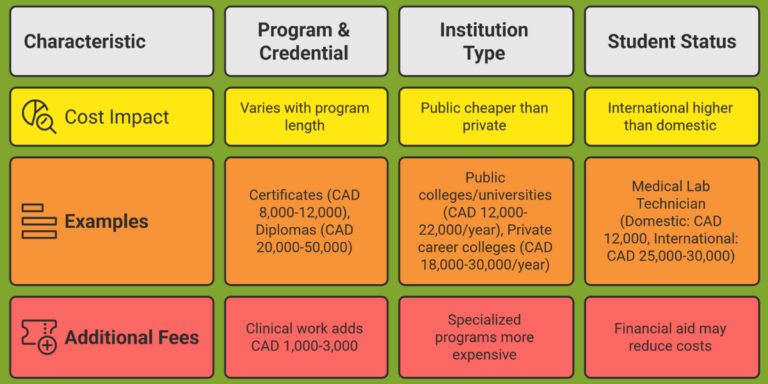
The kind of credential has a big impact on cost. Short-term certificate programs are quicker and less expensive to complete than longer diploma or degree options. Here’s a breakdown of average program costs by credential type:

  • Medical Assistant Course / Pharmacy Assistant Certificate Course (under 1 year): CAD 8,000 – 12,000 total
  • Diploma in Practical Nursing (2 years): CAD 20,000 – 50,000 total
  • Diagnostic Medical Sonography Diploma Program (2 years): CAD 25,000 – 50,000 total
  • Physiotherapist Assistant & Occupational Therapist Assistant Diploma: CAD 12,000 – 22,000
  • Diploma in Healthcare Management: CAD 15,000 – 25,000

Programs like Physiotherapist Assistant & Occupational Therapist Assistant, or a Diploma in Healthcare Management, often include clinical work, adding CAD 1,000 – 3,000 in lab and practicum fees to the total expense.

Note: Tuition estimates listed here can differ based on delivery mode, program updates, and local policies. Always verify with your chosen institution.

Type of Institution (Public vs. Private)

Where you study matters. Public colleges and universities usually have lower tuition rates than private career schools. Here is a breakdown of average tuition costs by institution type:

  • Public Colleges/Universities: CAD 12,000 – 22,000 per year
  • Private Career Colleges: CAD 18,000 – 30,000 per year
  • Specialized Private Programs (e.g., Medical Esthetics, Acupuncture): CAD 25,000 – 40,000 total program cost

Private institutions may offer fast-track or niche programs like Medical Esthetics Diploma Programs or Acupuncture Diploma Training Programs, which tend to be more expensive due to specialized training and shorter durations.

Note: Public and private college fees are influenced by program format and funding structures. Check institutional websites for current rates.

Domestic vs. International Student Tuition

One of the biggest pricing differences lies between domestic and international students. International students often pay one and a half to three times more than Canadian citizens or residents. Here is a breakdown of sample tuition costs by student type:

Medical Laboratory Technician Training Program

  • Domestic: CAD 12,000
  • International: CAD 25,000–30,000

Registered Massage Therapist Program

  • Domestic: CAD 15,000–20,000
  • International: CAD 25,000–35,000

Pharmacy Technician Diploma

  • Domestic: CAD 15,000–18,000
  • International: CAD 25,000–32,000

Some institutions offer financial support, scholarships, or tailored entry pathways to help ease the cost for international learners.

Note: International tuition policies are subject to frequent changes. For precise figures, consult the admissions department of each school.

Average Tuition Costs for Medical and Health Care Diplomas & Certificates

Average Tuition Costs for Medical and Health Care Diplomas & Certificates

Tuition costs can vary widely between programs. Here’s a breakdown of typical fees for some of the most sought-after health care courses in Canada.

General Cost Estimates

  • Undergraduate diploma programs: CAD 15,000 to 36,000 per year
  • Health Care Assistant certificate programs: Free in select provinces or up to CAD 9,518 annually
  • Diploma in Practical Nursing: CAD 10,000 to 40,000 per year
  • Pharmacy Technician Diploma: Around CAD 17,049 per year
  • Medical Laboratory Technician Training Program: CAD 9,575 to 18,825 per year

Total costs over the course of study may range from CAD 20,000 to 80,000, depending on program length and institution.

Note: These costs serve as broad guidelines. Confirm current fees directly with your intended college or program advisor.

Other In-Demand Medical Diploma Programs

  • Medical Assistant Course Cost: CAD 8,000 to 18,000 per year
  • Physiotherapist Assistant & Occupational Therapist Assistant: CAD 12,000 to 22,000 per year
  • Medical Office Administration Diploma Program: CAD 8,000 to 16,000 per year
  • Diagnostic Cardiac Sonography Diploma Program: CAD 20,000 to 25,000 per year
  • Diagnostic Medical Sonography Diploma Program: CAD 22,000 to 25,000 per year
  • Acupuncture Diploma Training Program: CAD 15,000 to 20,000 per year
  • Registered Massage Therapist Program: CAD 15,000 to 25,000 per year
  • Personal Support Worker Program: CAD 8,000 to 12,000 per year

These medical diploma programs for international students often include additional registration, lab, and administrative fees ranging from CAD 500 to 2,000.

Note: Fees can vary from year to year and depend on your province and chosen college. Refer to official sources for accurate data.

Online and Hybrid Healthcare Programs: Are They Cheaper?
Online and Hybrid Healthcare Programs: Are They Cheaper?

Online learning continues to gain popularity, offering increased flexibility and accessibility. For students considering online healthcare programs, affordability is another strong advantage.

Tuition Savings and Accessibility

Online healthcare programs often cost 10 to 30 percent less than traditional classroom-based programs. Here is a breakdown of typical savings:

  • In-person Medical Office Administration Diploma Program: CAD 15,000
  • Online version: CAD 10,000 – 12,000 → Savings: CAD 3,000 – 5,000
  • Relocation and commuting costs saved: CAD 5,000 – 10,000 annually
  • Total potential savings with online format: CAD 8,000 – 15,000 per year

For those balancing work or family, these programs are a practical way to lower healthcare costs in Canada.

Note: Online program pricing may vary by institution and access to resources. Please confirm with the program provider.

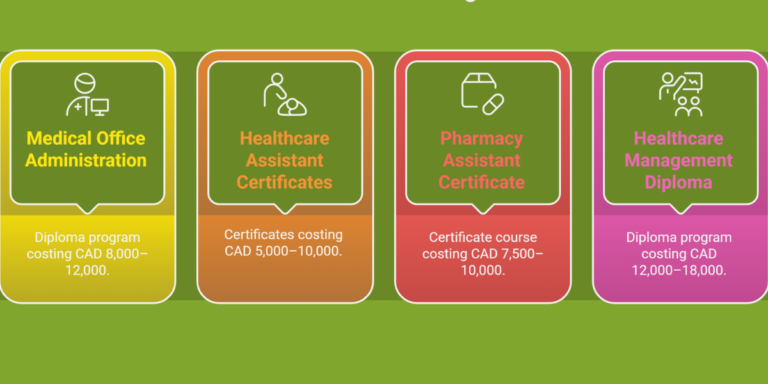
Popular Online Programs

Some well-regarded online offerings include:

  • Medical Office Administration Diploma Program: CAD 8,000–12,000
  • Healthcare assistant certificates: CAD 5,000–10,000
  • Pharmacy Assistant Certificate Course: CAD 7,500–10,000
  • Diploma in Healthcare Management Fees: CAD 12,000–18,000

These programs match the curriculum and value of in-person courses while reducing costs and improving accessibility.

Note: Tuition amounts listed reflect commonly available ranges and may not include all fees. Always confirm with the online program provider.

Connect with Us for Details on the Medical Health Care Courses and Diplomas in Canada

Textbooks, Supplies, and Additional Expenses

Textbooks, Supplies, and Additional Expenses

Education expenses don’t stop at tuition. Supplies, textbooks, and practicum fees add to the cost of training in health care.

Textbook Costs in Canada

Students usually spend between CAD 800 and 1,500 per year on textbooks. Here is a breakdown of typical textbook expenses:

  • General textbooks for healthcare courses: CAD 100 – 200 each
  • Specialized texts for medical programs (e.g., sonography, esthetics): CAD 250 – 300 each
  • Annual textbook budget: CAD 800 – 1,500
  • Savings options: Used books, rental programs, or e-book versions

Courses like the Diagnostic Medical Sonography Diploma Program or the Medical Esthetics Diploma Program often require multiple specialized texts, which can increase the annual textbook budget significantly.

Note: Textbook prices are approximate and may vary by course edition and format. Check your course syllabus or college bookstore.

Equipment and Clinical Supplies

Programs such as the Medical Laboratory Technician Training Program or the Registered Massage Therapist Program often require tools like stethoscopes, scrubs, lab kits, and personal equipment. Here’s a breakdown of typical equipment and supply costs:

  • Stethoscope: CAD 80 – 150
  • Lab coat/scrubs: CAD 60 – 120
  • Medical/lab kits: CAD 100 – 250
  • Software or simulation tools (if applicable): CAD 50 – 200
  • Total estimated equipment cost per student: CAD 300 – 600

Some institutions include these items in tuition fees, while others require separate purchases by the student.

Note: Equipment costs vary based on program type and institutional requirements. Always request a materials list for up-to-date pricing.

Licensing and Practicum Fees

Many programs include unpaid clinical placements. These provide valuable experience but require students to plan for expenses while not earning income. Here’s a breakdown of typical practicum and licensing costs:

  • Living expenses during unpaid practicum: CAD 2,000 – 5,000 (depending on duration and location)
  • Certification exam fees: CAD 300 – 1,000 (varies by profession)
  • Travel to practicum sites (if off-campus): CAD 100 – 500
  • Uniforms or additional insurance (if required): CAD 50 – 200

These should all be considered as part of the total healthcare certification cost in Canada.

Note: Licensing and practicum-related costs depend on program structure and location. Consult your school for exact figures.

Living Expenses While Studying in Canada

Living Expenses While Studying in Canada

Living costs are a major consideration for students planning to attend medical health programs. From rent to transit, expenses can vary by city and lifestyle.

Monthly Living Costs

Most students need between CAD 900 and 1,500 per month to cover housing, food, transportation, phone, and personal expenses. Here’s a breakdown of typical monthly living costs:

  • Rent (Toronto/Vancouver): CAD 800 – 1,200
  • Rent (Winnipeg/Halifax or smaller cities): CAD 500 – 900
  • Food and groceries: CAD 300 – 500
  • Transit pass: CAD 80 – 120
  • Phone and internet: CAD 50 – 100
  • Personal/miscellaneous expenses: CAD 100 – 300

These figures may vary depending on lifestyle, housing choice, and city, but they help estimate monthly budgeting for students in Canada.

Total Annual Cost (Tuition + Living)

  • Domestic students: CAD 18,000 to 35,000 annually
  • International students: CAD 25,000 to 60,000 annually

When exploring affordable medical courses in Canada, it’s important to calculate the full cost of attendance, not just tuition. Including supplies, books, and housing gives a more accurate budget.

Average Cost of University Courses and Medical School in Canada

Average Cost of University Courses and Medical School in Canada

University degrees and medical school programs involve a different level of investment. These options are ideal for students pursuing licensed professional paths.

University Courses

Health-related university courses usually cost between CAD 500 and 1,500 each. Here’s a breakdown of associated costs:

  • Cost per course: CAD 500 – 1,500
  • Full-time semester tuition: CAD 6,000 – 12,000
  • Annual university tuition (two semesters): CAD 12,000 – 24,000
  • Additional lab/clinical fees (if applicable): CAD 300 – 1,000 per course

Classes with labs or clinical training tend to be more expensive. These courses serve as building blocks for many careers in medical health programs.

Average Tuition for Medical School in Canada

  • Domestic students: CAD 12,000 to 28,000 per year
  • International students: CAD 25,000 to 70,000 per year

Over four to five years, total tuition costs range from CAD 60,000 to 150,000 for domestic students and CAD 120,000 to 300,000 for international students. Additional living and exam costs apply.

Cost Comparisons by Province

Cost Comparisons by Province

Program costs and living expenses vary across Canadian provinces. Regional comparisons can help students choose a location that fits their budget.

Ontario and BC

Ontario and British Columbia offer a broad range of medical diploma programs for international students. Here’s a breakdown of typical costs in these provinces:

  • Tuition (per year): CAD 15,000 – 30,000
  • Rent (shared accommodation): CAD 800 – 1,200/month
  • Utilities and Internet: CAD 100 – 150/month
  • Groceries and food: CAD 300 – 500/month
  • Public transportation: CAD 100 – 150/month
  • Total estimated living expenses: CAD 1,200 – 1,800/month or CAD 14,400 – 21,600/year

Higher demand and urban cost of living contribute to elevated tuition and expenses in cities like Toronto and Vancouver.

Alberta and the Prairies

In Alberta, programs like Health Care Assistant certificate training are sometimes subsidized. Here’s a breakdown of typical costs in Alberta and the Prairie provinces:

  • Health Care Assistant Program Tuition: CAD 6,000 – 12,000 per year (may be subsidized)
  • Rent (shared or student housing): CAD 500 – 900/month
  • Utilities and Internet: CAD 80 – 120/month
  • Groceries and food: CAD 250 – 400/month
  • Transportation (public transit): CAD 70 – 110/month
  • Total estimated living expenses: CAD 800 – 1,100/month or CAD 9,600 – 13,200/year

Lower rent and cost of living in the Prairie provinces help reduce the overall Canadian healthcare program’s tuition burden.

Quebec and Atlantic Provinces

Quebec offers low tuition, especially in French-language institutions. Here’s a breakdown of typical education and living costs in Quebec and the Atlantic provinces:

  • Tuition (Quebec – domestic students): CAD 3,000 – 9,000/year
  • Tuition (Quebec – international students): CAD 10,000 – 17,000/year
  • Rent (shared or student housing): CAD 500 – 800/month
  • Utilities and Internet: CAD 80 – 120/month
  • Groceries and food: CAD 250 – 400/month
  • Transportation: CAD 60 – 100/month
  • Total estimated living expenses: CAD 900 – 1,200/month or CAD 10,800 – 14,400/year
  • Total annual cost (including tuition): CAD 18,000 – 28,000/year

The Atlantic provinces, such as Nova Scotia and New Brunswick, offer similar programs and costs, making them attractive for budget-conscious students.

Scholarships, Government Support, and Financial Aid

Scholarships, Government Support, and Financial Aid

Financial assistance makes education more accessible. Many students can reduce college healthcare fees in Canada through government or institutional support.

Canadian Financial Aid Options

Domestic students can apply for grants and loans through programs like OSAP, Alberta Student Aid, or StudentAid BC. Here’s a breakdown of typical financial support amounts:

  • OSAP (Ontario): Up to CAD 12,000 – 15,000/year depending on need and program
  • Alberta Student Aid: Up to CAD 10,000 – 13,300/year (loan and grant combined)
  • StudentAid BC: CAD 7,000 – 12,000/year
  • Eligible uses: Tuition, textbooks, and living expenses for programs like the Pharmacy Assistant Certificate Course and Medical Assistant Course

These funds often provide enough coverage for full tuition or a large portion of education-related costs.

Institutional Scholarships and Bursaries

Colleges often provide need-based and merit-based awards that help reduce education costs. Here’s a breakdown of typical scholarship amounts:

  • General scholarship range: CAD 500 – 5,000 per year
  • Medical Laboratory Technician Training Program scholarships: CAD 1,000 – 3,000
  • Nursing program scholarships: CAD 1,500 – 4,000
  • Pharmacy program scholarships: CAD 2,000 – 5,000

Students in high-demand fields like Medical Laboratory Technician Training Program, Nursing, or Pharmacy frequently qualify for additional funding, making these programs more accessible.

International Student Support

International students may qualify for entrance scholarships, bursaries, or work-study programs. Here’s a breakdown of common cost-saving opportunities:

  • Entrance scholarships: CAD 1,000 – 5,000/year depending on merit and institution
  • Bursaries (need-based): CAD 500 – 3,000/year
  • Work-study program earnings: CAD 3,000 – 6,000/year
  • Employer sponsorships or tuition reimbursement: CAD 2,000 – 10,000/year (based on agreements)

These supports can significantly reduce the financial burden of medical diploma programs for international students.

Are Healthcare Diplomas Worth the Investment?

Are Healthcare Diplomas Worth the Investment?

Healthcare diplomas in Canada offer excellent value for students looking to quickly enter a growing industry. These programs tend to be shorter and more affordable than full university degrees, yet they lead to strong job prospects and competitive salaries. Here’s a closer look at what makes them a worthwhile investment:

Job Placement Rates

Many diploma programs report employment rates of 80% or higher within 6 months of graduation. Fields such as Personal Support Work, Pharmacy Assistance, and Medical Lab Technology have steady demand across provinces.

Entry-Level Salary Ranges

Graduates of healthcare diploma programs can expect to earn between CAD 35,000 and CAD 55,000+ annually in their first job. For example:

  • Medical Office Administrators: CAD 38,000 – 48,000
  • Pharmacy Technicians: CAD 42,000 – 55,000
  • Diagnostic Medical Sonographers: CAD 55,000 – 75,000
  • Personal Support Workers: CAD 35,000 – 45,000
  • Physiotherapist & Occupational Therapist Assistants: CAD 38,000 – 52,000
  • Medical Laboratory Technicians: CAD 40,000 – 55,000
  • Medical Assistants: CAD 36,000 – 48,000
  • Registered Massage Therapists: CAD 45,000 – 60,000
  • Acupuncture Practitioners: CAD 45,000 – 65,000
  • Healthcare Management Assistants: CAD 50,000 – 70,000

Permanent Residency Opportunities

For international students, many programs qualify for post-graduation work permits (PGWP), helping students accumulate Canadian work experience. This can lead to permanent residency under programs like the Canadian Experience Class (CEC) or Provincial Nominee Programs (PNP).

Note: Salary ranges and job outcomes depend on location, employer demand, and specific program credentials. Check with program advisors or job boards for current opportunities.

Choosing the Right Program Based on Budget and Goals

Choosing the Right Program Based on Budget and Goals

Careful planning enables students to select programs that align with both their career and financial goals. It’s essential to consider both the long-term benefits and the initial costs.

Cost vs. Career Outcome

Programs like the Diagnostic Cardiac Sonography Diploma Program, Acupuncture Diploma Training Program, or Pharmacy Assistant Certificate Course require a larger financial investment but often lead to higher earnings and job stability. Graduates can expect entry-level salaries ranging from CAD 45,000 to 75,000 annually, depending on role and location.

Permanent Residency and Work Pathways

Many medical diploma programs for international students qualify for work permits and contribute toward permanent residency eligibility. These added benefits make certain programs more appealing despite higher tuition. Estimated costs may be recovered through full-time employment within 2–3 years post-graduation.

Parent, Advisor, and Professional Considerations

Parents and advisors can help students evaluate all costs, not just tuition. Planning tools, financial aid resources, and clear career goals make a difference when selecting from health care courses in Canada. A detailed budget spreadsheet is helpful for comparing schools, fees, supplies, and housing across multiple programs.

Why Choose Pharma-medical Science College of Canada for Your Healthcare Education?

Why Choose Pharma-medical Science College of Canada for Your Healthcare Education?

Pharma-Medical Science College of Canada offers comprehensive medical health programs with a focus on hands-on learning and industry-relevant skills. Programs meet the needs of the healthcare, pharmaceutical, and food sectors.

Our tuition is competitive, and many students qualify for assistance through OSAP, Second Career, and ODSP. These supports help us offer accessible healthcare education to a diverse student population.

We welcome learners from around the world and offer comprehensive support for medical diploma programs for international students. Our staff helps students navigate study permits, job training, and career placement.

Graduates from our college find employment across the healthcare and pharmaceutical fields. With expert instructors and practical labs, students gain the skills needed for immediate workforce entry. Many of our graduates secure employment within 3–6 months of completing their training.

Conclusion

The cost of medical courses in Canada varies based on program type, location, and student status. From certifications to full medical degrees, options exist for a wide range of goals and budgets.

By reviewing tuition, living expenses, and available aid, students can find affordable medical courses in Canada that support long-term success. Take time to research programs, connect with admissions advisors, and apply early to secure financial support and maximize career opportunities.

Start your healthcare journey with confidence at Pharma-medical Science College of Canada. Apply today and take advantage of our affordable, career-focused programs designed for local and international students.

Summary: Please note that the cost figures throughout this article are approximate and intended to serve as general guidelines. Actual fees may differ based on program duration, location, institution, and delivery method. Always check directly with the program provider for the most current and accurate information.

Connect with Us for Details on the Medical Health Care Courses and Diplomas in Canada

How Long Does It Take to Complete a Registered Massage Therapist Program?

Feature Image

Interested in Becoming a Registered Massage Therapist? Here’s How Long It Really Takes

With demand for skilled healthcare professionals on the rise, more people are turning to massage therapy as a stable, rewarding, and in-demand career. Whether you’re drawn to wellness, rehabilitation, or hands-on care, becoming a Registered Massage Therapist (RMT) in Canada offers a clear and achievable path, especially if you’re exploring a massage therapist program in Ontario.

But how long does it take to become a registered massage therapist? What will you learn? And what are the career prospects after graduation?

In this comprehensive guide, we’ll walk you through everything you need to know—from how long it takes to become an RMT, to what’s involved in a registered massage therapist course in Ontario, and what kind of salary you can expect once you’re licensed. Whether you’re just starting out or looking to switch careers, this article will help you plan your journey with confidence and clarity.

What Is a Registered Massage Therapist and Why Choose This Career?

What Is a Registered Massage Therapist and Why Choose This Career

Massage therapy is officially recognized as a health profession in multiple Canadian provinces. Registered Massage Therapists (RMTs) are trained professionals who use manual techniques to assess and treat soft tissues and joints.

Choosing to become an RMT means entering a respected field that promotes wellness, rehabilitation, and stress relief. In Ontario, it’s mandatory for all registered massage therapists (RMTs) to be registered with the College of Massage Therapists of Ontario, which ensures that only those who complete an accredited massage therapist program and pass licensing exams can practice.

Are Massage Therapists in High Demand in Canada?

Canada has seen a rising demand for registered massage therapists, driven by growing awareness of preventative healthcare and natural treatments. With more people turning to massage therapy for pain management, stress relief, and recovery, the job market continues to expand.

According to labor projections, the healthcare and wellness sector, including massage therapy, is expected to experience steady growth. Graduates of a registered massage therapist course in Ontario can expect ample employment opportunities in both private and public healthcare systems.

Where Is the Highest Demand for a Massage Therapist?

Certain provinces, such as Ontario, British Columbia, and Alberta, have a particularly high demand for RMTs. Urban centers like Toronto and Vancouver offer more clinic-based opportunities, while rural areas often face a shortage of skilled practitioners.

Underserved communities are actively seeking RMTs to meet increasing healthcare needs, making relocation a strategic move for graduates looking to establish their careers quickly.

What Does a Registered Massage Therapist Actually Do?

What Does a Registered Massage Therapist Actually Do

The daily responsibilities of an RMT extend beyond giving relaxing massages. RMTs are healthcare professionals who work in clinical settings and treat specific medical conditions. They examine patients, formulate treatment plans, and follow up on outcomes to ensure the best results are achieved.

Types of Conditions RMTs Treat

RMTs in Canada are trained to address a wide range of issues, including:

  • Chronic pain (e.g., back pain, arthritis)
  • Postural imbalances
  • Sports injuries
  • Stress-related tension
  • Pregnancy-related discomfort

These conditions are often treated in conjunction with other therapies, and a good massage therapy career with the best program in Canada ensures that students are ready to handle such diverse needs.

Where RMTs Work

RMTs are employed in various environments, such as:

  • Multidisciplinary clinics
  • Physiotherapy and chiropractic centers
  • Spas and wellness retreats
  • Hospitals and long-term care facilities
  • Mobile or private practice

A comprehensive program helps students learn to be a massage therapist who can adapt to different workplace expectations and client demographics.

Collaboration with Other Healthcare Providers

Massage therapists often collaborate with professionals like physiotherapists, chiropractors, physicians, and nurses. This team-based approach helps deliver holistic care to patients, particularly in rehabilitation and chronic care settings.

Most accredited massage therapist programs in Ontario emphasize interdisciplinary communication to prepare students for these real-world scenarios and to learn soft tissue assessment and pain management effectively.

How Long Does It Take to Become an RMT in Canada?

How Long Does It Take to Become an RMT in Canada

A common question among prospective students is: How long does it take to become a massage therapist? The answer varies based on the province, type of program, and student commitment level.

In general, completing a registered massage therapist program in Canada takes between 2 to 3 years. Programs include both theoretical coursework and clinical experience.

Standard Diploma Programs

In Ontario, most standard diploma programs take approximately 2 years to complete. These programs include:

  • Academic theory (anatomy, pathology, physiology)
  • Hands-on techniques
  • Supervised clinical hours

By the end of the program, students are well-prepared for provincial certification exams and clinical practice, showing clearly how a massage therapy program can provide the skills and training needed to succeed.

Accelerated Massage Therapy Programs

There are colleges that offer quick programs, allowing you to complete your studies in 20 to 24 months. These are full-time, intensive programs designed for students who can dedicate themselves completely to their studies.

While the timeline is shorter, the coursework is just as rigorous, and students must be ready for a fast-paced learning environment.

Program Length Variability

The duration of a registered massage therapist course in Ontario can vary depending on:

  • Whether the student studies full-time or part-time
  • The number of required clinical hours
  • The format (in-person, hybrid, or online theory components)
  • Institution-specific curriculum design

It’s essential to research multiple schools to find a timeline that fits your needs.

Connect with Us for Details on the Massage Therapy Program in Canada

What Will You Learn in a Massage Therapy Program?

What Will You Learn in a Massage Therapy Program?

A well-rounded registered massage therapist program covers both foundational science and practical skill development. Here’s what students typically learn during each year of study.

What Do I Learn in My First Year of the Massage Therapy Course?

The first year focuses on foundational knowledge and basic hands-on skills. Students study:

  • Human anatomy and physiology
  • Musculoskeletal and nervous systems
  • Swedish massage techniques
  • Ethics, professionalism, and communication

This year lays the groundwork for more advanced clinical applications later on.

What Will I Learn in the Second Year?

In the second year, the curriculum becomes more advanced and clinically oriented. Students are introduced to:

  • Pathology and injury assessment
  • Therapeutic techniques and treatment planning
  • Case study analysis and documentation
  • Supervised clinical internships with real clients

These practical experiences are crucial for preparing students for the RMT licensing exams and real-world employment, helping them start their career as a licensed massage therapist with confidence.

When Can I Start the Massage Therapy Course?

When Can I Start the Massage Therapy Course?

Most massage therapist programs in Ontario offer multiple intake periods throughout the year, such as:

  • Fall (September) – Most common and highly attended
  • Winter (January) – Ideal for those finishing high school mid-year
  • Spring (May) – Less common but available at select institutions

Early application is advised, especially for international students who need to secure study permits and housing, and consider adding massage therapy training to their career plans.

Eligibility Requirements for a Registered Massage Therapist Program

Eligibility Requirements for a Registered Massage Therapist Program

To enroll in a registered massage therapist course in Ontario, students generally need to meet the following criteria:

  • High school diploma or equivalent
  • English language proficiency (for international students)
  • Strong academic background in biology or health sciences (preferred but not mandatory)

Be aware that a few programs might need you to complete a criminal background check or get medical clearance before you can participate in clinical work.

Can You Immigrate to Canada as a Massage Therapist?

Becoming a registered massage therapist is also an option for foreign-trained professionals who wish to immigrate to Canada through programs like Express Entry or Provincial Nominee Programs (PNPs). However, they must:

  • Have their credentials assessed by a recognized Canadian authority
  • Complete any required bridging or upgrading programs
  • Pass provincial licensing exams (e.g., CMTO in Ontario)

Taking a registered massage therapist program in Ontario can greatly ease this process and align credentials with Canadian standards.

Life After Graduation: Licensing, Career, and Compensation

Life After Graduation: Licensing, Career, and Compensation

Graduating from a massage therapist program is only the first step. To legally practice as an RMT in Ontario, you must pass the CMTO’s certification exams:

  • MCQ (Multiple Choice Questions) – Test theoretical knowledge
  • OSCE (Objective Structured Clinical Examination) – Evaluates practical skills

Many schools offer post-graduation support, including licensing prep courses and career counseling.

Wage Expectations for Registered Massage Therapists in Ontario

Compensation for RMTs varies based on location, experience, and specialization. On average:

  • Entry-level RMTs earn around $25–$35 per hour
  • Experienced RMTs may earn $40–$70 per hour
  • Independent practitioners can set their own rates, especially in private or mobile practices

City-by-city salary snapshot for Registered Massage Therapists (RMTs)

Wages can really differ based on where you live, the cost of living, and your job role, whether you’re employed in a clinic, operating independently, or working in specialized care. Here is a breakdown of minimum, average, and top-end earnings in different cities:

  • Vancouver, BC: $45/hr (starting) – $79/hr (average) – $95/hr (top tier)
  • Toronto, ON: $40/hr (starting) – $74/hr (average) – $90/hr (top tier)
  • Ottawa, ON: $38/hr (starting) – $71/hr (average) – $85/hr (top tier)
  • Surrey, BC: $37/hr (starting) – $68/hr (average) – $82/hr (top tier)
  • Brampton, ON: $35/hr (starting) – $63/hr (average) – $77/hr (top tier)
  • Mississauga, ON: $33/hr (starting) – $61/hr (average) – $75/hr (top tier)
  • Vaughan, ON: $32/hr (starting) – $59/hr (average) – $72/hr (top tier)
  • Edmonton, AB: $30/hr (starting) – $54/hr (average) – $68/hr (top tier)
  • Calgary, AB: $30/hr (starting) – $54/hr (average) – $68/hr (top tier)

Job roles and practice types that influence earnings:

  • Clinic-based RMTs (employees): Steady income, employer-covered overhead.
  • Independent Contractors: Typically earn higher per hour but manage their own bookings and expenses.
  • Mobile Therapists: Can charge premium rates for on-location services.
  • Specialists (e.g., sports or prenatal massage) often command higher fees based on expertise.

Wages scale with experience, specialization, and reputation. Urban centers offer higher income potential, while smaller cities provide affordable startup opportunities and steady demand.

How Many Hours Do Most Massage Therapists Work?

RMTs enjoy flexible scheduling options. While some work full-time (30–40 hours/week), others prefer part-time schedules to accommodate family or other commitments.

Self-employed RMTs have greater control over their hours and can often balance work with personal goals.

What Massage Makes the Most Money?

Certain specializations within massage therapy yield higher income potential, such as:

  • Sports massage
  • Deep tissue therapy
  • Prenatal and postnatal massage
  • Corporate wellness and mobile services

Graduates of a well-rounded registered massage therapist program are well-positioned to explore these niches and maximize their earnings.

Why Choose Pharma-Medical Science College of Canada for Your Massage Therapy Training?

Why Choose Pharma-Medical Science College of Canada for Your Massage Therapy Training?

At Pharma-Medical Science College of Canada, we offer one of the most comprehensive registered massage therapist programs in Ontario. Our instructor-led full-time program runs for 88 weeks and is designed to provide students with a strong base in both theoretical concepts and practical application.

A major component of the training includes 330 hours of supervised clinical practice at our on-campus massage clinic. This real-world experience ensures that graduates are confident and workplace-ready.

As a private career college registered under the Private Career Colleges Act, 2005, we support eligible students through financial aid programs such as OSAP, Second Career, OW/SA, WSIB, and ODSP. We also provide free financial consultations to help students understand their funding options. Financial aid may be available for those who qualify.

International students are welcome and benefit from tailored support as they transition into the Canadian healthcare system. With our experienced faculty and comprehensive career services, we guarantee that every student has the resources they need to excel as a Registered Massage Therapist in Ontario.

Final Thoughts and Next Steps

Becoming a Registered Massage Therapist in Ontario is a multi-step journey that typically takes 2 to 3 years to complete. From academic studies and hands-on practice to licensing exams and career preparation, each phase plays a key role in building your future in healthcare. Throughout this guide, we’ve covered what massage therapists do, where they work, what they learn in school, and how the job market supports this rewarding profession.

Whether you’re a local student or arriving from abroad, choosing the right registered massage therapist program is essential for aligning your education with your goals. Take the time to explore your options and make an informed choice that supports your future.

Ready to take the first step? Contact Pharma-Medical Science College of Canada today to learn more or speak with an admissions advisor. Your massage therapy career starts here.

Connect with Us for Details on the Massage Therapy Program in Canada

How to Become a Pharmacy Assistant in 5 Simple Steps

Feature Image

The healthcare field is booming, and with that growth comes an increasing demand for pharmacy assistants. If you’re looking for a stable, accessible career in healthcare that offers room for advancement, becoming a pharmacy assistant could be just what you’re looking for. This guide walks you through everything you need to know about how to become a pharmacy assistant, from education and training to career opportunities.

Whether you’re a high school graduate, a career changer, a parent helping a student plan their future, or an international student aiming to enter Canada’s healthcare workforce, this article provides a step-by-step roadmap on how to become a pharmacy assistant. You’ll also find helpful insights on pharmacy assistant training, choosing a pharmacy assistant program, and what to expect from a pharmacy assistant course.

Step 1 – Complete a High School Education

Complete a High School Education

To become a pharmacy assistant, a high school diploma or equivalent is typically required. This foundational education prepares you for both direct entry into the workforce and enrollment in specialized training programs.

Recommended High School Courses

Courses such as biology, chemistry, and mathematics are useful in preparing for the responsibilities of a pharmacy assistant. These subjects help build the scientific and numerical knowledge needed to understand medication dosages and pharmaceutical terminology.

English is equally important, as clear communication is essential in pharmacy settings. Electives in digital literacy and communication offer an added advantage, particularly when working with pharmacy software or engaging in customer interactions.

General Requirements for Pharmacy Assistants

When asking, “What are the qualifications needed to become a pharmacy assistant?” most employers seek candidates with strong basic academic skills, a reliable work ethic, and a desire to learn. A high school diploma is the first requirement, but qualities like attention to detail, integrity, and adaptability are just as important.

Employers may also value candidates with familiarity in customer service or retail environments, as these skills directly apply to pharmacy assistant roles.

Step 2 – Consider Further Education

Consider Further Education

Although not required, completing a formal pharmacy assistant training program can really boost your chances of landing a job and increasing your earning potential. It shows employers that you’re committed and equipped with the right skills.

At Pharma-Medical Science College of Canada, we offer one of the most comprehensive pharmacy assistant programs in Canada. Our diploma program combines academic knowledge with practical skills to prepare students for real-world success.

Choosing the Right Pharmacy Assistant Program

When selecting a pharmacy assistant program, consider your learning style and schedule. Some students thrive in hands-on, in-person environments, while others prefer online or hybrid formats that offer flexibility.

Key factors to consider include program accreditation, curriculum relevance, job placement support, and the institution’s reputation. The right program prepares you to become a pharmacy assistant and connects you to employment opportunities.

How Long Is a Pharmacy Assistant Course?

How long it takes to complete a pharmacy assistant course varies, but most pharmacy assistant courses take between six months and one year to complete. The duration of the course can change based on whether you choose to study full-time or part-time, and if it has a practicum or co-op element included.

These programs are structured to be intensive yet accessible, making them perfect for anyone eager to jump into the workforce quickly while still picking up vital skills.

What You’ll Learn in a Pharmacy Assistant Training Program

A thorough pharmacy assistant training program covers various topics. Among the essential skills gained in pharmacy assistant program settings are medical terminology, basic pharmacology, inventory systems, pharmacy software, and legal and ethical considerations in pharmacy practice.

Most programs include a practicum or co-op, which allows you to get some real-world experience in a pharmacy. This training reinforces classroom learning and prepares you for the role’s responsibilities.

Step 3 – Gain Practical Experience

Develop Key Skills

Real-world experience is essential to become a pharmacy assistant. Practical training builds confidence, strengthens your skills, and increases your appeal to employers.

Internship, Co-op, or Volunteer Opportunities

Many pharmacy assistant programs include a practicum or internship. These placements provide valuable exposure to pharmacy environments under the guidance of experienced professionals.

Suppose your program doesn’t include a placement, volunteer in hospitals, or retail pharmacies. Volunteering helps you gain relevant experience and show your dedication to the profession.

What Is the Next Step in Pharmacy Assistant?

After gaining experience, you may consider advancing your career. Pharmacy assistants can pursue additional certifications to become pharmacy technicians, a role with greater responsibility and pay.

You might also explore other healthcare careers, such as nursing or medical administration. A pharmacy assistant role is a fulfilling career option that offers a gateway to multiple paths within the healthcare sector. Pharmacy assistants can pursue additional certifications to become pharmacy technicians, a role with greater responsibility and pay.

Connect with Us for Details on the Pharmacy Assistant in Canada

Step 4 – Develop Key Skills

4. What You'll Learn in a Massage Therapy Diploma Program

While technical expertise is crucial, soft skills play a key role in this position too. If you want to become a pharmacy assistant who excels, focus on both professional and interpersonal skill development.

Core Competencies for Pharmacy Assistants

Pharmacy assistants must be accurate and detail-oriented, especially when managing prescriptions and medication inventory. Strong customer service skills are essential, as you’ll often be the first person patients interact with.

Math skills are necessary for dosage calculations, and computer literacy ensures efficiency with pharmacy software and inventory systems. Empathy and clear communication further support success in the role.

Lifelong Learning and Professional Development

The healthcare industry evolves constantly, so updating your skills is important. Continuing education, certifications, and workshops help you stay current with best practices and tools. For professionals and alumni, pursuing refresher courses or new credentials can enhance career opportunities and increase job satisfaction.

Step 5 – Start Your Job Search

Start Your Job Search

Once your training and education are complete, it’s time to enter the job market. There are many resources to help you begin your journey to become a pharmacy assistant.

How to Find a Pharmacy Assistant Job

Start your career in pharmacy by exploring job boards, hospital career pages, and local pharmacy listings to find openings. Many pharmacy assistant programs provide job placement services or access to alumni networks.

Attend career fairs, join healthcare-related groups, and utilize platforms like LinkedIn to broaden your professional connections. Recommendations from instructors or internship supervisors can also support your job search.

Is a Pharmacy Assistant an Entry-Level Job?

Yes, this position is considered entry-level, which makes it suitable for graduates or individuals moving into healthcare. Entry-level doesn’t mean basic—pharmacy assistant training prepares you to handle a wide range of responsibilities. With time and continued education, you can move into higher roles like pharmacy technician or team supervisor.

Is a Pharmacy Assistant Minimum Wage?

Some starting roles may pay near minimum wage, but earnings vary by location, employer, and qualifications. Completing a pharmacy assistant course or earning extra certifications can lead to better compensation.

You’ll find that wages are typically more generous in urban settings and hospitals. Your income potential increases with hands-on experience and additional training.

FAQs: What to Know About Becoming a Pharmacy Assistant

Here are answers to common questions about how to become a pharmacy assistant.

How Do I Become a Pharmacy Assistant?

Follow these five steps:

  1. Complete high school
  2. Enroll in a pharmacy assistant training program
  3. Gain practical experience
  4. Develop key skills
  5. Begin your job search

These steps provide a clear path to a healthcare career. A structured pharmacy assistant program can help you stay on track and reach your goals.

What Are the Steps in Pharmacy?

  • Career progression in pharmacy usually starts with an assistant role. From there, you can become a pharmacy technician and eventually pursue training to become a pharmacist. Each stage involves new skills and certifications, making pharmacy assistant training a strong foundation for future growth.

What Are Pharmacy Assistant Qualifications?

  • To become a pharmacy assistant, a high school diploma or equivalent is typically needed. Though formal training is optional, completing a pharmacy assistant course significantly improves your employment prospects. Skills in communication, organization, and basic science and math also contribute to success in this field.

Conclusion

7. Career Paths in Massage Therapy

If you want a practical entry into healthcare, learning how to become a pharmacy assistant is a smart move. This role offers flexibility, job security, and meaningful interactions that make a positive impact.

Whether you’re starting a new chapter or transitioning careers, consider exploring pharmacy assistant programs, speaking with an advisor, or applying to a respected institution like Pharma-Medical Science College of Canada. Take the next step and begin building a fulfilling future in healthcare.

Ready to start your healthcare career? Apply now to the Pharma-Medical Science College of Canada and take the first step toward becoming a certified pharmacy assistant.

Connect with Us for Details on the Pharmacy Assistant in Canada

Essential Advice for First-Year Medical Students in Canada: Thriving In Med School

Feature Image

Beginning medical school is a time of excitement, anticipation, and pressure. Students are transitioning into a rigorous academic environment that demands focus and adaptability. The first year sets the tone for success throughout medical training. Establishing strong habits and understanding the expectations early can lead to long-term benefits. This guide offers career advice for students and delivers clear career guidance tips for students navigating their first year in medicine.

What Is the Best Advice for First-Year Med Students?

What Is the Best Advice for First-Year Med Students

One of the most important pieces of advice for medical students starting out is to embrace the learning curve. It’s completely normal to feel overwhelmed in the beginning. Medical knowledge is vast, and no one is expected to know everything right away. A growth mindset and patience with yourself will make a significant difference.

Staying organized is essential. Use digital calendars, planners, or time-blocking methods to manage lectures, labs, study time, and rest. Effective time management can really help lower stress levels and boost your productivity. This is one of the most valuable career guidance tips for students trying to balance multiple responsibilities.

Building a support network early is equally important. Connect with classmates, faculty members, and academic advisors. A solid community can provide emotional support, collaborative study opportunities, and access to shared resources. Strong interpersonal connections can help reinforce your motivation and resilience. These networks also offer long-term career advice for students beyond the classroom.

Study Habits and Academic Success

Study Habits and Academic Success

Academic success in medical school depends on creating efficient study systems. Students should aim to understand rather than memorize, apply active learning techniques, and consistently review material. The right study habits form the cornerstone of success throughout a medical career. Developing good study habits is an essential part of advice for medical students aiming to build a solid academic foundation.

How Many Hours Should a Medical Student Study?

A reasonable target is 4–6 hours of dedicated study time per day outside of classes, adjusted for personal learning speed and content difficulty. Weekly planning can help distribute study loads evenly and prevent burnout. Prioritizing core subjects and rotating topics can also maintain variety and engagement.

Quality matters. Focused sessions using methods like active recall, flashcards, and summary writing are more effective than passive rereading. Consistent practice and routine beat last-minute cramming. Developing a structured study approach reflects practical career advice for students who want sustainable academic performance. It’s a key strategy in any list of career guidance tips for students managing heavy course loads.

What Was One Piece of Advice Given by Medical Students About Study Skills?

Experienced students often recommend using spaced repetition for long-term memory retention. This technique involves reviewing material at increasing intervals, which strengthens recall and reduces the need to relearn information. Combining this with practice questions can enhance clinical reasoning and exam preparedness. This method is widely recognized in career guidance tips for students in medical education.


Avoid cramming. Medical content is dense, and understanding concepts is more important than temporary memorization. Prioritizing comprehension over speed will benefit students throughout their studies. This is a powerful piece of advice for first-year medical students striving for strong academic outcomes and future confidence.

What Is the Best Teaching Method for Medical Students?

Many medical schools in Canada use case-based or problem-based learning (PBL). These techniques motivate students to put their knowledge into practice in real clinical situations. This type of learning enhances understanding and critical thinking. It also reinforces the kind of strategic thinking that aligns with long-term career advice for medical students.

Integrative and hands-on approaches are also valuable. Simulations, lab work, and interactive sessions allow for deeper engagement. Students should seek active participation and reflection during these activities. Embracing these teaching methods aligns with long-term career guidance tips for students aiming to develop both theoretical and practical skills.

Career and Future Planning

Career and Future Planning

Planning ahead helps medical students align their educational experiences with their professional goals. Understanding available part-time work, high-paying specialties, and in-demand fields can influence career decisions and build meaningful experiences early. These strategies reflect foundational career advice for students who are thinking long-term.

Which Job Is Best for Medical Students in Canada (During School)?

Several roles offer income and valuable exposure to the medical field. Research assistant positions help students build scientific literacy and contribute to publications. Tutoring allows students to reinforce their knowledge while supporting others.

Scribing in clinics or hospitals helps students become familiar with medical terminology, charting, and clinical environments. Volunteering in healthcare settings provides hands-on insight and strengthens resumes. These jobs offer practical career advice for students balancing academics with experiential learning. They’re commonly recommended as part of career guidance tips for students exploring career pathways.

Which Course Is Best for Earning Money in the Medical Field (Post-MD)?

After graduation, physicians may choose fields with high earning potential. Radiology, dermatology, and anesthesiology are consistently among the highest-paying specialties in Canada. These areas offer strong financial returns for students who invest in competitive training pathways.

Selecting a high-income specialty requires early preparation and understanding of entrance requirements. Strategic planning and dedication to academic performance are essential. This aligns with smart career guidance tips for students interested in financial stability and career growth. It’s also a form of future-focused career advice for medical students.

Which Medical Field Is High in Demand?

Canada currently faces shortages in several medical areas. Family medicine remains a key need across urban and rural regions. Psychiatry is growing in demand due to increased mental health awareness. Geriatrics is critical with an aging population.
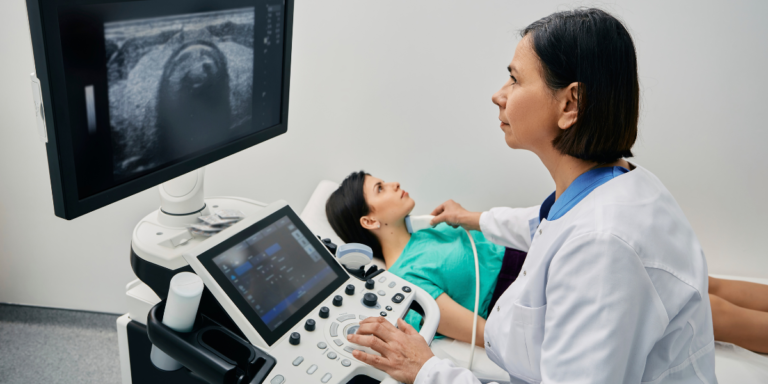
Rural general practice is also a priority. These roles offer meaningful impact and strong job security. Exploring these options early provides valuable career advice for medical students considering long-term relevance and contribution to community health. These roles are frequently highlighted in career guidance tips for students aiming to make a meaningful difference.

Connect with Us for Details on the Medical Sonography Program in Canada

Challenges and How to Overcome Them

Challenges and How to Overcome Them

Medical school presents many personal and academic challenges. Recognizing these struggles and addressing them early can improve resilience and academic performance. Understanding the difficult phases helps students prepare emotionally and mentally. This section delivers actionable advice for first-year medical students dealing with the realities of their new academic environment.

What Is the Hardest Year of Med?

Many students find the second year or clinical transition period to be the most difficult. The academic workload increases significantly, and students begin engaging with patients and real clinical environments. The expectations are higher, and emotional fatigue is common.

Preparing for this period through solid study habits and time management developed in the first year can ease the adjustment. Building coping strategies and peer support also helps. Acknowledging this reality is a practical form of career advice for students navigating challenging transitions. These are often overlooked in traditional career guidance tips for students, but they are essential.

What Do Medical Students Need the Most?

Balance is crucial. Adequate sleep, regular exercise, social interaction, and time for hobbies contribute to well-being. If you overlook these areas, you might find yourself facing burnout and struggling with your academic performance.

Resilience and adaptability are equally important. Medical training involves constant learning and regular feedback. Students benefit from staying flexible and learning from setbacks. These habits reflect core career guidance tips for students managing long-term academic success and reinforce vital advice for medical students.

How to Comfort a Med Student?

Supporting a medical student begins with listening. Avoid offering unsolicited advice and instead provide space for them to express frustration. Reminding them of their progress and celebrating small achievements can boost morale.

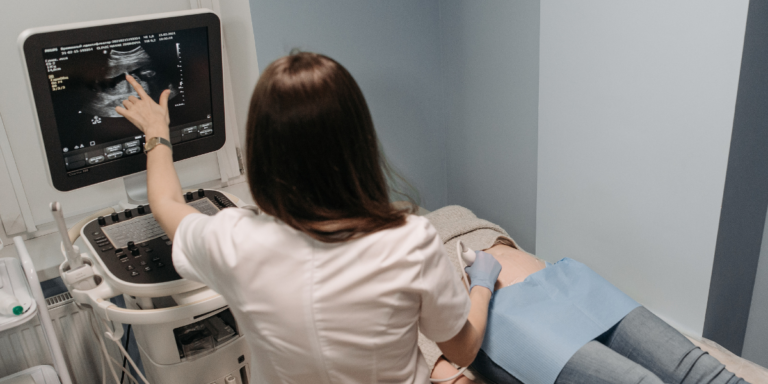
Offering practical help, like sharing notes or helping with daily tasks, can ease stress. It’s really important to encourage students to take breaks and focus on self-care. This approach supports emotional health and reinforces positive career advice for medical students under pressure. It also echoes important career guidance tips for students emphasizing well-being.

Skills and Traits for Success

Skills and Traits for Success

Medical success requires more than academic ability. Developing professional and interpersonal skills early will benefit students in every aspect of their careers. This section outlines essential traits that help medical students thrive. Cultivating these qualities is a major theme in effective career advice for students and thoughtful career guidance tips for students.

What Advice Would You Give to a First-Year Student?

Approach medical school with curiosity and humility. Ask questions, seek feedback, and remain open to learning from peers and mentors. Growth-oriented attitudes lead to continuous improvement.

Finding mentors early provides insight into specialties, research opportunities, and professional development. Mentorship is a key source of career advice for students aiming for guided progression and realistic goal-setting. Seeking this out reflects an understanding of valuable career guidance tips for students at every stage.

Which Skill Is Best for Medical Students?

Strong communication is critical. Clear dialogue with patients, peers, and supervisors improves clinical outcomes and teamwork. Developing empathy ensures compassionate care and builds trust.

Time management, critical thinking, and self-discipline are also essential. These skills support both academic and clinical excellence. Mastering them early reflects well-rounded career guidance tips for students preparing for healthcare leadership roles. These skills also represent top-tier advice for medical students who want to excel.

Our Commitment to Future Healthcare Professionals at Pharma-Medical

Our Commitment to Future Healthcare Professionals at Pharma-Medical

At Pharma-Medical Science College of Canada, we support future healthcare professionals by offering practical, career-aligned education. Our programs are rooted in current industry standards and designed to meet workforce demands.

Students receive hands-on training, expert-led instruction, and structured support to thrive in Canada’s medical and pharmaceutical sectors. We equip learners with technical and interpersonal competencies that employers value.

As a trusted private career college, we go beyond classroom instruction. Our career services, financial aid options, and mentorship resources provide strong career advice for students throughout their journey. At Pharma-Medical, we build futures with purpose.

Conclusion

Success in medical school begins with the right mindset, strong habits, and supportive networks. The first year lays the groundwork for a fulfilling healthcare career. With clear goals, practical strategies, and informed decisions, students can achieve their full potential.

Remember that each step, each challenge, and each win contributes to progress. By applying the best advice for first-year medical students, embracing solid career guidance tips for students, and taking care of your well-being, your future in medicine is well within reach.

Ready to shape your future in healthcare? Start your journey with Pharma-Medical Science College of Canada, where your success is our priority.

Connect with Us for Details on the Medical Sonography Program in Canada

11 Things to Know About a Career in Massage Therapy

Feature Image

A career in massage therapy involves helping people manage pain, reduce stress, and recover from injuries through hands-on therapeutic techniques. Massage therapists play a key role in supporting clients’ physical and emotional wellness, contributing meaningfully to their overall health.

With rising demand across Canada’s healthcare, rehabilitation, and wellness sectors, trained professionals are needed more than ever. From hospitals to clinics and fitness centers, opportunities to become a massage therapist continue to grow.

This guide is for prospective students, recent graduates, and working adults exploring a new path, as well as parents and career advisors helping others make informed choices.

Here, we explore 11 essential things you should know before enrolling in a massage therapy diploma program or starting your journey through massage therapist training in Canada.

1. What a Massage Therapist Really Does

1. What a Massage Therapist Really Does

The daily work of a massage therapist includes applying various manual techniques, reviewing client histories, and creating treatment plans. A typical session involves assessing the client’s condition, targeting specific muscle groups, and adapting techniques to meet individual health goals.

A career in massage therapy can develop in many environments across Canada, such as wellness clinics, spas, hospitals, or working with sports teams. In each setting, therapists support clients in achieving better mobility, stress relief, and recovery.

People who become massage therapists are often drawn to the role’s hands-on nature and the fulfillment that comes from supporting others through healing and wellness.

2. Education Requirements Before Starting Massage Therapy Training

2. Education Requirements Before Starting Massage Therapy Training

Diagnostic and Clinical Programs

Before starting massage therapist training, applicants must have completed high school or an equivalent level of education. Although there are no mandatory pre-requisite courses, knowledge in biology, anatomy, or health sciences is very helpful.

Success in massage therapy diploma programs requires a strong work ethic and readiness for physical and academic challenges. You’ll be expected to learn detailed information about the human body and apply it during practical sessions.

Choosing to become a massage therapist means preparing for a profession that demands care, technical ability, and a commitment to lifelong learning.

3. Education and Program Duration

3. Education and Program Duration

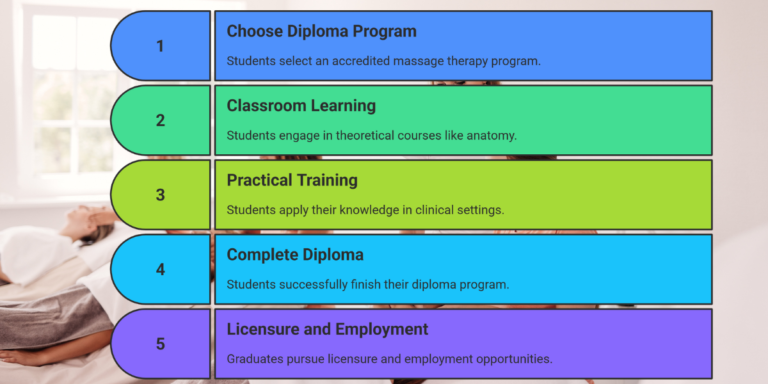
Most students in Canada choose to complete a massage therapy diploma program at an accredited college. These programs usually last between 12 and 24 months and offer a combination of theory and practical training.

Classroom learning includes courses on anatomy, physiology, and pathology. Practical training takes place in supervised clinical environments. This format allows students to apply what they’ve learned in real-world situations.

Completing a massage therapy diploma is an important step toward licensure and employment. It provides the foundation for a stable and rewarding future; a massage therapy program can shape your career in healthcare.

4. What You’ll Learn in a Massage Therapy Diploma Program

4. What You'll Learn in a Massage Therapy Diploma Program

Students enrolled in a massage therapy diploma program will study subjects such as human anatomy, physiology, pathology, and clinical ethics. These core areas form the scientific and ethical base of the profession.

Training includes massage techniques such as Swedish massage, deep tissue therapy, and trigger point release. These methods are taught in both classroom settings and supervised clinics throughout Canada.

Massage therapist training also emphasizes communication skills, client interaction, and safety protocols to prepare graduates to work effectively and confidently as they become massage therapists. You’ll also learn soft tissue assessment and pain management, which are vital techniques for supporting clients’ recovery and overall wellness.

5. Licensure and Certification Requirements

5. Licensure and Certification Requirements

In Canada, completing a recognized massage therapy diploma is often required before applying for licensure. Each province has its own regulatory body and standards for licensing massage therapists.

Graduates must usually pass a certification exam to practice legally. For example, Ontario requires successful completion of the CMTO exam. In provinces without regulation, employers still prefer applicants who have completed a comprehensive massage therapy diploma program.

Licensure ensures that those pursuing a career in massage therapy meet professional and ethical standards. It is a vital part of the path to becoming a massage therapist in Canada. This step is a key part of your journey to becoming a registered massage therapist in Canada.

6. Essential Soft Skills for Massage Therapists

6. Essential Soft Skills for Massage Therapists

Beyond technical knowledge, soft skills play a major role in massage therapist training. Students learn how to build rapport, listen carefully, and create a professional atmosphere for clients.

Respect, confidentiality, and punctuality are key components of every successful practice. These traits are taught and reinforced throughout massage therapy diploma programs.

A career in massage therapy also calls for physical strength and body awareness. Proper posture and technique reduce the risk of strain and allow therapists to enjoy long, healthy careers.

Connect with Us for Details on the Massage Therapy Program in Canada

7. Career Paths in Massage Therapy

7. Career Paths in Massage Therapy

There are many directions a career in massage therapy can take in Canada. Professionals may work independently, in group practices, or as part of larger healthcare teams. Opportunities also exist in sports medicine, palliative care, and rehabilitation.

After completing a massage therapy diploma program, many therapists specialize in fields like prenatal massage, orthopedic techniques, or injury recovery. These specialties can enhance both job satisfaction and earnings.

Some practitioners who become massage therapists move into leadership roles, open clinics, or become educators within the field. The profession allows for career growth and development over time.

8. Salary Expectations and Job Outlook

Many wonder: how much does a massage therapist earn in Canada? Salaries can differ quite a bit depending on factors like experience, location, and the kind of job you have. Entry-level massage therapists usually earn around $40,000 annually, while seasoned professionals can make up to $80,000 or more, especially in private practice or specialized roles.

Here’s a breakdown of average salary ranges by major cities in Canada:

  • Toronto, ON: $48,000 – $85,000
  • Vancouver, BC: $46,000 – $82,000
  • Calgary, AB: $45,000 – $78,000
  • Montreal, QC: $42,000 – $70,000
  • Ottawa, ON: $44,000 – $76,000

Common job roles for massage therapy graduates include:

  • Registered Massage Therapist (RMT)
  • Sports Massage Therapist
  • Spa and Wellness Practitioner
  • Rehabilitation Assistant
  • Mobile Massage Therapist

As more Canadians seek preventative care and holistic health solutions, the demand for qualified massage therapists continues to grow nationwide.

9. The Physical and Emotional Demands of the Job

9. The Physical and Emotional Demands of the Job

Massage therapy can be a physically tough career. Therapists are often on their feet for much of the day and perform repetitive movements. Proper body mechanics and strength are important.

Emotionally, therapists need to be present and attentive to their clients’ needs. Supporting people through pain or recovery can be intense, making self-care an important part of the profession.

Good massage therapist training teaches strategies for managing these demands. Balancing professional responsibilities with personal wellness is essential for long-term success.

10. How to Choose the Right Massage Therapy Program

10. How to Choose the Right Massage Therapy Program

Why should you consider a massage therapy program? Choosing the right massage therapy diploma program in Canada involves research and planning. Start by confirming that the school is accredited and recognized by the relevant provincial authorities.

Look into instructor credentials, student reviews, graduation rates, and employment outcomes. Visit campuses if possible and talk to recent graduates.

A good program will combine classroom knowledge with clinical experience and offer support services to help you become a massage therapist and begin your career in massage therapy with confidence.

11. How Massage Therapy Fits into the Broader Healthcare Ecosystem

11. How Massage Therapy Fits into the Broader Healthcare Ecosystem

Massage therapy is increasingly accepted in Canada’s healthcare system. It complements treatments for chronic pain, injury rehabilitation, stress, and anxiety.

Many massage therapy diploma graduates work alongside physicians, physiotherapists, and chiropractors. This collaborative model improves outcomes for patients and increases the reach of massage therapy in clinical care.

Starting a career in massage therapy connects you to a network of professionals dedicated to holistic wellness. It is a respected and growing part of the healthcare landscape.

Why Study Massage Therapy at Pharma-Medical Science College of Canada

Why Study Massage Therapy at Pharma-Medical Science College of Canada

A career in massage therapy in Canada offers meaningful work and the chance to help others feel their best. With growing demand, now is an excellent time to consider entering the field.

Taking part in a reputable massage therapy diploma program helps you gain the skills, confidence, and credentials needed to succeed. Combined with strong, soft skills and dedication, your path to becoming a massage therapist can be both fulfilling and sustainable.

Pharma-Medical Science College of Canada provides hands-on education, experienced faculty, and career-focused support to help you thrive as a healthcare professional in Canada. If you’re excited to kick off your journey into the world of massage therapy, we encourage you to check out our program options and reach out to an advisor today!

Contact us and join our medical therapy diploma program today.

Conclusion

A career in massage therapy in Canada offers meaningful work and the chance to help others feel their best. With growing demand, now is an excellent time to consider entering the field.

Taking part in a reputable massage therapy diploma program helps you gain the skills, confidence, and credentials needed to succeed. Combined with strong, soft skills and dedication, your path to becoming a massage therapist can be both fulfilling and sustainable.

Pharma-Medical Science College of Canada provides hands-on education, experienced faculty, and career-focused support to help you thrive as a healthcare professional in Canada. If you’re excited to kick off your journey into the world of massage therapy, we encourage you to check out our program options and reach out to an advisor today!

Contact us and join our medical therapy diploma program today.

Connect with Us for Details on the Massage Therapy Program in Canada

Is Sonography a Good Career in Canada? (12 Reasons It Is)

Is Sonography a Good Career in Canada_ (12 Reasons It Is)

Have you ever considered a healthcare career where you work with cutting-edge technology, support patients through important medical moments, and play a key role in diagnosing critical health conditions? If so, sonography might be exactly what you’re looking for. Across Canada, medical sonographers are stepping into roles that blend science, compassion, and skill in ways that directly improve patient care. This profession is growing steadily, supported by advances in medical imaging and a rising need for qualified professionals.

So, is sonography a good career in Canada? Absolutely. In the sections that follow, you’ll discover 12 solid reasons why this field offers a bright, secure, and fulfilling future for those ready to make a difference.

What Is Sonography and What Does a Medical Sonographer Do?

A woman sits at a desk with a laptop, focused on her studies in a healthcare course.

Sonography, also known as ultrasonography, is a type of medical imaging that produces images of the inside of the body by using high-frequency sound waves. These images play a key role for doctors, helping them diagnose and track various health conditions, from pregnancy and abdominal issues to heart and vascular diseases.

So, what does a medical sonographer do? On a daily basis, sonographers perform diagnostic ultrasound exams, explain procedures to patients, position them correctly, and operate imaging equipment. They collaborate closely with doctors, nurses, and specialists to capture precise images that assist in making diagnoses.  Some pursue specializations, such as Path to Cardiac Sonography, which focuses on heart imaging, or obstetric sonography, which concentrates on prenatal and women’s health.

Students can prepare for this field through a Leading Accredited Diagnostic Medical Sonography Program or a cardiac sonography program, depending on their interests.

Is Sonography a Good Career?

Microscope and test tubes on a lab bench, representing medical and diagnostic training in healthcare programs.

The most common question from prospective students is, Is medical sonography a good career? The resounding answer is yes. With healthcare needs growing, sonographers are essential. They play a vital role in the early detection of diseases, ongoing patient monitoring, and surgical guidance. In a country like Canada, with an aging population and a commitment to accessible healthcare, demand is consistently high.

This career offers stability, satisfaction, and diverse opportunities for advancement. Simply put, is diagnostic medical sonography a good career? Yes — it’s a career that blends technology, patient care, and lifelong learning in a way few others can. It’s truly a promising career in Canada.

1. Sonographers Make a Real Difference in Patient Care

1. Sonographers Make a Real Difference in Patient Care

Few careers allow you to have such a direct impact on people’s lives. Sonographers help detect illnesses in their early stages, including cancer, cardiovascular issues, and fetal abnormalities, which enables timely and sometimes life-saving treatment.

They offer comfort and reassurance to patients during some of their most vulnerable moments. Whether guiding an expectant mother through a prenatal ultrasound or assisting a cardiologist during an echocardiogram, sonographers make a significant difference in patient care that extends well beyond just the clinical outcomes.

2. Sonographers Are Key Members of the Healthcare Team

2. Sonographers Are Key Members of the Healthcare Team

Medical sonographers don’t work in isolation. They are integral members of multidisciplinary healthcare teams. From emergency departments to outpatient clinics, they collaborate with radiologists, obstetricians, cardiologists, and surgeons to ensure patients receive accurate diagnoses and timely treatment.

Their insights often influence clinical decisions, making them respected and trusted professionals. There’s no doubt that sonographers are important members of healthcare teams, and their role continues to grow with advancing medical technology.

3. Strong Job Stability and Growing Demand

3. Strong Job Stability and Growing Demand

Canada is experiencing a healthcare staffing shortage across many disciplines, and sonography is no exception. Labor market projections by the Canadian government indicate steady growth in diagnostic imaging roles across the provinces.

Common job roles for sonographers include:

  • Diagnostic Medical Sonographer
  • Cardiac Sonographer
  • Obstetric and Gynecologic Sonographer
  • Vascular Sonographer
  • Musculoskeletal Sonographer
  • Abdominal Sonographer
  • Pediatric Sonographer

Places where sonographers can find employment in Canada include:

  • Public hospitals
  • Private diagnostic imaging clinics
  • Physician offices and specialist practices
  • Mobile ultrasound services
  • Fertility and maternity centers
  • Rehabilitation and sports medicine clinics
  • Research institutions and academic settings

Whether in urban hospitals or rural clinics, sonographers are in demand, offering excellent job stability across the country. Graduates of sonography programs can expect to find employment quickly, particularly if they are open to relocating or pursuing a specialized certification. This is part of Your Journey to Diagnostic Cardiac Sonography Careers.

4. Competitive Compensation

4. Competitive Compensation

Compensation is a key consideration for any career, and sonography provides a strong earning potential for qualified professionals. In Canada, diagnostic medical sonographers earn an average salary that typically ranges from $65,000 to $90,000 per year. This can depend on various factors, including your experience, specialization, and where you’re based.

Here are estimated salary ranges in several Canadian cities:

  • Toronto, ON: $70,000 – $95,000
  • Vancouver, BC: $68,000 – $92,000
  • Calgary, AB: $72,000 – $96,000
  • Edmonton, AB: $70,000 – $94,000
  • Ottawa, ON: $67,000 – $91,000
  • Montreal, QC: $65,000 – $88,000
  • Halifax, NS: $63,000 – $85,000

Sonographers who graduate from the Best Cardiac Sonography Program or pursue niche roles such as vascular or musculoskeletal imaging often see even higher earning potential. Compared to other allied health professions, sonography stands out for offering great pay along with reliable opportunities for career growth and salary advancement.

5. Flexibility and Work-Life Balance

5. Flexibility and Work-Life Balance

Many professionals seek careers that allow them to balance their personal and professional lives. Sonography offers flexibility in scheduling through part-time roles, weekend shifts, or mobile imaging opportunities.

This flexibility makes it ideal for parents, mature students, and those transitioning from other careers. With such flexible scheduling, sonographers can design a work-life balance that suits their individual lifestyle needs, contributing to long-term job satisfaction.

6. A Hands-On, People-Focused Career

6. A Hands-On, People-Focused Career

If you enjoy interacting with people and dislike desk-bound jobs, sonography may be the perfect fit. Each day brings a new patient, a new case, and a new challenge. The role is physically active, emotionally engaging, and deeply rewarding.

Sonographers communicate directly with patients, ease their concerns, and ensure their comfort. It’s a hands-on, people-focused career that attracts compassionate, curious, and motivated individuals.

Connect with Us for Details on the Medical Sonography Program in Canada

7. Fast and Focused Training Options

7. Fast and Focused Training Options

Unlike some healthcare careers that require many years of education, sonography offers quicker entry through focused programs. Usually, a diagnostic medical sonography program takes about two to three years to complete, featuring a mix of classroom education and practical clinical training.

Whether you’re a recent high school graduate or a career switcher with a background in healthcare or science, there are clear and achievable pathways to enter the field. These fast training programs allow for a smoother and quicker transition into a rewarding medical role. These fast training programs allow for a smoother and quicker transition into a pathway to a rewarding healthcare career.

8. Wide Range of Specialization Opportunities

8. Wide Range of Specialization Opportunities

Sonography is a diverse field with plenty of options. Professionals have the option to focus on various specialties, including general imaging, obstetrics, musculoskeletal sonography, vascular studies, and cardiac imaging. Each of these specialties brings its own unique challenges and rewards.

Graduates from a cardiac sonography program, for instance, can focus on heart-related diagnostics, opening up roles in hospitals, cardiology clinics, and research centers. These opportunities for specialization ensure that professionals can tailor their careers to align with personal interests and professional goals. This opens up the World of Diagnostic Cardiac Sonography.

9. Variety of Job Settings and Locations

9. Variety of Job Settings and Locations

One of the most appealing aspects of sonography is its geographic and institutional flexibility. Sonographers can work in public hospitals, private clinics, mobile imaging units, educational institutions, and telehealth setups.

With qualifications recognized across provinces and internationally, you can find work in a variety of locations, from major cities like Toronto and Vancouver to remote communities in need of diagnostic services. This adaptability increases job opportunities and makes relocation or travel more accessible.

10. Exposure to Advanced Technology

10. Exposure to Advanced Technology

Medical imaging is one of the most tech-driven fields in healthcare, and sonographers are at the forefront. They operate sophisticated ultrasound machines, use real-time imaging software, and stay current with evolving techniques.

This constant interaction with technology use appeals to those with a passion for science and innovation. It’s a field where continuous learning and professional development are encouraged and necessary. If you’re wondering how to become a sonographer in Canada, it starts with hands-on training and access to the latest equipment.

11. Tangible Benefits and a Meaningful Career

11. Tangible Benefits and a Meaningful Career

When considering career options, many people seek roles that offer not just a paycheck but purpose. Sonography delivers on both fronts. With tangible benefits of a sonography career — including strong salaries, job security, advancement potential, and the ability to make a difference — it’s easy to see why the field is so appealing.

You contribute to patient care while investing in a future that offers stability and personal growth. It’s a truly rewarding career as a medical diagnostic sonographer.

12. Excellent Career Outlook and Growth Potential

12. Excellent Career Outlook and Growth Potential

The long-term outlook for sonography is exceptionally strong. As the population ages and medical imaging continues to evolve, the need for skilled sonographers will grow.

From leadership roles to educational opportunities, there’s ample room for growth. The career outlook is promising across Canada, making this field an intelligent choice for anyone entering or transitioning within the healthcare sector. If you’re choosing the best sonography course, ensure it supports long-term development.

Why Study Sonography with Us at the Pharma-Medical Science College of Canada

Why Study Sonography with Us at the Pharma-Medical Science College of Canada

At Pharma-Medical Science College of Canada, we offer nationally recognized programs in diagnostic medical sonography and cardiac sonography that prepare students for real-world success. Our curriculum aims to integrate theoretical understanding with real-world skills, supported by passionate faculty who are focused on ensuring student achievement.

What Does Our Diagnostic Medical Sonography Program Hold? Comprehensive training, experienced instructors, clinical placements, and a supportive learning environment.

Graduates of our programs benefit from high employment rates, clinical placement opportunities, and access to government financial aid. Whether you’re starting your first career or making a change, our institution provides a solid foundation for growth.

Conclusion

Choosing sonography as a career in Canada means entering a field that offers stability, professional respect, and the opportunity to truly impact lives. Throughout this article, we’ve explored 12 strong reasons that support this path, from job stability and excellent pay to flexibility, diverse specializations, and advanced training options. Sonographers enjoy a hands-on role, make meaningful contributions to healthcare, and benefit from an impressive career outlook with room to grow.

Ready to begin your journey in diagnostic or cardiac sonography? Pharma-Medical Science College of Canada is here to guide you every step of the way.

Contact us today to learn more about our programs, speak with an advisor, or get help with your application process.

Connect with Us for Details on the Medical Sonography Program in Canada

Want to Study a Medical Healthcare Course in Canada? Here Are Some Options to Consider

Feature Image

Understanding how long a pharmacy assistant course is in Canada is critical for planning your educational and career path. Whether you’re a student exploring healthcare roles, a professional considering a career switch, or a parent helping your child make informed decisions, knowing the timeline helps align expectations with goals.

The healthcare and pharmaceutical sectors are growing across the country, increasing demand for skilled pharmacy assistants. With strong job prospects, this role presents a stable and fulfilling career opportunity.

This article is ideal for students, working adults, career advisors, and parents looking to gain insight into training and job requirements in the pharmacy assistant field.

Why Study a Healthcare Course in Canada?

A woman sits at a desk with a laptop, focused on her studies in a healthcare course.

Canada maintains high academic standards and is known for its modern, technology-driven training environments. Students enrolling in a healthcare course in Canada benefit from rigorous curricula, hands-on experience, and exposure to cutting-edge healthcare practices.

The demand for healthcare professionals is growing steadily due to Canada’s aging population and the increasing focus on health and wellness. From rural areas to urban centers, qualified healthcare workers are in high demand, making it an excellent time to pursue a healthcare course in Canada.

Canada also provides attractive post-graduation pathways. Students completing a healthcare course in Canada can apply for Post-Graduation Work Permits (PGWP), which often lead to permanent residency opportunities.

Moreover, the country’s multicultural society and inclusive academic environment make it a welcoming destination for international students. Institutions provide support services to help students integrate and succeed.

Overview of Medical Healthcare Courses and Diplomas in Canada

Microscope and test tubes on a lab bench, representing medical and diagnostic training in healthcare programs.

Diagnostic and Clinical Programs

These programs train students to support physicians in diagnosis and treatment. Popular options include

Diagnostic Medical Sonography Program

The diagnostic medical sonography program is a practical healthcare course in Canada that trains students in ultrasound imaging of internal organs. This course opens career paths in hospitals, clinics, and private diagnostic facilities across the country.

Program Details:

  • Course Name: Diagnostic Medical Sonography Program
  • Program Length: 100 weeks of instructor-led full-time training and clinical practice
  • Practicum Duration: 32 weeks, Local Clinic and hospital
  • Application Fees: CAD $100
  • Tuition Fees: Approximately CAD $18,000 – $22,000 per year
  • IELTS Overall: 6.5 (No band less than 6.0)
  • TOEFL Overall: 88 (with no section below 20)
  • PTE Overall: 58

Diagnostic Cardiac Sonography Program

The diagnostic cardiac sonography program is a specialized healthcare course in Canada that trains students in heart imaging techniques. It prepares graduates for careers in cardiology departments of hospitals, clinics, and diagnostic centers.

Program Details:

  • Course Name: Diagnostic Cardiac Sonography Program
  • Program Length: 78 weeks of instructor-led full-time training and clinical practice
  • Practicum Duration: 22 weeks, Local Clinic and hospital
  • Application Fees: CAD $100
  • Tuition Fees: Approximately CAD $18,000 – $22,000 per year
  • IELTS Overall: 6.5 (No band less than 6.0)
  • TOEFL Overall: 88 (with no section below 20)
  • PTE Overall: 58

Medical Laboratory Technician Program:

The medical laboratory technician program is a foundational healthcare course in Canada that trains students to collect, handle, and analyze clinical samples. This course is ideal for those looking to work in medical labs, hospitals, and diagnostic centers.

Program Details:

  • Course Name: Medical Laboratory Technician Program
  • Program Length: 49 weeks of instructor-led full-time training with Co-op
  • Practicum Duration: 200 hours, Local Clinic and hospital co-op
  • Application Fees: CAD $100
  • Tuition Fees: Approximately CAD $14,000 – $18,000 per year
  • IELTS Overall: 6.0 (minimum 5.5 in each band)
  • TOEFL Overall: 80 (with no section below 18)
  • PTE Overall: 54

Physiotherapist Assistant and Occupational Therapist Assistant:

A group of doctors and nurses standing together in a hospital room, collaborating on patient care and treatment plans.

The physiotherapist assistant and occupational therapist assistant program is a practical healthcare course in Canada that equips students to support licensed therapists in rehab settings. Graduates work in hospitals, rehabilitation centers, and long-term care facilities.

Program Details:

  • Course Name: Physiotherapist Assistant Program, Occupational Therapist Assistant
  • Program Length: 48 weeks (1105 hours) instructor-led full-time training with Co-op
  • Practicum Duration: 320 hours in physiotherapy clinics and rehabilitation centers
  • Application Fees: CAD $100
  • Tuition Fees: Approximately CAD $16,000 – $20,000 per year
  • IELTS Overall: 6.5 (No band less than 6.0)
  • TOEFL Overall: 88 (with no section below 20)
  • PTE Overall: 58

Each of these is a valuable healthcare course in Canada, offering strong job prospects and professional development.

Patient and Personal Care Programs

These courses emphasize direct patient interaction and care:

Personal Support Worker Program  (PSW):

The personal support worker program (PSW) is a vital healthcare course in Canada that trains students to support elderly and disabled individuals with daily living activities in homes and long-term care settings.

Program Details:

  • Course Name: Personal Support Worker Program (PSW)
  • Program Length: 28 weeks (700 hours), instructor-led full-time training with co-op
  • Practicum Duration: 310 hours, co-op placement in both a long-term care facility and a community facility
  • Application Fees: CAD $100
  • Tuition Fees: Approximately CAD $12,000 – $16,000
  • IELTS Overall: 6.0 (minimum 5.5 in each band)
  • TOEFL Overall: 80 (with no section below 18)
  • PTE Overall: 54

Massage Therapy Diploma Program (RMT):

A group of women receiving therapeutic massages in a serene room, promoting relaxation and wellness.

The massage therapy diploma program is a specialized healthcare course in Canada designed to teach therapeutic massage techniques that aid in rehabilitation. Graduates are equipped to work in clinics, wellness centers, and physiotherapy practices.

Program Details:

  • Course Name: Massage Therapy Diploma Program (RMT)
  • Program Length: Full Time, 88 weeks of instructor-led full-time training
  • Clinic Practice: 315 hours at a college Massage clinic
  • Application Fees: CAD $100
  • Tuition Fees: Approximately CAD $14,000 – $18,000 per year
  • IELTS Overall: 6.0 (minimum 5.5 in each band)
  • TOEFL Overall: 80 (with no section below 18)
  • PTE Overall: 54

Acupuncture:

The acupuncture program is a holistic healthcare course in Canada designed to train students in traditional Eastern therapies. It’s in high demand across wellness centers, clinics, and integrative health practices.

Program Details:

  • Course Name: Acupuncture
  • Program Length: 89 weeks (2200 hours) instructor-led full-time training
  • Clinic Practice: 600 hours at a college Acupuncture clinic
  • Application Fees: CAD $100
  • Tuition Fees: Approximately CAD $15,000 – $20,000 per year
  • IELTS Overall: 6.5 (No band less than 6.0)
  • TOEFL Overall: 88 (with no section below 20)
  • PTE Overall: 58

Medical Esthetics Diploma:

The medical esthetician diploma is a specialized healthcare course in Canada that blends cosmetic procedures with clinical skincare knowledge. It prepares students for careers in dermatology clinics, medical spas, and wellness centers.

Program Details:

  • Course Name: Medical Esthetics Diploma
  • Program Length: 66 weeks (1350 hours) instructor-led full-time training
  • Clinic Practice: On College Medical and Esthetics clinic
  • Application Fees: CAD $100
  • Tuition Fees: Approximately CAD $13,000 – $17,000 per year
  • IELTS Overall: 6.0 (minimum 5.5 in each band)
  • TOEFL Overall: 80 (with no section below 18)
  • PTE Overall: 54

Choosing a healthcare course in Canada from this category is ideal for those passionate about patient care and holistic health.

Pharmacy and Healthcare Office Programs

Four students engaged in a discussion at a table, each using a laptop, focused on their pharmacy and healthcare studies.

For those interested in administrative or pharmaceutical roles:

Pharmacy Assistant:

The pharmacy assistant program is a practical healthcare course in Canada that prepares students to assist pharmacists with medication dispensing, inventory control, and patient communication in pharmacies and healthcare settings.

Program Details:

  • Course Name: Pharmacy Assistant Program
  • Program Length: 34 weeks (900 hours) instructor-led full-time training with Co-op
  • Practicum Duration: 6 weeks, for a total of 240 hours
  • Application Fees: CAD $100
  • Tuition Fees: Approximately CAD $13,000 – $16,000
  • IELTS Overall: 6.0 (minimum 5.5 in each band)
  • TOEFL Overall: 80 (with no section below 18)
  • PTE Overall: 54

Medical Office Administration Diploma Program:

The medical office administration diploma program is a foundational healthcare course in Canada focused on training students in administrative tasks like medical billing, scheduling, and patient records management in healthcare environments.

Program Details:

  • Course Name: Medical Office Administration Diploma Program
  • Program Length: 40 weeks (970 hours) instructor-led full-time training with Co-op
  • Practicum Duration: 6 weeks, for a total of 240 hours
  • Application Fees: CAD $100
  • Tuition Fees: Approximately CAD $12,000 – $15,000
  • IELTS Overall: 6.0 (minimum 5.5 in each band)
  • TOEFL Overall: 80 (with no section below 18)
  • PTE Overall: 54

These are great entry points into the healthcare system and are in demand across clinics and hospitals.

Connect with Us for Details on the Medical Healthcare Course in Canada

Food, Cosmetic Science & Pharmaceutical Courses in Canada

A unique subset of healthcare education focuses on food science and pharmaceutical production. Students can explore options such as:

Food, Nutrition and Health Diploma:

The Food, Nutrition, and Health Diploma program is a science-based healthcare course in Canada focused on dietary planning, public health, and nutrition science, preparing students for work in the healthcare, wellness, and food industry sectors.

Program Details:

  • Course Name: Food, Nutrition and Health Diploma
  • Program Length: 48 weeks (1001 hours) instructor-led full-time training
  • Application Fees: CAD $100
  • Tuition Fees: Approximately CAD $15,000 – $20,000 per year
  • IELTS Overall: 6.5 (No band less than 6.0)
  • TOEFL Overall: 88 (with no section below 20)
  • PTE Overall: 58

Food Safety & Quality:

A woman in a lab coat holds a paper displaying a food safety chart, emphasizing quality control in the food industry.

The Food Safety & Quality program is a specialized healthcare course in Canada that focuses on food regulations and quality control. It prepares students for roles in food inspection, safety compliance, and regulatory affairs in the food industry.

Program Details:

  • Course Name: Food Safety & Quality
  • Program Length: 40 weeks (810 hours) instructor-led full-time training
  • Practicum Duration: Hands-on practice in a college laboratory
  • Application Fees: CAD $100
  • Tuition Fees: Approximately CAD $14,000 – $18,000 per year
  • IELTS Overall: 6.5 (No band less than 6.0)
  • TOEFL Overall: 88 (with no section below 20)
  • PTE Overall: 58

Pharmaceutical Quality Assurance & Quality Control:

A person in a lab coat holds two test tubes, symbolizing pharmaceutical quality assurance and control in a lab setting.

The pharmaceutical quality assurance & quality control program is a career-focused healthcare course in Canada that emphasizes maintaining drug safety during manufacturing. Graduates are trained for roles in pharmaceutical labs, QA departments, and regulatory settings.

Program Details:

  • Course Name: Pharmaceutical Quality Assurance & Quality Control
  • Program Length: 46 weeks (920 hours), instructor-led full-time training
  • Practicum: Hands-on practice in a college laboratory
  • Application Fees: CAD $100
  • Tuition Fees: Approximately CAD $14,000 – $18,000 per year
  • IELTS Overall: 6.5 (No band less than 6.0)
  • TOEFL Overall: 88 (with no section below 20)
  • PTE Overall: 58

Pharmaceutical Quality Assurance & Regulatory Affairs:

The pharmaceutical quality assurance & regulatory affairs program is a compliance-focused healthcare course in Canada that prepares students to manage drug regulations and industry standards in pharmaceutical companies and health agencies.

Program Details:

  • Course Name: Pharmaceutical Quality Assurance & Regulatory Affairs
  • Program Length: 28 weeks (560 hours), instructor-led full-time training
  • Application Fees: CAD $100
  • Tuition Fees: Approximately CAD $14,000 – $18,000 per year
  • IELTS Overall: 6.5 (No band less than 6.0)
  • TOEFL Overall: 88 (with no section below 20)
  • PTE Overall: 58

Pharmaceutical Manufacturing Technology:

The pharmaceutical manufacturing technology program is a technical healthcare course in Canada focused on drug production techniques, preparing students for careers in pharmaceutical manufacturing facilities and quality control labs.

Program Details:

  • Course Name: Pharmaceutical Manufacturing Technology
  • Program Length: 43 weeks (950 hours), instructor-led, theoretical and practical full-time training
  • Practicum: Hands-on practice in Manufacturing Laboratory
  • Application Fees: CAD $100
  • Tuition Fees: Approximately CAD $14,000 – $18,000 per year
  • IELTS Overall: 6.5 (No band less than 6.0)
  • TOEFL Overall: 88 (with no section below 20)
  • PTE Overall: 58

Pharmaceutical Quality Control Technician Program:

The pharmaceutical quality control program is a specialized healthcare course in Canada focused on testing and validating product quality before market release. It prepares students for roles in pharmaceutical labs, QA departments, and manufacturing compliance.

Program Details:

  • Course Name: Pharmaceutical Quality Control Technician Program
  • Program Length: 26 weeks (520 hours) instructor-led full-time training
  • Practicum: Hands-on practice in a college laboratory
  • Application Fees: CAD $100
  • Tuition Fees: Approximately CAD $14,000 – $18,000 per year
  • IELTS Overall: 6.5 (No band less than 6.0)
  • TOEFL Overall: 88 (with no section below 20)
  • PTE Overall: 58

These programs are among the most technical and specialized healthcare courses in Canada, combining science with regulation.

Community & Human Services Diploma Programs

Community-oriented programs serve vulnerable populations and support social well-being:

Community Service Worker:

The community service worker program is a community-focused healthcare course in Canada that trains students to support vulnerable populations through roles in shelters, support centers, and outreach organizations.

Program Details:

  • Course Name: Community Service Worker
  • Program Length: 36 weeks (850 hours) instructor-led full-time training with Co-op
  • Practicum Duration: 8 weeks, for a total of 280 hours
  • Application Fees: CAD $100
  • Tuition Fees: Approximately CAD $12,000 – $16,000
  • IELTS Overall: 6.0 (minimum 5.5 in each band)
  • TOEFL Overall: 80 (with no section below 18)
  • PTE Overall: 54

Early Childcare Assistant:

A woman and a child sit together on a couch, engaged in a nurturing and supportive moment.

The early childcare assistant program is a career-oriented healthcare course in Canada that prepares students to work with children in early education and care settings, such as daycare centers and preschools.

Program Details:

  • Course Name: Early Childcare Assistant
  • Program Length: 36 weeks (845 hours), instructor-led full-time training With Co-op
  • Practicum Duration: 8 weeks, for a total of 320 hours
  • Application Fees: CAD $100
  • Tuition Fees: Approximately CAD $12,000 – $15,000
  • IELTS Overall: 6.0 (minimum 5.5 in each band)
  • TOEFL Overall: 80 (with no section below 18)
  • PTE Overall: 54

Advanced Esthetics Diploma:

The advanced esthetics diploma program is a specialized healthcare course in Canada that merges advanced skincare techniques with client service skills for careers in medical spas, dermatology clinics, and cosmetic practices.

Program Details:

  • Course Name: Advanced Esthetics Diploma
  • Program Length: 42 weeks (1020 hours) instructor-led full-time training
  • Clinic Practice: On the college’s Medical and Esthetics clinic
  • Application Fees: CAD $100
  • Tuition Fees: Approximately CAD $13,000 – $17,000 per year
  • IELTS Overall: 6.0 (minimum 5.5 in each band)
  • TOEFL Overall: 80 (with no section below 18)
  • PTE Overall: 54

For those drawn to social impact, these represent a rewarding type of healthcare course in Canada.

Choosing the Right Healthcare Course in Canada

A group of nurses stands together in front of a large window, smiling and dressed in scrubs, showcasing teamwork in healthcare.

It’s important to align your choice of program with your long-term career goals. Are you interested in working in clinical settings, administrative offices, research labs, or wellness centers? A healthcare course in Canada can help you explore all these avenues.

Program duration and certification requirements vary, so consider the length and outcome of the course. Some programs require licensing exams or further bridging education.

Hands-on training is a cornerstone of Canadian healthcare education. Look for programs offering internships, practicums, or co-op placements to gain real-world experience.

Lastly, factor in the cost of tuition, housing, and living expenses. These can vary significantly across provinces. A healthcare course in Canada in a smaller city may offer lower costs than in major urban centers.

Admissions Process and Requirements

A group of nurses stands together in front of a large window, smiling and dressed in scrubs, showcasing teamwork in healthcare.

Admission to a healthcare course in Canada typically requires:

  • A high school diploma with a strong background in science and math
  • English language proficiency scores (IELTS, TOEFL, or equivalent)
  • Additional documents like police checks, immunization records, and medical forms for clinical placements

Many institutions offer scholarships, bursaries, and financial aid to both domestic and international students. Always check application deadlines, which can differ by program and college.

International Student Considerations

International students must apply for a study permit and ensure their program qualifies for a Post-Graduation Work Permit (PGWP). A healthcare course in Canada that meets PGWP criteria can provide a pathway to permanent residency.

Life in Canada offers safety, cultural diversity, and high-quality healthcare. International students can access campus support services, health coverage, and language assistance.

Preparing for cultural adjustment, weather differences, and academic expectations will help ensure a smooth transition into your healthcare course in Canada.

Job Outlook and Career Pathways

Graduates of a healthcare course in Canada can pursue roles like

  • Personal Support Worker (PSW)
  • Medical Laboratory Technician
  • Pharmacy Assistant
  • Sonographer
  • Community Support Worker

Salaries vary by profession and region, but most healthcare roles offer strong growth potential. Licensing bodies may require international professionals to take bridging programs.

The PGWP allows students to gain Canadian work experience post-graduation. This work experience is often critical when applying for permanent residency under immigration streams like the Canadian Experience Class (CEC).

Why Choose Pharma – Medical Science College of Canada

A woman proudly holds her ultrasound photo, smiling as she shares her pregnancy news.

Pharma-Medical Science College of Canada is a trusted name in Ontario’s private career college landscape. Specializing in healthcare education, we offer a wide range of diploma programs tailored to today’s job market.

Our graduates are recognized across North America’s healthcare and pharmaceutical industries. We provide financial aid options such as OSAP, Second Career, and more.

With experienced instructors and high job placement rates, our students are well-prepared for real-world careers. As a top destination for international applicants, we also support skilled newcomers integrating into the Canadian workforce.

If you’re considering a healthcare course in Canada, Pharma-Medical Science College should be on your list.

Conclusion

Canada offers a wide array of healthcare education opportunities for domestic and international students alike. Whether you’re interested in diagnostics, patient care, pharmaceuticals, or community services, there’s a healthcare course in Canada that fits your career aspirations.

Start early by researching programs, comparing costs, and reviewing admission requirements. A successful and fulfilling career in healthcare starts with careful planning and informed choices.

Ready to take the next step? Contact our program advisors today or start your application for a healthcare course in Canada that could change your life.

Connect with Us for Details on the Medical Healthcare Course in Canada

How Long Does It Take to Complete a Pharmacy Assistant Course in Canada?

Feature Image

Understanding how long a pharmacy assistant course is in Canada is critical for planning your educational and career path. Whether you’re a student exploring healthcare roles, a professional considering a career switch, or a parent helping your child make informed decisions, knowing the timeline helps align expectations with goals.

The healthcare and pharmaceutical sectors are growing across the country, increasing demand for skilled pharmacy assistants. With strong job prospects, this role presents a stable and fulfilling career opportunity.

This article is ideal for students, working adults, career advisors, and parents looking to gain insight into training and job requirements in the pharmacy assistant field.

Understanding the Role: What Does a Pharmacy Assistant Do?

A pharmacy assistant in Canada supports pharmacists in daily operations, including preparing medications, managing inventory, handling customer service, and processing prescriptions. These professionals are vital to the efficiency of pharmacies in hospitals, retail locations, and long-term care facilities.

Pharmacy assistants handle clerical and customer service duties, ensuring that pharmacy operations run smoothly and patients receive timely and accurate service.

By supporting pharmacists, pharmacy assistants play a crucial role in improving patient care and ensuring smooth pharmacy operations.

Pharmacy assistant assisting a pharmacist in a pharmacy, managing inventory and preparing medications for customers.

Becoming a Pharmacy Assistant in Canada: Step-by-Step Guide

A man in a lab coat is speaking on his cell phone, likely discussing pharmacy-related matters.

To become a pharmacy assistant in Canada, follow this typical pathway:

  1. Education – A high school diploma or equivalent is usually the minimum requirement.
  2. Training – Enroll in a pharmacy assistant course from a recognized institution.
  3. Experience – Some programs include internships or practicum placements.
  4. Job Search – Apply for entry-level roles in pharmacies.

Key qualifications often include strong communication, organization, and attention to detail. While certification isn’t always required, completing an accredited pharmacy assistant course in Canada significantly improves job prospects.

Duration of Pharmacy Assistant Courses in Canada

Nurse and doctor collaborating in a lab, analyzing samples and discussing findings in a professional setting.

So, how long is a pharmacy assistant course in Canada? The duration depends on the program and delivery method. Most full-time programs last between 6 to 12 months. Part-time options may extend up to 18 months or longer, offering flexibility for working individuals.

Course format affects the duration. Online programs often allow self-paced study, while in-person programs follow structured schedules. Some colleges also offer hybrid programs, combining online theory with in-person labs.

Connect with Us for Details on the Pharmacy Assistant Course in Canada

How Long Does It Take to Become a Pharmacy Assistant?

A woman in a white lab coat works intently on a computer in a pharmacy setting, focused on her tasks.

If you’re planning to become a pharmacy assistant in Canada, one of the first questions you’ll ask is how much time it takes. Most training programs are set up to be finished in a short amount of time, allowing students to jumpstart their careers without any holdups.

Typically, a pharmacy assistant course in Canada takes between 6 to 12 months for full-time students. Part-time students may take longer, depending on their schedule and course format. By combining classroom education with real-world experience, these programs ensure that students are thoroughly prepared to succeed in a genuine pharmacy setting.

This role offers a faster entry into the workforce, making it an ideal choice for those eager to start working in the healthcare field while still gaining valuable skills and experience.

Timeline for Each Step in Becoming a Pharmacy Assistant

Two women in a pharmacy store examining a cell phone, possibly discussing pharmacy assistant training or job opportunities.

Becoming a pharmacy assistant in Canada is a streamlined process that allows students to enter the workforce in less than a year. Here’s a typical timeline you can expect:

  1. High School Diploma or Equivalent – This is the minimum academic requirement for admission into most programs.
  2. Pharmacy Assistant Course – Duration ranges from 6 to 12 months, depending on whether the program is full-time, part-time, online, or hybrid.
  3. Internship or Practicum – Many programs include a placement component lasting 4 to 8 weeks to build real-world experience.
  4. Career Preparation – Resume workshops and interview training are often part of the course to help students transition smoothly into the job market.
  5. Job Search and Onboarding – Once training is complete, most graduates find employment within 1 to 6 weeks, depending on demand and location.

The journey to becoming a pharmacy assistant in Canada is quite swift, typically taking under a year, which offers a quick and effective way to enter the healthcare profession.

What to Expect in a Pharmacy Assistant Program

A woman in a pharmacy holding a paper, likely related to her studies in a pharmacy assistant program.

A typical pharmacy assistant course in Canada includes both theoretical and hands-on training. Expect 20–30 hours per week of coursework, including labs and lectures.

Many programs feature practical placements, allowing students to work in real pharmacy settings. These placements are essential for gaining job-ready skills and can add 4–8 weeks to the total course time.

Managing your coursework while handling other commitments can be a bit of a struggle, but with effective time management, it’s absolutely manageable!

Is Becoming a Pharmacy Assistant Challenging?

A woman holds a box of pills in a pharmacy, symbolizing the role of a pharmacy assistant in patient care.

Like any career path, becoming a pharmacy assistant in Canada comes with challenges. Students often face a fast-paced curriculum, medical terminology, and strict attention to detail.

Tips for success include:

  • Building strong organizational skills
  • Seeking help when needed
  • Staying consistent with study routines

Individuals with good communication skills, empathy, and multitasking abilities will find the role manageable and rewarding.

Certification, Licensing, and Accreditation for Pharmacy Assistants

A woman in a graduation gown and cap proudly holds her diploma, symbolizing her achievement in pharmacy assistant training.

Though licensing is not mandatory for pharmacy assistants in Canada, completing an accredited course boosts credibility and employability.

Certification through institutions like the Canadian Council of Professional Certification (CCPC) can also give you an edge in competitive job markets.

Always ensure the program is recognized and offers legitimate certification to maximize job prospects.

Career Outlook and Benefits of Completing a Pharmacy Assistant Course

A group of people in white lab coats, likely pharmacy assistants, discussing healthcare in a professional setting.

The job outlook for pharmacy assistants in Canada is positive, with the aging population and expanding healthcare services driving demand.

Sectors hiring include:

  • Community pharmacies
  • Hospitals
  • Long-term care facilities
  • Mail-order pharmacies

Completing a pharmacy assistant course opens doors to promotions and increased responsibilities. A shorter course means a quicker start to your career.

Salary Expectations (City-wise):

  • Toronto: $37,000 – $45,000 annually
  • Vancouver: $35,000 – $42,000
  • Calgary: $36,000 – $43,000
  • Montreal: $34,000 – $40,000
  • Edmonton: $35,000 – $41,000

Salaries vary based on experience, education, and type of employer.

How to Choose the Right Pharmacy Assistant Course in Canada

A woman in a lab coat writes on a clipboard, likely documenting observations in a pharmacy or laboratory setting.

When selecting a pharmacy assistant course in Canada, consider the following:

  • Course length: Does it match your availability and career timeline?
  • Hands-on training: Programs with internships or labs offer practical experience.
  • Flexibility: Online or part-time options suit working adults and international students.
  • Accreditation: Make sure the program is acknowledged by the appropriate educational organizations.

Do your research and compare programs carefully before committing.

About Pharma Medical Science College of Canada: Our Commitment to Training Healthcare Professionals

A man in a white lab coat stands before shelves filled with various medicines in a pharmacy setting.

Pharma-Medical Science College of Canada is a leading private career college located in Ontario, well-known for its focus on healthcare and pharmaceutical education. Aligned with the growing demand for pharmacy professionals, we offer a specialized pharmacy assistant course in Canada that equips students with both theoretical knowledge and hands-on skills.

The course runs for approximately 34 weeks and includes practical training through internships to prepare students for real-world pharmacy settings. Our flexible learning options and dedicated support services cater to both domestic and international students. Financial aid is available for eligible applicants, and our career services team helps graduates successfully transition into the workforce.

If you’re wondering how long a pharmacy assistant course is in Canada and seeking a quality program that fits your goals, Pharma-Medical is a trusted choice to launch your career in healthcare.

Conclusion

A career as a pharmacy assistant in Canada begins with a clear understanding of the role, the training required, and the path to employment. We’ve outlined the steps to enter the field, the duration of training programs, what to expect during education, and how to successfully launch your career. Most pharmacy assistant courses in Canada range from 6 to 12 months, depending on the format and institution.

With a high demand in cities all over the country, attractive salaries, and plenty of chances to move up, this position lays a strong groundwork for a future in healthcare. Choosing an accredited program with practical training can make all the difference in gaining employment and thriving in the workplace.

Explore your future at Pharma-Medical Science College of Canada. Join a pharmacy assistant program designed to build real skills and prepare you for a meaningful career in healthcare. Contact us today to learn more about enrollment and program details.

Connect with Us for Details on the Pharmacy Assistant Course in Canada

7 Career Paths in the Field of Pharmaceutical Quality Assurance

Feature Image

Pharmaceutical Quality Control (PQC) is the backbone of drug safety, efficacy, and regulatory compliance in the pharmaceutical industry. It encompasses all measures taken to ensure that pharmaceutical products are manufactured consistently and meet predefined quality criteria. From raw material testing to final product check, PQC plays a critical role in safeguarding public health.

Maintaining drug safety, consistency, and meeting Health Canada and international regulatory standards is a complex process. That’s why quality assurance in the pharmaceutical industry is so important. It ensures that every batch of medicine released into the market is safe, effective, and produced under controlled conditions.

The demand for trained professionals in pharmaceutical quality control and assurance is growing rapidly, not only in Canada but also across the globe. With increasing regulatory scrutiny and expanding pharmaceutical markets, there is a significant need for experts in QA in the pharmaceutical industry.

Pharma Medical Science College of Canada, located in Toronto, offers specialized programs designed to prepare students for careers in quality assurance in the pharma industry. Their diploma and training courses are tailored to meet industry demands, giving students practical skills and a competitive edge in the job market.

This blog highlights seven high-potential career paths within pharmaceutical quality assurance, helping you navigate your future in this vital sector.

1. Quality Control (QC) Analyst

Two QC Analysts in lab coats examining a tablet on a digital device, ensuring pharmaceutical product quality and safety.

QC Analysts serve as the frontline defenders of pharmaceutical product integrity. They are tasked with the analytical testing of raw materials, intermediates & finished products to ensure that they meet strict quality standards. Their work ensures that each product is safe, effective, and consistent from batch to batch.

Responsibilities:

  • Conduct chemical and physical testing using advanced instruments such as HPLC, UV Spectrophotometry, and Dissolution Testers.
  • Adhere to Good Laboratory Practices (GLP) during testing and documentation.
  • Identify and troubleshoot analytical issues.
  • Maintain accurate and thorough records of test results.

Career Progression: A QC Analyst can advance to roles such as QC Supervisor and eventually QC Manager, taking on more oversight responsibilities and leadership in laboratory operations.

2. Quality Assurance (QA) Specialist

A man wearing a green hat, smiling, stands in a bright outdoor setting, showcasing a casual and friendly demeanor.

QA Specialists are central to maintaining quality systems within pharmaceutical manufacturing. They oversee every process and ensure it complies with internal procedures and external regulations. Their job is not only to prevent errors but also to improve quality systems continuously.

Responsibilities:

  • Draft, review, and implement SOPs (Standard Operating Procedures)
  • Conduct batch record reviews and support deviation investigations
  • Manage CAPA (Corrective and Preventive Action) systems
  • Facilitate quality assurance training sessions to enhance compliance culture

Career Progression: QA Specialists typically move up to QA Manager positions and later to Director of Quality Assurance, leading quality systems across the organization.

3. Validation Engineer

A woman in a lab coat stands confidently, representing her role as a Validation Engineer in the pharmaceutical industry.

Validation Engineers ensure that pharmaceutical processes and equipment are robust, reproducible, and compliant with regulatory expectations. They validate everything from production equipment to cleaning protocols, ensuring repeatability and safety in every step.

Responsibilities:

  • Create and execute validation protocols (Installation Qualification, Operational Qualification, and Performance Qualification)
  • Perform risk assessments and ensure process integrity.
  • Analyze validation data and provide recommendations.
  • Collaborate with QA, production, and engineering teams to resolve validation challenges.

Career Progression: Starting as a Validation Engineer, professionals can move into Validation Manager roles and eventually rise to Director of Validation, overseeing validation strategies enterprise-wide.

Connect with Us for Details on the Pharmaceutical Quality Control Program

4. Regulatory Affairs Specialist

Regulatory Affairs Experts act as the bridge between pharmaceutical companies and health authorities like Health Canada. They ensure that all documentation, product submissions, and labeling meet the ever-changing global regulatory requirements.

Responsibilities:

  • Prepare and manage regulatory submissions for new product approvals and changes
  • Monitor updates in national and international regulatory guidelines
  • Ensure compliance in labeling, packaging, and documentation
  • Liaise with Health Canada and international regulatory bodies

Career Progression: Professionals in this field can advance from Regulatory Affairs Specialist to Regulatory Affairs Manager and then to VP of Regulatory, managing global compliance operations.

5. Compliance Auditor

Compliance Auditors play a key role in maintaining a pharmaceutical company’s adherence to GMP (Good Manufacturing Practices) and GLP standards. They assess both internal operations and external vendors to ensure regulatory compliance and continuous improvement.

Responsibilities:

  • Conduct thorough internal and third-party audits
  • Identify gaps, non-conformities, and risk areas
  • Prepare detailed audit reports & follow up on corrective actions
  • Educate and prepare teams for external inspections and audits

Career Progression: Auditors can grow into Compliance Manager roles and further progress to Director of Compliance, leading audit programs and quality initiatives.

6. Pharmacovigilance Specialist

Pharmacovigilance Specialists are essential for monitoring the safety of pharmaceutical products once they are in demand. They assess, record, and report adverse drug reactions to help ensure public safety.

Responsibilities:

  • Collect and manage data related to adverse drug reactions (ADRs)
  • Maintain and update pharmacovigilance systems and safety databases
  • Prepare and submit safety reports to regulatory authorities
  • Analyze benefit-risk ratios and contribute to safety decision-making

Career Progression: Starting as a Pharmacovigilance Specialist, professionals can become Drug Safety Managers and then Directors of Pharmacovigilance, steering global safety monitoring systems.

7. Qualified Person (QP)

Pharmacist assisting a customer in a pharmacy, discussing medication options and providing professional advice.

A Qualified Person (QP) has the legal authority to release pharmaceutical products to the market. Their sign-off confirms that products meet all quality standards and were manufactured in accordance with regulatory guidelines.

Responsibilities:

  • Review all batch documentation and ensure GMP compliance
  • Oversee quality systems and batch certification
  • Verify that testing and manufacturing were completed correctly
  • Approve final product release to market

Career Progression: A QP can move into senior leadership roles such as Head of Quality or Vice President of Quality, directing quality assurance strategies at the highest level.

How Pharma Medical Science College Supports Careers in Pharmaceutical Quality Control

Two women in lab coats and masks collaborate on a computer in a pharmaceutical quality control lab setting.

We offer a Diploma in Pharmaceutical Quality Control and Quality Assurance, designed to meet the current needs of the pharmaceutical industry. Our program provides students with strong foundations in pharmaceutical analysis, quality assurance, and regulatory affairs.

Students learn essential practices such as GMP, GLP, SOPs, and USP monographs, along with hands-on training in wet chemistry and advanced instruments like HPLC, UV-Vis, FT-IR, Dissolution, GC, TLC, and microbiology equipment. We also cover instrument theory, software usage, calculations, and troubleshooting.

Our state-of-the-art lab allows students to gain real-world experience, preparing them for roles like QC Analyst, QA Specialist, or Validation Assistant. Career opportunities also extend into the food, cosmetic, chemical, and natural health product industries, as well as government and research labs.

Located in Toronto, we welcome both local and international students, offering support with co-op placements and job readiness. If you’re aiming to build a career in pharmaceutical quality control, our training is your ideal starting point.

Conclusion

Pharmaceutical Quality Control is vital in protecting public health and ensuring the safety & effectiveness of medications. With growing complexity in the pharmaceutical landscape, the demand for experts in quality assurance in the pharmaceutical industry has never been higher.

From QC Analysts to Qualified Persons, the career paths in QA in the pharmaceutical industry are both diverse and rewarding. Whether you’re starting or looking to specialize, there are numerous opportunities in quality assurance pharmaceutical roles.

Pharma Medical Science College of Canada provides focused training through its pharmaceutical quality control course and diploma programs. Their offerings are tailored for today’s pharma industry, blending theoretical understanding with hands-on experience.

Start your career in Pharmaceutical Quality Control with specialized training from Pharma Medical Science College, where industry meets education.

Connect with Us for Details on the Pharmaceutical Quality Control Program

What Are the Admission Requirements for the Medical Laboratory Technician Program In Ontario

Feature Image

Medical laboratory technicians play a central role in diagnostic testing. Their work ensures accurate and timely test results, which are essential for doctors to diagnose and treat patients. There is ongoing demand for trained professionals in this field throughout the province. Enrolling in a medical lab technician program in Ontario is a smart move if you have a strong interest in science and healthcare.

Before applying, it’s crucial to ask: What does it take to start your career as a medical laboratory technician in Ontario? Let’s break down the essential admission requirements you’ll need to meet. This article explains each step to help you get started.

Prerequisites for Admission

A group of people in lab coats discussing information around a whiteboard in a laboratory setting.

To qualify for admission to a medical laboratory technician program in Ontario, you must complete specific high school courses. These include Biology, Chemistry, Mathematics, and English. These subjects create a strong foundation for what you’ll learn in the program.

Most colleges require a minimum grade of 60% to 70% in each subject. Requirements can vary by institution, so check with the program you’re interested in. Completing these courses ahead of time increases your chances of being accepted into a medical lab technician program in Ontario and prepares you academically for the coursework.

Curious how a Medical Laboratory Technician program can lead to a rewarding healthcare career? Get hands-on training, lab experience, and real-world prep all in one place. Check out our article: How Does a Medical Laboratory Technician Program Prepare You for a Career in Healthcare?.

Overall Grade Point Average (GPA) Requirements

Two people in lab coats reviewing a clipboard, likely discussing academic requirements for medical lab technician programs.

Your overall GPA is a key part of the admissions process. Most medical laboratory technician programs in Ontario institutions require at least a 2.5 GPA on a 4.0 scale. Some programs may expect even higher grades due to competition.

Higher GPAs help you stand out from other applicants. Maintaining strong academic performance in high school or prior post-secondary education improves your chances of getting into the medical lab technician programs in Ontario that interest you.

Connect with Us for Details on the Medical Laboratory Technician Program

Additional Admission Criteria

A group of medical professionals wearing blue scrubs, collaborating in a clinical setting.

Academic records are important, but there are other criteria, too. For international students, demonstrating English language proficiency through IELTS or TOEFL may be necessary.

Colleges offering a medical laboratory technician program in Ontario typically require proof of up-to-date immunizations, including Hepatitis B, Tetanus, and TB. A criminal background check is also required to ensure eligibility for clinical placements, which are a major part of medical lab technician programs in Ontario.

Looking to start your healthcare journey in Toronto? Explore one of the top Medical Laboratory Technician programs that blends hands-on training with classroom learning. Explore more in our article: Top Medical Laboratory Technician Program in Toronto.

Conditional Admissions

A group of people in lab coats examining a sample together in a laboratory setting.

Some applicants may receive conditional admission offers. This happens if you’re still completing required courses or awaiting final grades. A conditional offer means your acceptance depends on fulfilling all remaining requirements by a given deadline.

You must meet those conditions to maintain your spot in the medical laboratory technician program in Ontario. This system gives applicants extra time to finish prerequisites while reserving their place in the medical lab technician programs in Ontario they’ve applied.

International Students: Special Considerations

Three people in white lab coats engaged in conversation, likely discussing medical lab technician topics.

International applicants follow a slightly different path. First, academic credentials must be evaluated by a recognized agency like WES or ICAS to confirm Canadian equivalency.

You will also need a valid study permit and may need to submit English language test results. Early applications are encouraged to account for permit processing times. Most institutions offering medical lab technician programs in Ontario provide resources to guide international students through this process.

Our Admission Requirements at Pharma Medical Science College of Canada

A group of women in lab coats engaged in conversation, representing collaboration in a medical laboratory setting.

At Pharma Medical Science College of Canada, we provide a detailed and hands-on medical laboratory technician program in Ontario that helps students succeed in real-world healthcare settings. Admission requirements include:

  • Grade 12 level education and a university degree or college diploma in a science-related field
  • Demonstrated competency in English

Additional Requirements:

  • Medical Certificate (Immunization Form) confirming current immunization
  • CPR & First Aid Certificates – STANDARD FIRST AID and BASIC RESCUER CPR preferred prior to clinical placement
  • Criminal Record check to be submitted within 30 days of starting school

We assist international students with credential assessments and study permit applications. To apply, fill out the form on our website and submit your documents. Our admissions team is ready to help you take the next step in one of Ontario’s most respected medical lab technician programs.

Conclusion

Admission to a medical laboratory technician program in Ontario requires meeting several well-defined criteria. From completing science-focused high school courses and maintaining a strong GPA to submitting proof of immunization, CPR training, and a criminal background check, each requirement helps prepare students for academic and clinical success. International students also need credential evaluations and study permits, making early preparation essential.

Following these requirements can set the stage for a successful future in medical lab technology. Whether you’re graduating from high school or making a career change, meeting these standards opens the door to exciting opportunities.

Apply now to Pharma Medical Science College of Canada and begin your journey into one of Ontario’s leading medical lab technician programs. Your future in healthcare starts here! Have questions? Contact us today!

Connect with Us for Details on the Medical Laboratory Technician Program